Phases 1 and 3 of The Escape Plan
Build the cushion that breaks the cycle.
Most debt starts with an emergency nobody saved for — a car repair, a doctor's bill, a slow month. Savings is what turns those from a crisis into an inconvenience. Start with one month. Then build to six.
How it works
Savings happens in two stages.
Not all at once, and not before everything else. The order is what makes it work.
Start with one month
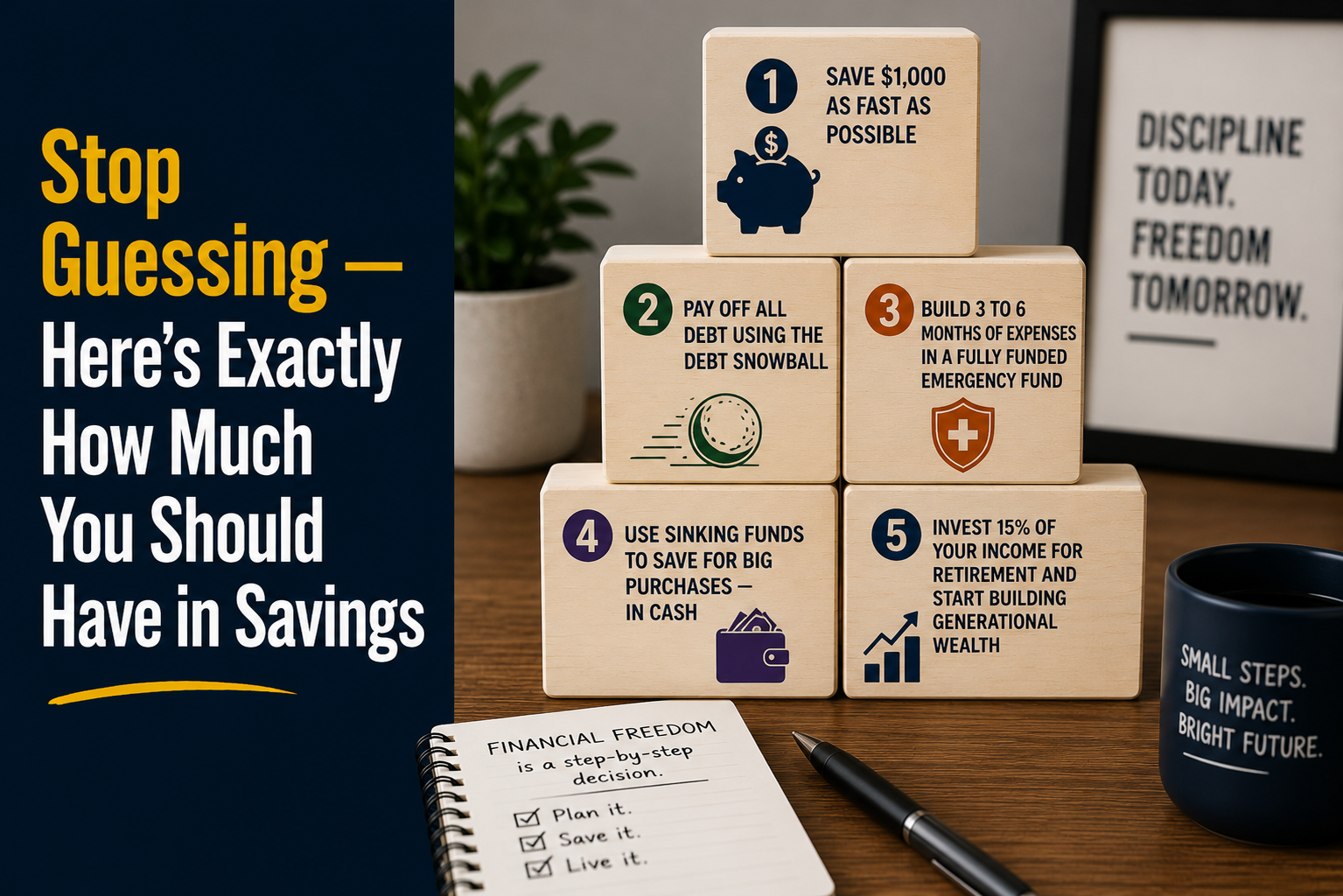
In Phase 1 your only goal is one month of take-home pay. Not six. One. It's enough to stop reaching for a credit card when something breaks, and it's small enough to finish fast.
Then pause and kill the debt
Once you have the month, stop. Every extra dollar goes at debt in Phase 2. Stacking cash while you're paying 24% on a credit card is running in the wrong direction.
Then build three to six months
Debt-free? Now grow it to three to six months of expenses in Phase 3. Single income, commission pay, or kids at home — lean toward six. Two steady incomes — three can be enough.
Keep it boring and separate
High-yield savings account, ideally at a different bank from your checking, automated every payday. Out of sight is the point. This is insurance, not an investment — it's supposed to be dull.
Run your numbers
What's your number, and when do you hit it?
Put in what your essentials cost each month and what you can set aside. You'll see your first milestone, your full goal, and the dates for both.
Where to keep it
Your emergency fund shouldn't earn nothing.
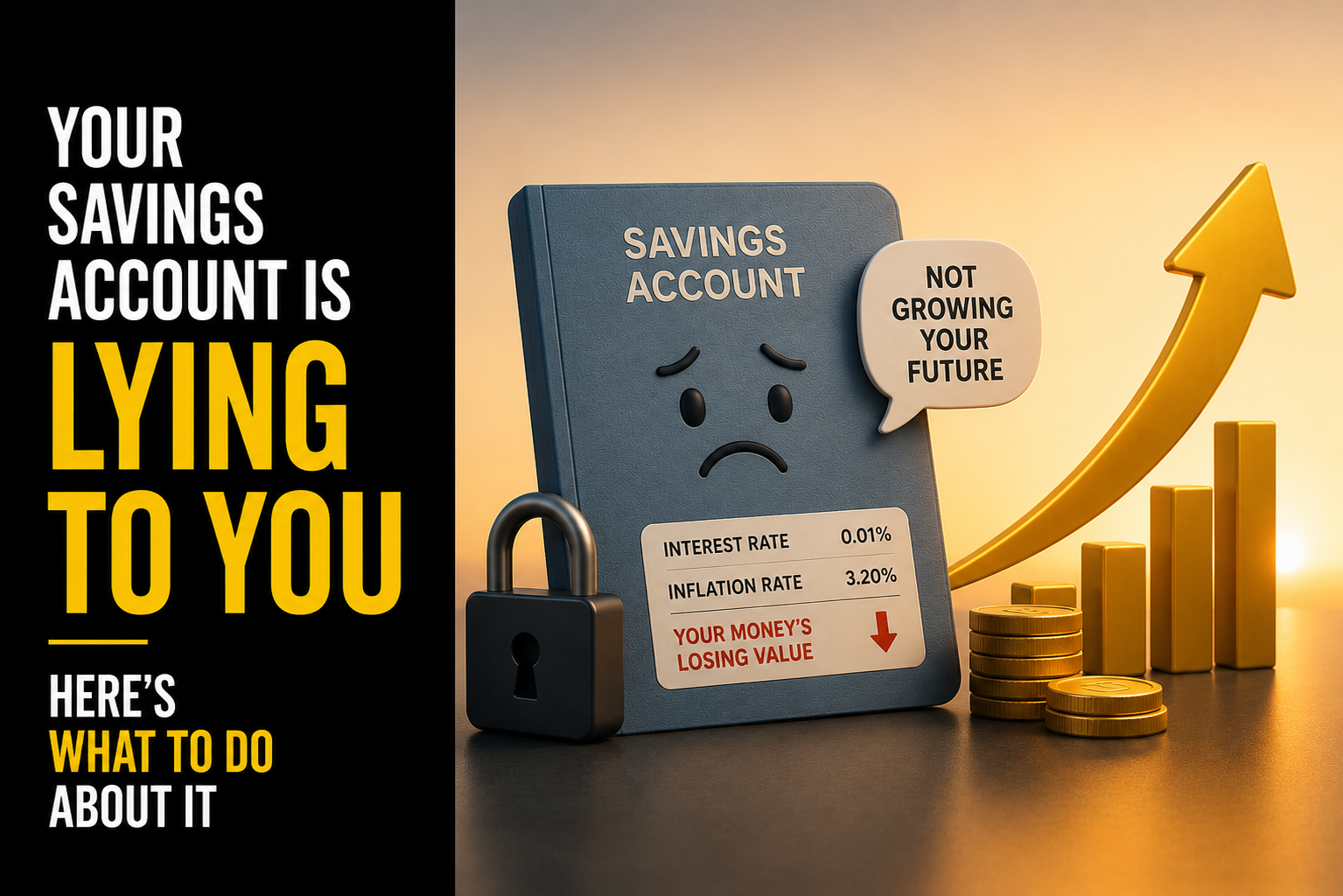
A regular savings account pays next to nothing. A high-yield savings account keeps the money just as safe and just as reachable — and actually earns something while it waits. Look for no monthly fees, no minimum balance, and FDIC insurance.
These are partner recommendations. Anthony may earn a commission if you open an account through them, at no extra cost to you. See our earnings disclosure.
Read more
Saving, made practical.



Where this fits
Savings shows up twice in the plan.
One month in Phase 1 to stop the bleeding. Three to six months in Phase 3, once the debt is gone.
Build the cushion with me.
Weekly money tips, real stories, and my free Wealth Checklist.
Free. Unsubscribe anytime.