
Introduction
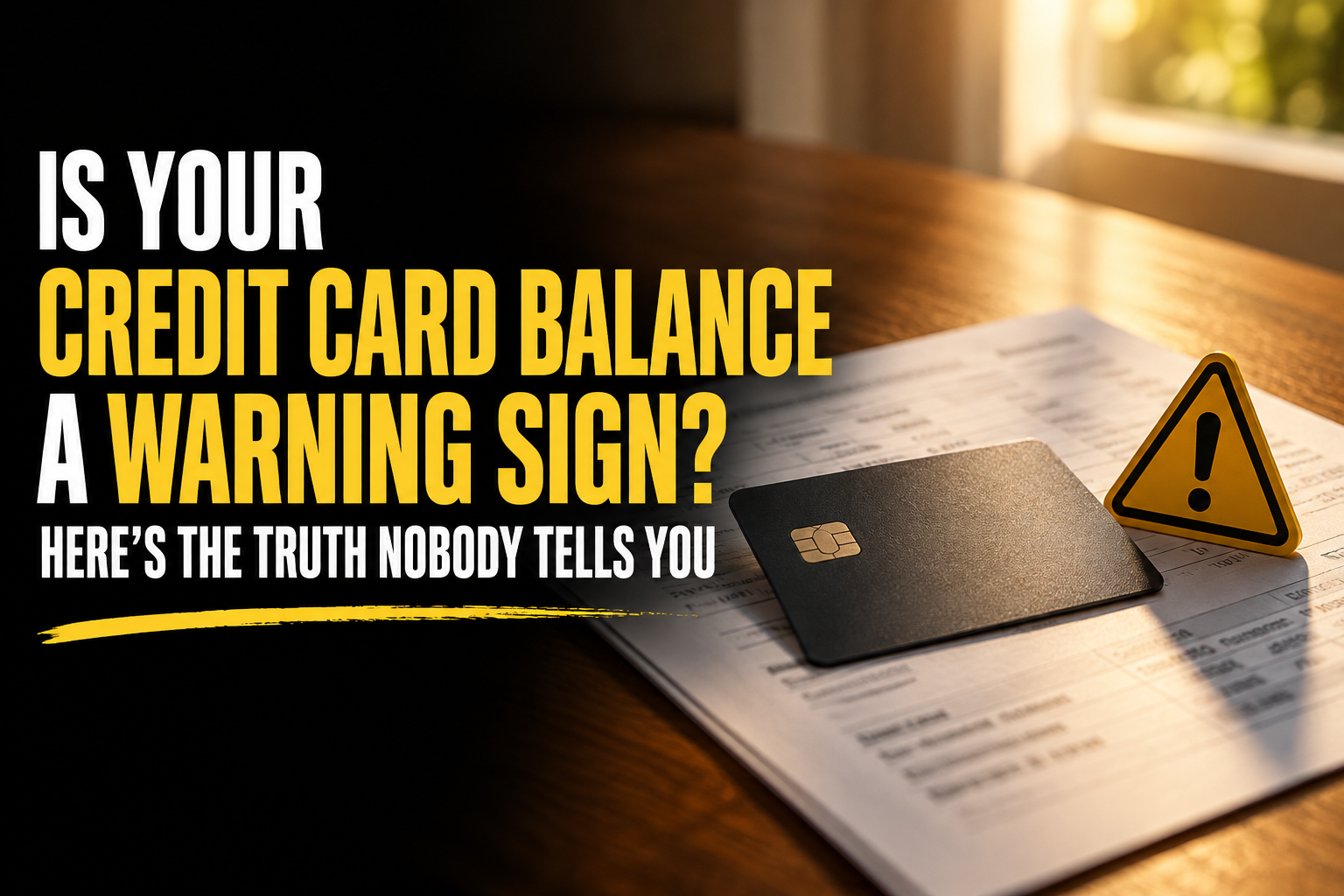
You check your credit card balance and feel that familiar knot in your stomach. It's grown again. And somewhere in the back of your mind, you're asking the question everyone eventually asks: is this normal, or is this a problem?
Here's the honest answer. There is no safe number. Not $500. Not $5,000. The moment you swipe that card, you've borrowed money you don't have yet — whether you pay it back in a week or carry it for years.
That's not meant to scare you. It's meant to give you clarity. You're not really asking "how much is too much." You're asking "am I okay?" And if you're asking, some part of you already knows.
This isn't about shame. It's about seeing your situation clearly enough to change it. Let's walk through what too much actually looks like, what it's quietly costing you, and the exact system to get free of it.
The Warning Signs Are Quieter Than You Think
You don't need a certain dollar amount to be in trouble. You need one of these:
- You're only making the minimum payment, month after month
- The balance hasn't moved — or has grown — in the last few months
- You've used a card to cover groceries, gas, or a bill that came due before payday
That last one matters most. When a credit card starts covering what your income was supposed to cover, it isn't a convenience anymore. It's quietly replacing a plan you haven't built yet.
That's not a character flaw. It's a structure problem. And structure problems get solved with structure — not guilt.
What It's Actually Costing You
Let's make this real without the spreadsheet. A balance in the thousands, sitting at a typical interest rate, paid only at the minimum, can take years to clear — and cost you nearly as much in interest as the original balance itself.
Debt doesn't just take your money. It takes your options. Every dollar going to interest is a dollar that can't go toward your emergency fund, your family, or the life you're actually trying to build.
Here's the distinction worth sitting with: income alone doesn't fix this. You can earn more and still feel stuck if the structure underneath your money hasn't changed.
The Way Out Is a System, Not a Feeling
Motivation fades. A system doesn't need to feel good to work. Here's the plan:
- Stop using the cards. Today — not after this balance clears.
- Write down every balance, smallest to largest.
- Pay minimums on everything except the smallest.
- Send every extra dollar toward that smallest balance until it's gone.
- Roll that payment into the next one. Repeat until you're done.
This is the debt snowball, and it works because it's built on behavior, not just math. A fast early win keeps you moving when the bigger balances start to feel discouraging.
Biblical wisdom reminds us that "the borrower is slave to the lender" (Proverbs 22:7). That's not a scare tactic — it's a clear description of what debt actually does. It hands someone else control of your decisions. Freedom means taking that control back, one balance at a time.
What This Means For You
If you recognized yourself in those warning signs, you're not behind. You're just finally seeing the truth clearly — and that's the exact starting point every debt-free person once stood at.
Conclusion
Here's what we covered: there's no safe amount of credit card debt, the real cost shows up in lost options as much as lost dollars, and the way out is a system you follow — not a feeling you wait for.
Your next step: write down every balance you owe, smallest to largest. That list is the beginning of your plan.
Which balance are you putting at the top of your list this week?
Keep building,

Anthony O'Neal is a bestselling author, speaker and personal finance educator. He teaches families how to get out of debt and build real wealth on any income through The Escape Plan, his show The Table with AO, and the In the Black app.