

Key Takeaways
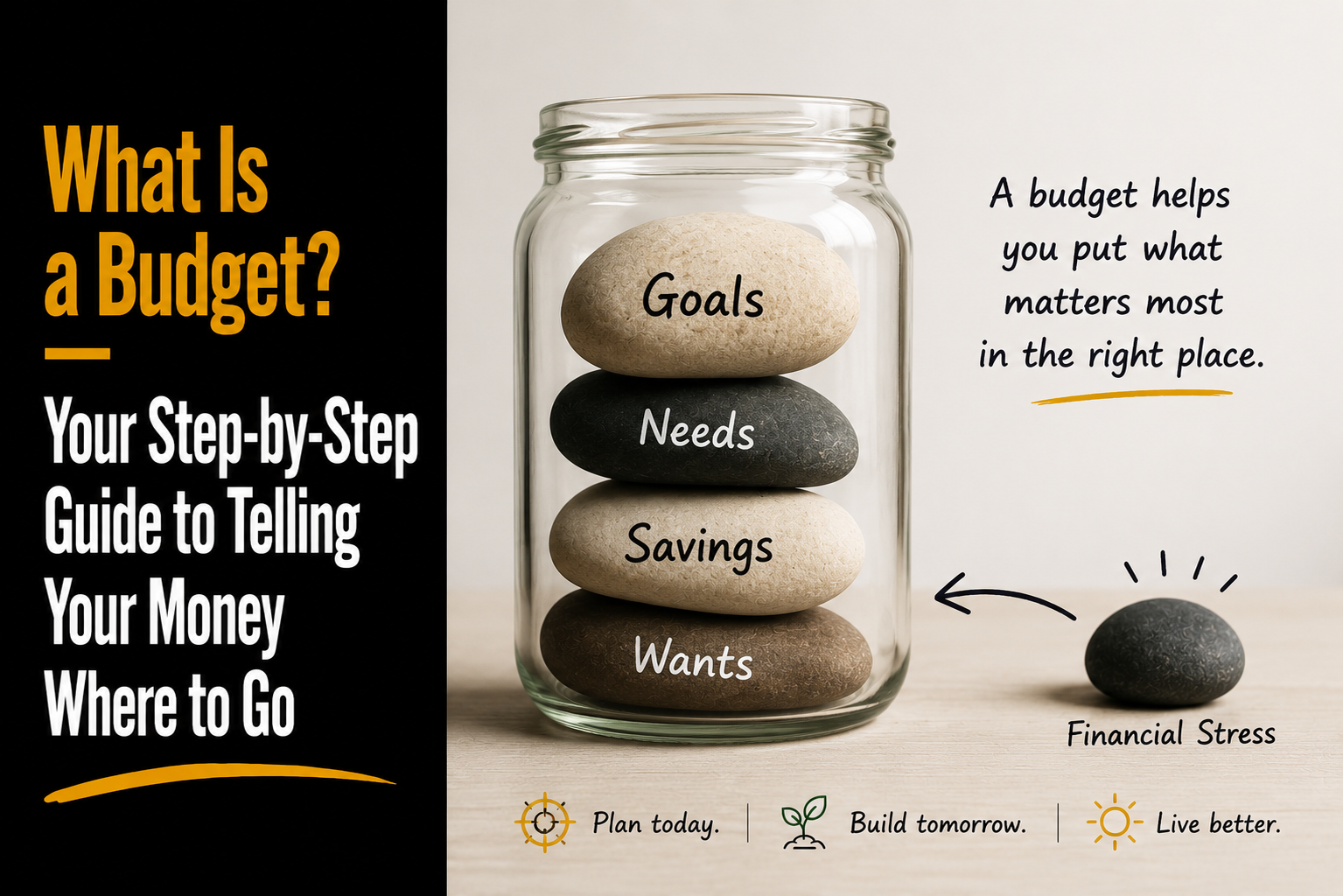
- A budget is simply a plan that tells your money where to go — before the month starts.
- The debt snowball method works best when paired with a solid budget.
- Budget for your non-negotiables first: food, housing, utilities, and transportation.
- You don't need to be a math genius to budget — you just need a plan and the discipline to follow it.
- A budget isn't a punishment. It's your permission slip to build the life you actually want.
Real talk, family — most people don't have a money problem. They have a plan problem.
You work hard. You clock in, you grind, you bring home a paycheck. And then somehow, before the month is even over, you're sitting there wondering where it all went. Sound familiar?
I've been there. At 19 years old, I was broke, homeless, and had no idea how to manage a single dollar. Nobody taught me. And that's not an excuse — that's just the truth for a lot of us, especially in the Black community, where financial literacy wasn't exactly passed down at the dinner table.
But here's what changed everything for me: I learned how to make a plan for my money. A budget. And I want to break it all the way down for you today — what it is, why it matters, and exactly how to build one that works for your life.
Let's get to work.
A Budget Is Just a Plan — Nothing More, Nothing Less
Let's kill the fear around this word right now.
A budget is not a punishment. It's not a spreadsheet only accountants understand. It's not something you do when you're broke and desperate.
A budget is simply a written plan that tells every dollar you earn exactly where it's going — before the month begins.
That's it. Cookie jar on the bottom shelf.
Think about it this way: if you were going on a road trip, you wouldn't just get in the car and drive with no destination. You'd pull up the GPS, map out the route, and know exactly how to get where you're going. A budget is your financial GPS. Without it, you're just driving in circles — burning gas and going nowhere.
Biblical wisdom backs this up too. Proverbs 21:5 says, "The plans of the diligent lead to profit as surely as haste leads to poverty." Diligence requires a plan. And your money deserves one.
Why Most People Avoid Budgeting (And Why That's Costing Them)
Here's the truth nobody wants to say out loud: most people avoid budgeting because they're scared of what they'll find.
They'd rather not know. They swipe the card and hope for the best. They tell themselves, "I make decent money, I'll be fine." But fine isn't free. And hope is not a financial strategy.
According to research, nearly 78% of Americans live paycheck to paycheck — including people making six figures. That's not a income problem. That's a plan problem.
When you don't have a budget, your money makes decisions for you. And trust me, your money has no loyalty. It will leave you every single time.
A budget puts you back in the driver's seat. It gives you clarity, confidence, and control — three things that change everything.
The Different Ways People Budget (And What Actually Works)
Not all budgets are created equal. Let me walk you through the most common methods so you can see why one stands above the rest.
The 50/30/20 Method
This one says 50% of your income goes to needs, 30% to wants, and 20% to savings. Sounds clean on paper. But here's the problem — the average American spends closer to 80% on needs alone, especially when you factor in debt payments. This method doesn't account for that reality, and it gives you way too much permission to spend on wants when you should be focused on getting free.
The "Set It and Forget It" Approach
Some people write a budget once and never look at it again. That's like writing out a workout plan and never going to the gym. The plan means nothing if you don't follow through. Budgeting is a monthly habit, not a one-time event.
The Zero-Based Budget — The One That Actually Works
This is the method I teach, and it's the one that will change your life.
A zero-based budget means your income minus your expenses equals zero. Every. Single. Dollar. Has a job.
That doesn't mean you have zero dollars in your account. It means you've assigned every dollar a purpose — whether that's rent, groceries, debt payoff, savings, or giving. Nothing is left floating around waiting to be wasted.
This method works because it forces you to be intentional. And intentionality is the foundation of financial freedom.
How to Build Your Budget in 5 Steps
Alright, family. Here's where we get practical. Follow these five steps and you'll have a working budget before you finish reading this article.
Step 1: Write Down Your Income
Start with what's actually coming in this month. Not your salary — your take-home pay. That's after taxes, health insurance, and any other deductions your employer pulls out.
If you have a side hustle or any irregular income, include a conservative estimate. Don't count on money that isn't guaranteed.
Add it all up. That number is your starting point.
Step 2: List Every Expense
Now write down everything you plan to spend money on this month. And I mean everything.
Start with what I call your non-negotiables — the things that keep your family alive and stable:
- Food and groceries
- Housing (rent or mortgage)
- Utilities (lights, water, gas)
- Transportation (car payment, gas, insurance)
Cover those first. Always. Then move to other essentials like phone, childcare, and minimum debt payments. After that, you can look at the extras.
Step 3: Subtract Expenses From Income
Take your total income and subtract your total expenses. The goal is zero.
If you have money left over, put it to work — toward your debt snowball, your emergency fund, or your savings goal. Don't let it sit there unassigned. Unassigned money disappears.
If you're in the negative, don't panic. That's information, not a verdict. Look at where you can cut, and if needed, look at ways to bring in more income temporarily.
Step 4: Track Every Transaction All Month Long
This is where most people drop the ball.
You can't write a budget and then ignore it for 30 days. You have to track what you spend in real time. Every grocery run. Every gas station stop. Every online purchase.
Tracking keeps you honest. It shows you where your plan is working and where you're slipping. And when you see yourself about to overspend in a category, you can course-correct before it's too late.
Use a budgeting app, a notebook, a spreadsheet — whatever you'll actually stick with. The tool doesn't matter. The habit does.
Step 5: Make a New Budget Every Single Month
Your life changes month to month. Your budget should too.
One month you've got a birthday party. The next month it's back-to-school shopping. The month after that, your car needs new tires. A budget that doesn't account for real life won't survive real life.
Before each month begins, sit down and build a fresh budget based on what that month actually looks like. Look back at the previous month, see what worked and what didn't, and adjust accordingly.
This is a practice. And like any practice, you get better at it over time.
Budgeting Myths That Are Keeping You Stuck
Let me address a few lies that might be holding you back right now.
"Budgeting is for people who are bad with money."
No. Budgeting is for anyone who earns money and wants to keep it. Millionaires budget. CEOs budget. Athletes who went broke didn't — and that's exactly why they went broke. A budget isn't a sign of struggle. It's a sign of stewardship.
"I don't make enough to budget."
This one breaks my heart because it's backwards. The less you make, the more you need a budget. When every dollar counts, you can't afford to let a single one go unaccounted for. A budget doesn't require a big income. It requires intention.
"Budgeting means I can't enjoy life."
Family, a budget doesn't mean you can't have fun. It means you plan for fun. You put it in the budget. And when you spend that money, you spend it guilt-free — because you already said it was okay. That's not restriction. That's freedom.
What a Budget Actually Gives You
When you commit to budgeting consistently, something shifts. And it's not just in your bank account.
You stop feeling anxious every time you check your balance. You stop fighting with your spouse about money. You stop dreading the end of the month. You start making progress — real, visible, measurable progress.
A budget gives you:
- Clarity — You know exactly where your money is going.
- Confidence — You make decisions from a place of intention, not fear.
- Control — You are the boss of your money, not the other way around.
- Peace — And that peace? It's priceless.
God didn't design you to live stressed out, broke, and wondering if your card will go through. That's not the life He has for you. But you have to do your part. And your part starts with a plan.
Conclusion
Look, family — a budget is not complicated. It's not scary. And it is absolutely not just for people who are struggling.
A budget is a plan. And a plan is how you go from where you are to where you want to be.
Here's what we covered today:
- A budget is simply telling your money where to go before the month starts
- The zero-based budget is the most effective method — every dollar gets a job
- You build it in five steps: income, expenses, subtract, track, and repeat
- The myths around budgeting are lies that keep people stuck
- A budget gives you clarity, confidence, control, and peace
Here's your move: Sit down tonight and write out your income and your expenses for this month. Don't overthink it. Just start. That first budget won't be perfect — and that's okay. You'll get better every single month.
And if you want a simple tool to help you get started, check out the resources at anthonyoneal.com.
Now I want to hear from you — what's been your biggest challenge when it comes to sticking to a budget? Drop it in the comments below. Let's figure it out together.
Keep building,

Anthony O'Neal is a bestselling author, speaker and personal finance educator. He teaches families how to get out of debt and build real wealth on any income through The Escape Plan, his show The Table with AO, and the In the Black app.
Find $516 you didn't know you had
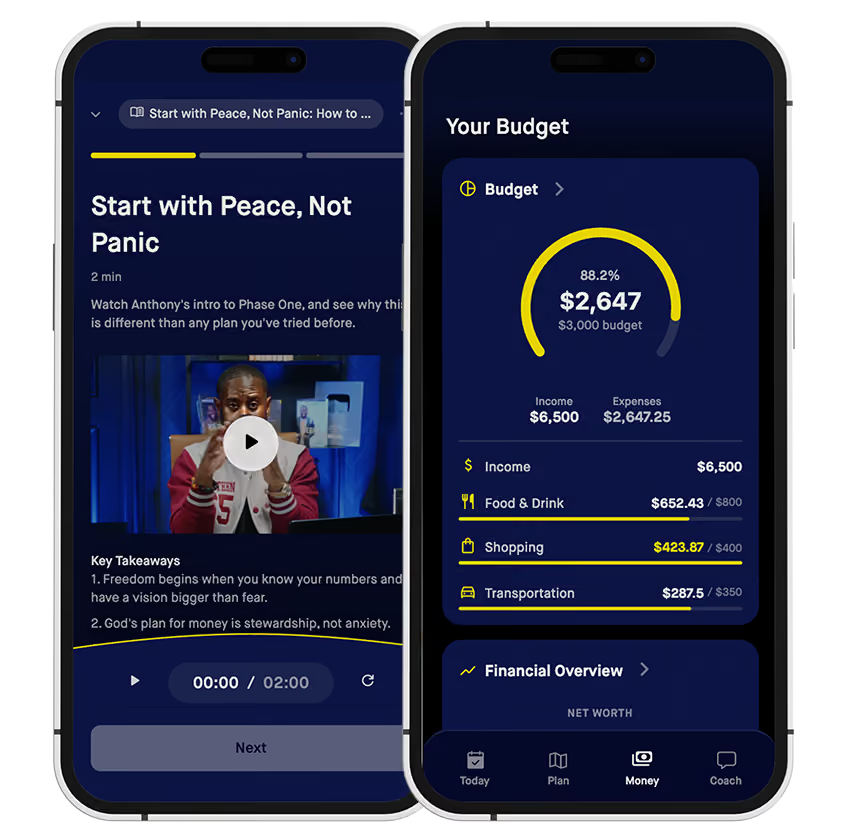
Writing the budget is the easy part. In the Black tracks your spending against the plan and puts a money assignment in your pocket every morning. The average person finds $516 in their first 30 days.
Start In the Black freeIn the Black is my app.
Recommended for this topic
Find $516 you didn't know you had
Writing the budget is the easy part. In the Black tracks your spending against the plan and puts a money assignment in your pocket every morning. The average person finds $516 in their first 30 days.
Start In the Black freeIn the Black is my app.