

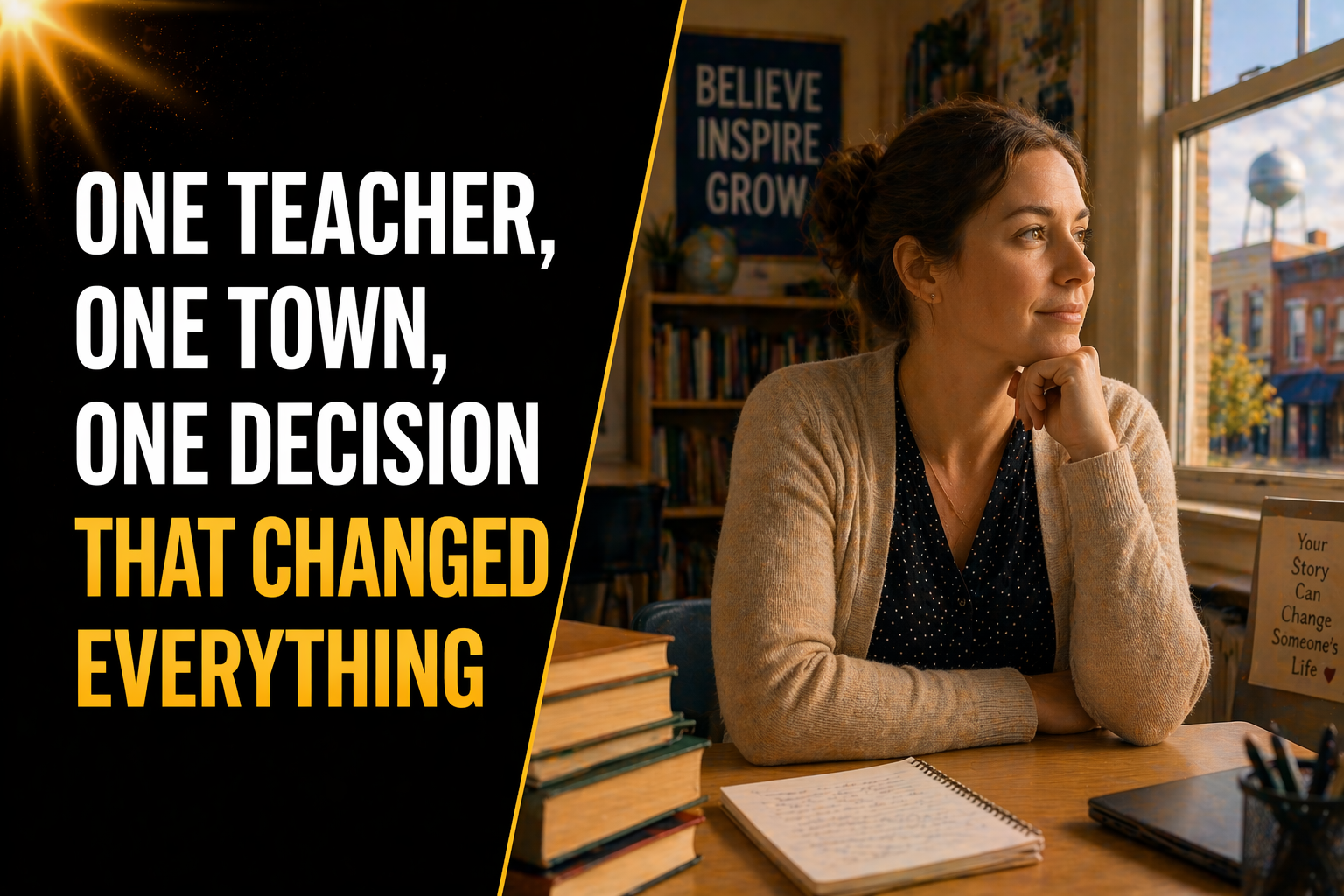
What if the one class that could break generational poverty in your community just vanished?
Not a math class. Not a science class. The one class that teaches your kids how money actually works — how to budget, how to avoid debt traps, how to build something that lasts longer than a paycheck.
Let that satisfying in for a second.
In too many communities across America, financial literacy isn't even on the menu. And the cost of that silence? It's not just dollars. It's futures. It's families stuck in cycles they never chose.
Today, I want to tell you a story that hit me in the chest. Because it proves that one classroom, one teacher, and one decision can rewrite an entire family tree.
The Gap Nobody Talks About
Here's a stat that should make all of us uncomfortable: according to the National Endowment for Financial Education, only 24% of millennials demonstrate basic financial literacy.
Let me say that differently. Three out of four young adults in this country don't understand how money works. Not investing. Not crypto. The basics — budgeting, saving, staying out of debt.
And in Black and brown communities? The gap is even wider. Not because we're less capable. Because the system never prioritized teaching us.
Think about your own upbringing. Did anyone sit you down and explain compound interest? Did anyone teach you what a 401(k) actually does? Did anyone show you the difference between a high-yield savings account and the one at your local bank making you 0.01%?
For most of us, the answer is no. We learned about money the hard way — through mistakes, through debt, through stress that kept us up at night.
That's not a personal failure. That's a systemic one.
What Happens When One Person Decides to Change It
In small towns and big cities across this country, there are teachers and mentors who are doing something radical. They're teaching kids about money before life teaches them the hard way.
I've seen it firsthand. I've spoken at schools where students walked in thinking budgeting was something only "rich people" did. By the end of the semester, those same students were teaching their parents how to set up an emergency fund.
Read that again. The kids were teaching the parents.
That's not just education. That's a generational shift happening in real time.
One teacher I connected with told me something I'll never forget. He said, "Anthony, I had a student who went home and started asking his parents about their debt. His parents had never talked about money — not once. That one conversation led the whole family to get on a budget."
That family? They went from drowning in debt to nearly debt-free within three years. The student graduated, went to college, and is now engaged — building a life on a foundation that didn't exist before that class.
One class. One conversation. One family transformed.
The Ripple Effect Most People Miss
Here's what people don't understand about financial literacy education. It doesn't stay in the classroom.
When a 16-year-old learns the debt snowball method, they go home and talk about it at the dinner table. When a student learns that a high-yield savings account can earn them 4-5% instead of pennies, they tell their mama. When a young person understands that you don't need a credit card to build a life, they carry that truth into every relationship, every job, every decision.
Financial education doesn't just change a student. It changes a household. And when you change enough households, you change a community.
I think about my own story. At 25, I was broke and living in my car. Nobody taught me about money. Nobody sat me down and said, "Anthony, here's how this works." I had to learn through pain — through debt, through shame, through rock bottom.
But what if someone had? What if one teacher in my school had taken 45 minutes a week to teach me the basics?
I'll tell you what would have happened. I would have skipped years of suffering. Years of bad decisions. Years of feeling like I was too far behind to ever catch up.
That's why this matters to me. Not as a content creator. Not as a financial educator. As a man who lived the consequences of not knowing.
Why This Can't Be Optional
Right now, only a handful of states require personal finance education for high school students. A handful. We require algebra. We require chemistry. But we don't require the one subject that every single human being will use every single day for the rest of their life.
That's not just a policy failure. That's a moral one.
"Don't let your zip code decide your legacy."
Every kid in America — regardless of their neighborhood, their parents' income, or their skin color — deserves to understand how money works before they're handed a credit card application at 18.
And here's the thing. The teachers who are doing this work right now? They're not waiting for permission. They're not waiting for a mandate. They're showing up every day because they understand something most politicians don't — that financial literacy is the bridge between poverty and freedom.
What If It All Disappeared Tomorrow?
Now I want you to imagine something.
What if every personal finance class in America disappeared tomorrow? What if every teacher who was pouring into students about budgeting, saving, and avoiding debt just stopped?
We'd lose more than a curriculum. We'd lose the conversations happening at kitchen tables. We'd lose the families who were finally getting on the same page about money. We'd lose the students who were about to become the first in their family to graduate debt-free.
We'd lose hope. Real, tangible, generational hope.
And in communities where financial stress is already the norm — where 70% of families are considered economically challenged — that loss would be devastating.
This isn't theory, family. This is real life. These are real families. Real kids. Real futures hanging in the balance.
So What Do We Do About It?
I'm not going to leave you with just a story. That's not how we do things around here. Here's your move.
If you're a parent: Start the money conversation at home. Tonight. It doesn't have to be perfect. Ask your kids, "Do you know what a budget is?" Ask them, "Do you know the difference between a need and a want?" Open the door. That's all it takes.
If you're a teacher or mentor: Look into financial literacy resources for your classroom or community. There are free curricula available that can change the trajectory of your students' lives. One class can start a ripple effect that lasts for generations.
If you're someone who never got this education: It's not too late. You're not too far behind. You're one decision away from a new story. Start with a budget. Open a high-yield savings account. Learn the debt snowball method. Take the first step — your children's children will thank you for it.
If you're in a position to give: Consider supporting financial literacy programs in underserved communities. Your investment into someone else's education is an investment into generational wealth for families who need it most.
Conclusion
Look, family — this one is personal for me.
I know what it feels like to not have the information. I know what it costs. And I know what changes when someone finally puts the truth in your hands.
Financial literacy isn't a luxury. It's a lifeline. And the teachers, mentors, and community leaders who are delivering it every single day are doing kingdom work — whether they know it or not.
One classroom can change a family. One family can change a community. One community can change a generation.
The question isn't whether financial education matters. The question is — what are we going to do to make sure it never disappears?
Now I want to hear from you: Did anyone teach you about money growing up? Or did you have to figure it out on your own? Drop it in the comments — let's build together.
Keep building,

Anthony O'Neal is a bestselling author, speaker and personal finance educator. He teaches families how to get out of debt and build real wealth on any income through The Escape Plan, his show The Table with AO, and the In the Black app.