

Key Takeaways
- Pull up your last three months of spending and look at it honestly — not with shame, just clarity.
- Compare what you planned to spend with what you actually spent, category by category.
- Adjust your categories to reflect real life. A budget isn't broken because it needs to change — that's the system working.
- Give every extra dollar a job: debt, savings, or margin.
- Reset your budget every 90 days, with a quick check-in before each new month.
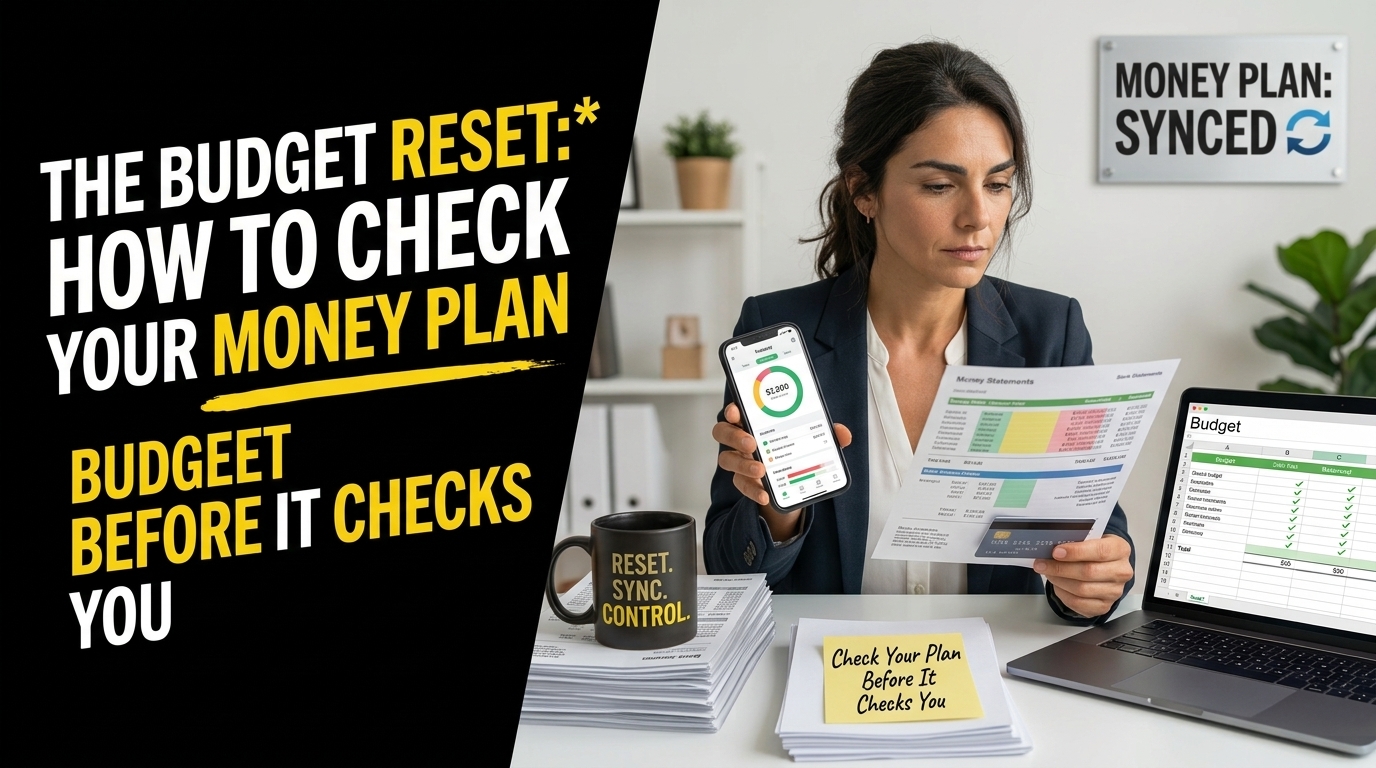
Quick Answer: A budget reset means reviewing your last three months of real spending, comparing it to what you planned, and adjusting your categories so your budget matches your actual life — not the life you hoped you'd be living when you first wrote it down.
Let's Not Beat Around the Bush
Most people don't fail at budgeting because they're bad with money. They fail because they build a budget once, then never look at it again.
Life changes. Groceries go up. A subscription you forgot about is still pulling $12 a month. The budget you wrote in January doesn't know what happened in March.
This isn't about guilt. It's about structure. A reset gives you permission to stop guessing and start seeing your money clearly again.
Here's the five-step process I want you to walk through.
Step 1: Pull Up the Last Three Months — Honestly
Before you change anything, you need to see what's actually been happening. Open your budgeting app or your spreadsheet and look back at the last three months.
Don't just skim it. Sit with it.
You're not looking for someone to blame — not yourself, not your spouse. You're looking for the truth. Truth is clear, not comfortable. But it's the only thing that moves you forward.
Step 2: Compare What You Planned to What You Actually Spent
Now go category by category. What did you say you'd spend? What did you actually spend?
Look for the patterns:
- Categories that are consistently over
- Categories that are consistently under
- One-time expenses that threw things off
This step isn't about perfection. It's about information. You can't fix what you haven't looked at honestly.
Here's the Tip
If a category runs high every single month, don't just raise the number and move on. Look at what's actually in there first. Sometimes you genuinely need more margin in that category. Sometimes it's convenience spending that snuck in quietly — and convenience is expensive.
Step 3: Adjust Your Categories to Match Real Life
Your budget is a tool, not a verdict. If groceries have been higher than planned and your gas budget has had room to spare, move the margin. That's not failure — that's stewardship.
A zero-based budget means every dollar has a job before the month starts. It does not mean that job is locked in forever. Life moves. Your plan should move with it.
Step 4: Give Every Extra Dollar a Job
If you find money left over after this review, don't let it float. Floating money disappears — not because it's cursed, but because undirected money always finds a way to get spent.
Put it to work:
- Toward your next debt in the snowball
- Into your emergency fund
- Toward a goal you've been putting off
Margin without direction isn't freedom. It's just delayed spending.
Step 5: Build Next Month's Budget From What You Learned
Now you're not guessing anymore. You're building your next budget from real data, not hope. That's the difference between a budget that holds up and one that falls apart by the second week.
Expect some adjusting in the first couple of months. That's normal. Structure takes repetition before it becomes simple.
Why This Has to Be a Rhythm, Not a One-Time Fix
A single reset feels good for a week. A rhythm changes your life.
Do a deeper reset every 90 days. Do a quick check-in before each new month begins. Small, consistent attention beats a once-a-year overhaul every time.
This is discipline, not hustle. You're not grinding harder — you're paying attention on purpose.
How to Keep the Reset From Wearing Off
A few ways to protect the progress you just made:
- Keep what's working. If something helped — cash for groceries, planning meals ahead — don't abandon it just because it's not exciting anymore.
- Track as you go. Don't wait until month's end to find out where the money went. Log it along the way.
- Acknowledge the wins. If a category stayed on track, notice it. Progress deserves to be seen.
- Expect disruption. Life will throw something unexpected at you. That doesn't mean the plan failed — it means you adjust one category and keep moving.
- Make small corrections, not full overhauls. Your budget should flex monthly. It shouldn't need to be rebuilt from scratch every time something shifts.
Conclusion
This isn't about fear, and it isn't about shame. It's about freedom.
We walked through five steps: look back honestly, compare plan to reality, adjust your categories, give every extra dollar a job, and build your next month from truth instead of guessing.
Here's your move: Before the next month starts, sit down with your last three months of spending. Just look. That's it. That one step changes everything after it.
What's one category that surprised you when you looked back? That's usually where the real adjustment needs to happen.
Keep building,

Anthony O'Neal is a bestselling author, speaker and personal finance educator. He teaches families how to get out of debt and build real wealth on any income through The Escape Plan, his show The Table with AO, and the In the Black app.
more articles
Money Tips
October 29, 2026
10 Realest Moments From The Table That Stopped Families Cold
Money Tips
October 29, 2026
Inside the One Big Beautiful Bill: What It Really Means for Your Family's Money
Money Tips
October 28, 2026
The New Tax Bill Just Changed Your Paycheck — Here's What You Need to Know
Money Tips
October 28, 2026
Where America Really Stands With Money Right Now
Money Tips
October 27, 2026
What Does "Affordable" Actually Mean When You're Buying a Car?
Money Tips
October 27, 2026
The Tax Breakdown: What You're Actually Paying and Why It Matters
Where this fits
The Escape Plan
Five phases, one plan. Find where you are, then take the next step.
In The Black
A coach in your pocket
Daily money assignments and real accountability, built around the Escape Plan. Know your next step every single day.
$59.99 a quarter or $179.99 a year
Get In The Black →Get the plan in your inbox.
Weekly money tips, real stories, and my free Wealth Checklist.
Free. Unsubscribe anytime.