

Key Takeaways
- The cash envelope system works because it makes overspending physically impossible — when the cash is gone, you're done.
- Start with two or three "problem categories," not your whole budget.
- Leftover cash at the end of the month isn't a bonus — it's your next step toward freedom.
Most people don't have a spending problem. They have an awareness problem.
You swipe a card, and the money just disappears into the system. No weight. No feeling. No pause. By the time the statement comes, the damage is already done — and you're left wondering where it all went.
That's not a character flaw. That's design. The system is built to make spending feel invisible.
The cash envelope system fixes that. It's not complicated, it's not trendy, and it doesn't require an app or a subscription. It's cash, in envelopes, with a job to do. And it works because it puts the weight of your spending back in your hands — literally.
Here's how to set it up, and how to actually stick with it.
What the Cash Envelope System Actually Is
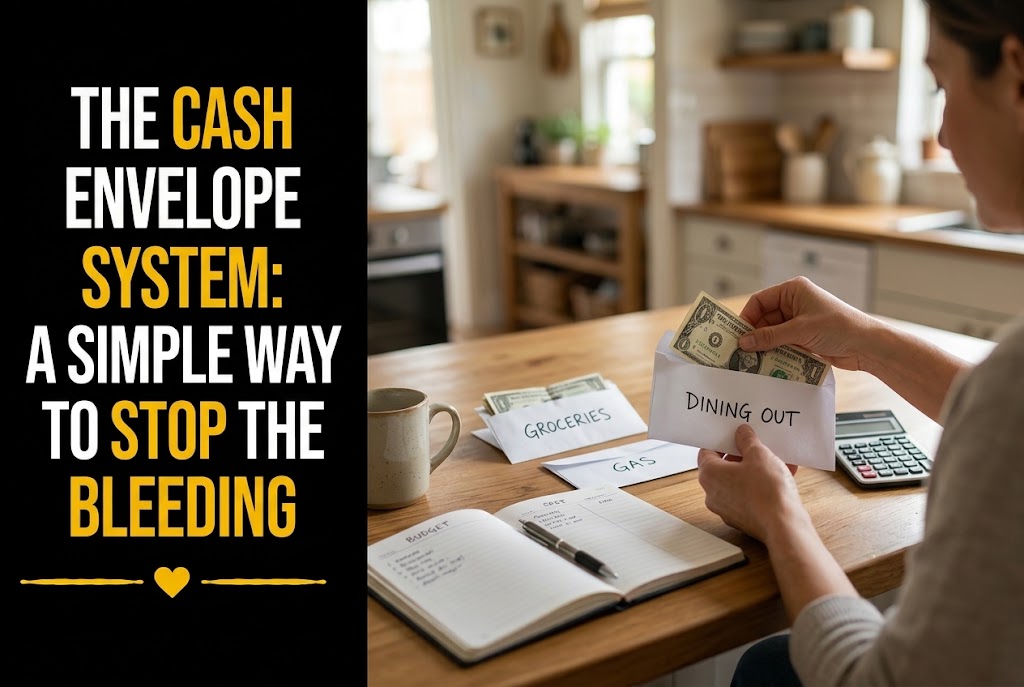
The cash envelope system is a budgeting method where you pull cash for specific categories — groceries, gas, eating out, personal spending — and put it into labeled envelopes. You spend only what's in that envelope. When it's empty, that category is closed until next month.
No borrowing from one envelope to feed another. No "I'll just put it on the card this once."
Biblical wisdom teaches us to be good stewards of what we've been given — not to manage money by feeling, but by structure. Structure is what makes stewardship real. The envelope system is structure you can hold in your hand.
Why This Works When Apps and Willpower Don't
1. It removes the guesswork
With a card, you have to stop, check an app, do math, and then decide. Most people skip that step. With cash, the math is already done. You look in the envelope. You know exactly where you stand.
2. It makes the cost real
There's a difference between swiping a card and physically watching your money leave your hand. One feels abstract. The other feels true. That feeling isn't weakness — it's the exact friction most people need to slow down and think before they spend.
3. It ends the cycle of regret
You know the pattern: overspend, feel guilty, tell yourself you'll do better, repeat. The envelope system interrupts that cycle before it starts. The limit isn't a feeling you have to enforce on willpower alone — it's already set.
How to Set It Up (Four Steps)
Step 1: Build your budget first
Before you touch a single envelope, you need a plan for every dollar coming in. This isn't optional — the envelope system only works inside a real, written budget. List your income. List every expense. Give every dollar a job before the month begins.
Step 2: Choose two or three problem categories
You don't need an envelope for everything. Look at where your money actually disappears — groceries, restaurants, personal spending are common ones. Start there. You can always add more once the system becomes a habit.
Step 3: Label and fund your envelopes
Pull the cash, label the envelopes, and divide the money according to what you budgeted. If you're paid twice a month, split the amount across both paychecks. Either way, the envelope is funded before you spend a dollar.
Step 4: Spend only what's inside
This is the whole system. When the restaurant envelope is empty, you're done eating out for the month. Not because you're being punished — because you already decided, in advance, what this month would look like. That decision deserves respect.
What To Do When an Envelope Runs Out
Don't borrow from another envelope. That doesn't solve the problem — it just moves it somewhere else.
If your grocery envelope runs dry before the month is over, that's not a failure. That's information. Next month, look honestly at the number and adjust it. The goal isn't perfection. The goal is a plan that reflects reality.
What To Do With Leftover Cash
If there's money left in an envelope at the end of the month, don't let it quietly disappear back into spending. Put it toward whatever step you're on — your emergency fund, or your next debt in the debt snowball.
That leftover cash is proof the system is working. Let it go to work for you.
What This Means For You
If you've felt like you make decent money but still can't explain where it goes, this isn't about adding more pressure. It's about adding structure. Freedom doesn't come from having more money — it comes from knowing exactly what every dollar is doing.
The cash envelope system isn't flashy. It won't trend on social media for the right reasons. But it works, because it's built on a simple truth: a dollar with a job is a dollar you control.
Conclusion
We covered the full system:
- Build a real budget before anything else
- Choose two or three problem categories to start
- Fund and label your envelopes
- Spend only what's inside — no borrowing, no exceptions
You're not behind. You're not bad with money. You've just been managing dollars you can't see. Give them a visible home, and watch what changes.
Here's your next step: Pick one category this week — groceries, gas, or eating out — and build your first envelope. Don't try to overhaul everything at once. One envelope, done well, builds the discipline for the rest.
Which category would hit you the hardest if you started there? That's usually the one to start with first.
Keep building,

Anthony O'Neal is a bestselling author, speaker and personal finance educator. He teaches families how to get out of debt and build real wealth on any income through The Escape Plan, his show The Table with AO, and the In the Black app.
more articles
Money Tips
October 31, 2026
What Should You Actually Be Spending on Groceries? A Breakdown by Family Size
Money Tips
October 30, 2026
Why Your Budget Keeps Falling Apart (And How to Finally Make It Stick)
Money Tips
October 30, 2026
The Budget Blueprint: 15 Steps to Finally Take Control of Your Money
Money Tips
October 29, 2026
10 Realest Moments From The Table That Stopped Families Cold
Money Tips
October 29, 2026
Inside the One Big Beautiful Bill: What It Really Means for Your Family's Money
Money Tips
October 28, 2026
The New Tax Bill Just Changed Your Paycheck — Here's What You Need to Know
Where this fits
The Escape Plan
Five phases, one plan. Find where you are, then take the next step.
In The Black
A coach in your pocket
Daily money assignments and real accountability, built around the Escape Plan. Know your next step every single day.
$59.99 a quarter or $179.99 a year
Get In The Black →Get the plan in your inbox.
Weekly money tips, real stories, and my free Wealth Checklist.
Free. Unsubscribe anytime.