

Key Takeaways
- Grocery prices have climbed every year since 2020 and are not reversing anytime soon.
- Inflation, weather, labor shortages, and supply chain costs are all driving the increase at the same time.
- Rising prices aren't the real threat to your household. A budget with no margin is.
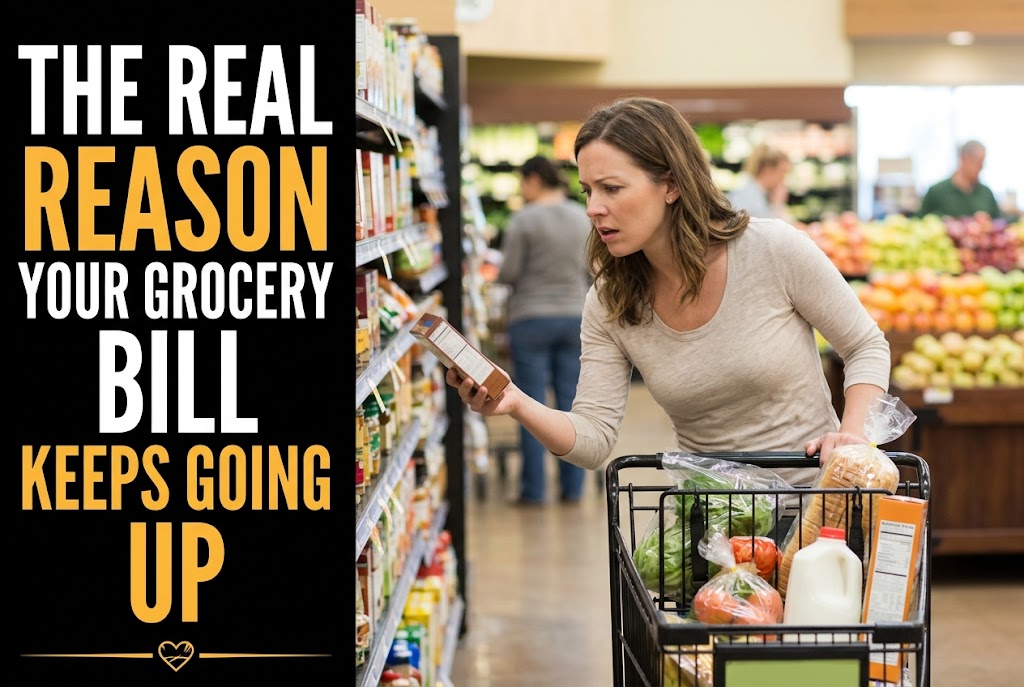
You already feel it before you even look at the receipt. You're standing at checkout, the total climbs higher than you expected, and you're doing quiet math in your head trying to figure out what to put back.
Let's not pretend this is in your head. It's not. Groceries really do cost more than they did a year ago, and more than they did the year before that. But here's what needs to be said clearly: the price increase is not the crisis. The crisis is a household with no plan built to absorb it.
This isn't about shame. It's about getting honest about what's actually happening, so you can build something that holds.
Why Food Costs More Right Now
There's no single reason your grocery bill is heavier. It's a stack of pressures hitting at the same time.
Inflation has quietly reduced what every dollar in your pocket can actually buy. The $100 grocery trip from a few years ago simply doesn't fill the same cart today.
Weather has disrupted crops in major growing regions, which is part of why coffee and beef have climbed so sharply. A drought on the other side of the world still shows up in your cart.
Labor shortages across farming, trucking, processing, and retail have pushed wages up, and that cost doesn't stay with the company. It gets passed down to you.
Supply chains for imported goods, bananas, seafood, and coffee among them, cost more to move than they used to. Fuel, shipping, and tariffs all add weight to the final price tag.
None of this is something you can control. What you can control is the structure sitting underneath your money when these costs hit.
What a Rising Grocery Bill Actually Exposes
A bigger grocery bill doesn't create financial stress out of nowhere. It reveals stress that was already quietly there.
If a 3% increase in food costs is enough to throw off your entire month, that's not really a grocery problem. That's a structure problem. Most families aren't struggling because prices went up. They're struggling because there was never any margin built into the plan to begin with.
Here's the truth a lot of people don't want to hear: a bigger paycheck doesn't fix this on its own. More income without a plan just means a bigger number disappearing the exact same way the smaller one did.
The System That Actually Protects Your Household
Freedom doesn't come from waiting for prices to drop. It comes from building something that doesn't depend on them staying the same.
Give every dollar a job before the month starts. A written plan is the difference between reacting to a price increase and absorbing it without panic.
Set your grocery number based on what you actually spend, not what you wish you spent. Pull your last two months of receipts. That number, not a guess, is where your real plan begins.
Build margin somewhere else in the budget to protect this category. If groceries go up forty dollars, something else has to flex. That's not failure. That's the plan doing exactly what it's supposed to do.
Buy ahead when prices are low. Stocking staples during a sale isn't hoarding. It's stewardship.
Review your budget monthly, not once a year. Prices shift constantly. Your plan has to shift with them on purpose, not by accident three months later.
This approach is slower than a shortcut. It's also the only version of this that actually holds up over time.
What This Means for You
If your grocery bill has you anxious every single time you walk through the store, that doesn't mean you're bad with money. It means the structure around your money needs attention.
Biblical stewardship was never about controlling the economy. It was about preparing for seasons, planning ahead, and building wisely regardless of what's happening around you. That doesn't guarantee prices come down. It guarantees you have something steady underneath you either way.
Conclusion
Grocery prices are not going back to where they were in 2020. That's just the truth, and there's no reason to soften it.
But here's what's also true. A household with a real plan can absorb a 3% increase without it becoming a crisis. A household without one feels every single increase like the floor just dropped out.
The fix was never a bigger paycheck or a better coupon. It's a budget built with margin on purpose, reviewed often, and adjusted before the stress ever hits.
Your next step: Pull your last two grocery receipts this week and compare them to what you actually budgeted. That gap is where the real conversation starts.
What's the one expense that's been quietly stretching your budget the most lately? That's worth naming before it turns into the next crisis.
Keep building.

Anthony O'Neal is a bestselling author, speaker and personal finance educator. He teaches families how to get out of debt and build real wealth on any income through The Escape Plan, his show The Table with AO, and the In the Black app.
more articles
Money Tips
November 3, 2026
The Spending Freeze: 17 Ways to Take Back Control of Your Money
Money Tips
November 3, 2026
The $1.86 Trillion Problem: What Student Loan Debt Really Looks Like in 2026
Money Tips
November 2, 2026
Why Your Tax Refund Might Be Smaller Than It Should Be
Money Tips
November 2, 2026
The IRS Just Changed the Rules for 2026. Here's What It Means for Your Family.
Money Tips
November 1, 2026
Budgeting With Irregular Income: A System That Brings You Peace
Money Tips
November 1, 2026
Tell Your Money Where to Go: A Simple Guide to Zero-Based Budgeting
Where this fits
The Escape Plan
Five phases, one plan. Find where you are, then take the next step.
In The Black
A coach in your pocket
Daily money assignments and real accountability, built around the Escape Plan. Know your next step every single day.
$59 a quarter or $179 a year
Get In The Black →Get the plan in your inbox.
Weekly money tips, real stories, and my free Wealth Checklist.
Free. Unsubscribe anytime.