

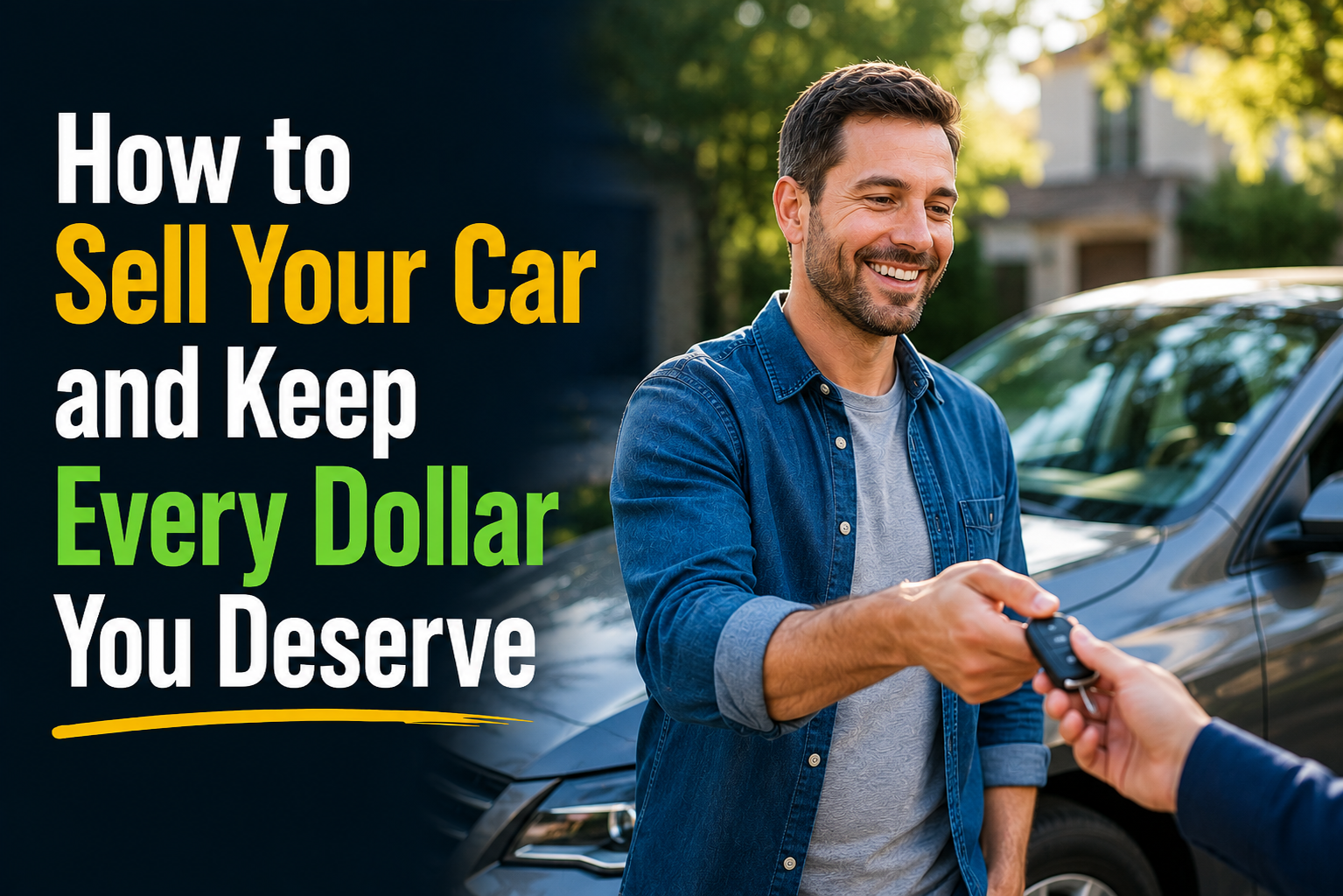
Selling a car can feel overwhelming. But here's the truth — most people leave hundreds, sometimes thousands, of dollars on the table simply because they didn't know what to do or when to do it.
I've seen it happen too many times. Someone needs to get rid of a car, they panic, they take the first offer, and they walk away with way less than they should have. Family, that ends today.
Whether you're selling your car to get out of debt, downsize, or just upgrade to something better — I'm going to walk you through every single step so you can sell smart, sell safe, and keep every dollar you deserve.
Let's get to work.
Step 1: Decide How You Want to Sell
Before you do anything else, you need to make a decision — are you selling privately or going through a dealer?
Selling privately means you list the car yourself, find your own buyer, and handle the transaction. It takes more time and effort, but you will almost always walk away with more money. That's the goal.
Selling to a dealer or instant-offer site like CarMax or Carvana is faster and easier — but you will pay for that convenience. Their offers are almost always lower than what you could get on your own. And watch out — some of those "instant cash offers" are only valid if you roll the money into another car loan. Don't fall for it.
Real talk: if you have the time and patience, sell it yourself. The extra money is worth it.
Step 2: Pull Your Paperwork Together
Nothing kills a car sale faster than not having your documents ready. Get organized before you list anything.
Here's what you need:
- The car title — This is the legal proof that you own the vehicle. If you've paid off your car, you should already have it. If you still owe money on it, you'll need to work with your lender to get it released at the time of sale.
- Vehicle history report — This shows potential buyers the accident history, ownership records, and repair history. Transparency builds trust.
- Service records — If you've kept up with oil changes, tire rotations, and repairs, show it. It tells buyers you took care of the car.
- Warranty documents — If your car is still under warranty, that's a selling point. Most warranties are transferable to the new owner.
Having all of this ready before you list shows buyers you're serious — and it protects you legally.
Step 3: Get the Car Ready to Show
First impressions matter. A dirty, cluttered car tells a buyer you didn't care about it — and they'll use that to lowball you.
You don't have to spend a fortune, but you do need to put in some effort.
On the outside:
- Wash and wax the exterior
- Buff out minor scratches if you can
- Check that all lights are working
- Inspect the tires and rims
- Remove any bumper stickers or magnets
On the inside:
- Clear out all personal items — check every pocket, the trunk, and under the seats
- Vacuum the floors and seats thoroughly
- Wipe down the dashboard and all surfaces
- Get rid of any odors
A professional detail can run you anywhere from $150 to $350, but it can easily add $500 to $1,000 to your final sale price. That's a return worth making.
Also — be honest about any major issues. A cracked windshield or a strange noise will come up during the inspection anyway. Disclose it upfront and price accordingly. Integrity matters.
Step 4: Price It Right
This is where most people either leave money on the table or scare buyers away entirely. You need a number that's fair, competitive, and leaves room to negotiate.
Here's how to find it:
Use valuation tools. Sites like Kelley Blue Book and Edmunds will give you a solid estimate based on your car's year, make, model, mileage, and condition. Use both and compare.
Look at what's actually selling. Search for cars similar to yours in your area. What are they listed for? What condition are they in? This gives you a real-world benchmark.
Talk to a mechanic. If there are known issues with the car, get an estimate for repairs. This helps you decide whether to fix it before selling or adjust your price to reflect the condition.
Once you have your number, price it slightly higher than your target. If your car is worth $9,000, list it at $9,500. That gives you room to negotiate without going below what you need.
Step 5: Write an Ad That Sells
Your listing is your first impression to every potential buyer. Make it count.
A strong car listing includes:
- The basics — year, make, model, mileage, number of owners, and asking price
- The selling points — low mileage, new tires, heated seats, backup camera — whatever makes your car stand out
- Why you're selling — buyers always want to know. Be honest and straightforward.
- The condition — mention recent repairs or upgrades, and be upfront about any flaws. You can even include the VIN number to show you have nothing to hide.
- Payment terms — let buyers know if the price is firm or negotiable, and what forms of payment you accept
Photos are everything. Take clear, well-lit pictures of the front, back, both sides, the interior, the dashboard, and the trunk. Natural daylight works best. The more photos, the better.
Where to list:
- Facebook Marketplace (free and highly effective)
- Cars.com (free)
- Craigslist (small fee, still works)
- Autotrader (paid, broader reach)
- Your personal social media — don't underestimate word of mouth
The more places you list, the more eyes on your car.
Step 6: Screen Your Buyers
Once the messages start coming in, don't just respond to everyone. Be selective and be smart.
Here's how to protect yourself:
Get them on the phone. A five-minute phone call tells you more than ten text messages. You'll quickly know if someone is serious or just wasting your time.
Ask for their full name. If they won't give it, move on. That's a red flag.
Confirm how they plan to pay. If they're vague, want to pay in installments, or offer to send a check for more than the asking price — walk away immediately. These are classic scams.
Never give out your home address. Meet in a public place, preferably during the day. Many local police stations have designated safe exchange zones with cameras. Use them.
Bring someone with you. Always. Safety first, family.
Step 7: Handle the Test Drive the Right Way
A serious buyer is going to want to drive the car. That's completely normal — and it's your opportunity to make your final pitch.
Before the test drive:
- Check your insurance. Make sure your policy covers other drivers in case of an accident during the test drive.
- Ask to see their driver's license. Don't skip this step.
- Ride along. Never let someone drive off alone with your car. Go with them.
- Keep it short and local. A 15 to 20-minute drive in the surrounding area is plenty. You don't need to go on a road trip.
During the drive, point out the car's best features. Answer questions honestly. This is your last chance to remind them why your car is worth the price.
If a buyer wants a mechanic to inspect the car — let them. An inspection shows you have nothing to hide, and it usually speeds up the sale. The buyer typically pays for the inspection.
Step 8: Negotiate Without Backing Down
Most buyers are going to make an offer below your asking price. That's expected. Here's how to handle it with confidence.
Know your floor before you sit down. Decide the lowest number you'll accept before any conversation starts. If you don't have a number in your head, you'll get talked down too far.
Don't panic at a low offer. Counter calmly. "I appreciate the offer, but the best I can do is $X." Keep it simple and firm.
Be willing to walk away. This is your most powerful tool. If a buyer won't come up to a fair price, let them go. Another buyer is coming.
Never accept a partial payment. Get the full amount before you hand over the keys and sign the title. No exceptions. Once that title is signed, the car is theirs — and if they stop paying, there's nothing you can do.
Step 9: Close the Deal Cleanly
You've found your buyer and agreed on a price. Now it's time to make it official.
Accepted forms of payment:
- Cash
- Cashier's check (verify it at the bank before handing over the title)
- Venmo or PayPal (confirm the funds have cleared before completing the transfer)
If you want extra security, you can meet at the buyer's bank to verify the funds in person.
Paperwork you'll need to complete:
- Bill of sale — This is your receipt. It documents the vehicle details, the sale price, and both parties' signatures. Keep a copy for yourself.
- Title transfer — Sign the title over to the new owner. This is the most important document in the transaction.
- Release of liability — Depending on your state, you may need to file this with your DMV to confirm you no longer own the vehicle. Do not skip this step. If the new owner gets a ticket or gets into an accident before they register the car, you don't want it coming back to you.
- Notify your insurance company — Remove the car from your policy as soon as the sale is complete.
What to Do With the Money
Congratulations, family. You just sold your car.
Now here's where most people mess up — they take that money and immediately spend it on something they haven't planned for.
Before you do anything, put that money in your budget. Decide intentionally where it goes. Are you paying off debt? Building your emergency fund? Saving for a cash car? Let your goals drive the decision, not your emotions.
Scripture reminds us that wisdom is in the planning. Proverbs 21:5 says, "The plans of the diligent lead to profit as surely as haste leads to poverty." Don't rush this decision.
If you don't have a budget yet, that's your first move. A written plan for your money is the foundation of everything.
Conclusion
Selling a car doesn't have to be stressful or complicated. When you follow the right steps — pricing it correctly, preparing it properly, screening buyers carefully, and closing the deal cleanly — you walk away with the money you deserve and the peace of mind you need.
Here's your action step: Start today. Pull your title, check your car's value on Kelley Blue Book, and take those photos this weekend. The sooner you start, the sooner that money is in your hands and working toward your freedom.
Now I want to hear from you — have you ever sold a car and felt like you got less than it was worth? Drop it in the comments. Let's talk about it.
Keep building,

Lorem ipsum dolor sit amet, consectetur adipiscing elit. Suspendisse varius enim in eros elementum tristique. Duis cursus, mi quis viverra ornare, eros dolor interdum nulla, ut commodo diam libero vitae erat. Aenean faucibus nibh et justo cursus id rutrum lorem imperdiet. Nunc ut sem vitae risus tristique posuere.