

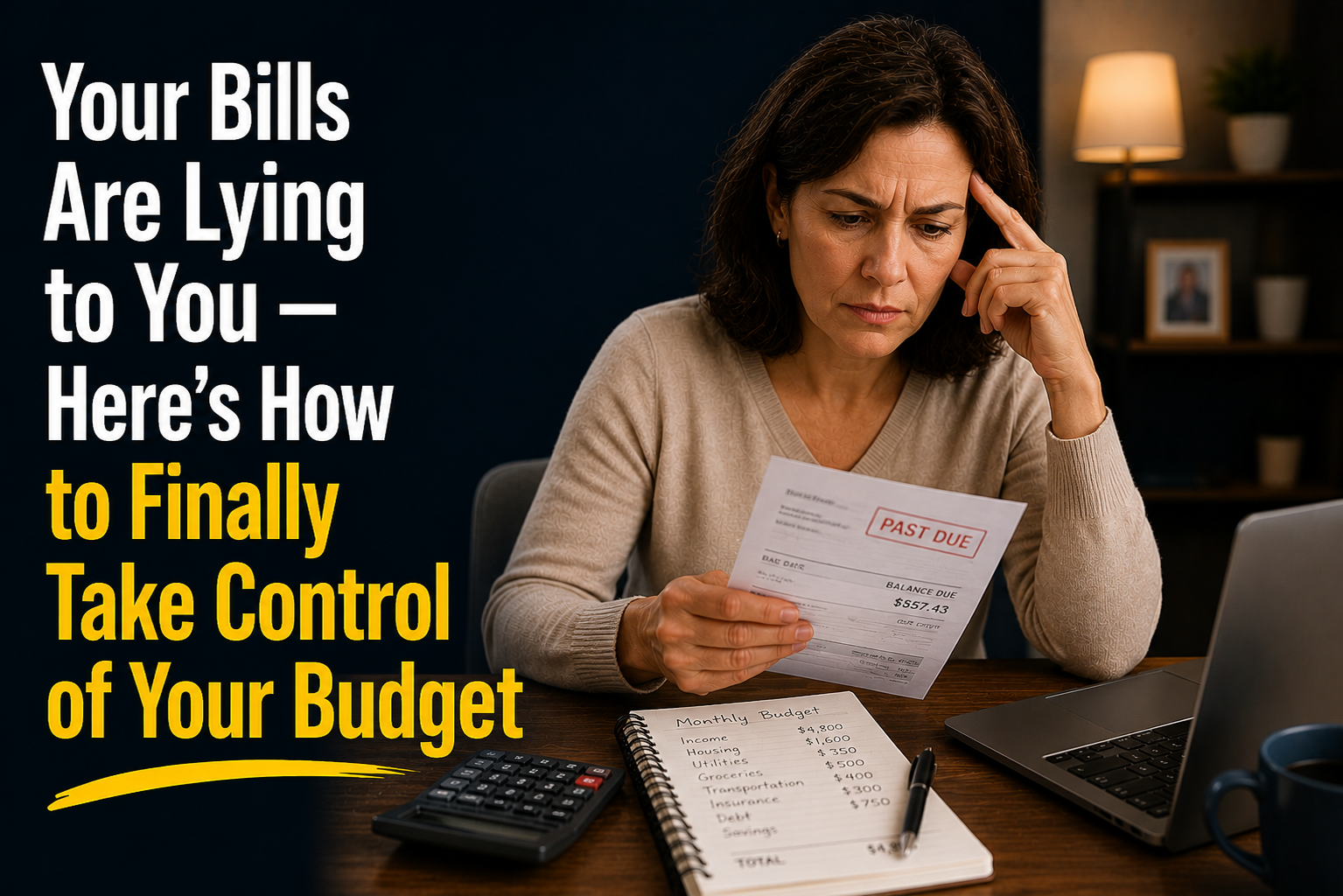
Let me ask you something, family.
Have you ever sat down, looked at your bank account, and thought — where did all my money go? You made a plan. You had good intentions. But somewhere between the first and the fifteenth, the money just... disappeared.
Here's what most people don't realize: it's not always a discipline problem. Sometimes it's a knowledge problem. Specifically, most people have never been taught the difference between fixed expenses and variable expenses — and that one blind spot is quietly destroying budgets across America.
Today, we're fixing that. Let's get to work.
What Are Fixed Expenses?
Fixed expenses are the bills that cost you the same amount every single month.
These are your predictable costs — the ones you can write down in your budget without even checking your bank account. They don't move much, and that's actually a good thing. Predictability is your friend when you're trying to build a plan.
Common Fixed Expenses Include:
- Rent or mortgage payment
- Car payment
- Health, auto, and life insurance premiums
- Phone bill
- Internet service
- Streaming subscriptions (Netflix, Hulu, etc.)
- Childcare or daycare costs
- Gym memberships
Now, some of these can creep up over time — your streaming service raises its price, or you add a line to your phone plan. But month to month? These bills are mostly stable. That's what makes them fixed.
What Are Variable Expenses?
Variable expenses are the costs that change from month to month — usually based on how much you use them or what life decides to throw at you.
These are the sneaky ones. The ones that blow up your budget when you're not paying attention.
Common Variable Expenses Include:
- Groceries
- Gas and transportation
- Electricity and water bills
- Eating out and takeout
- Entertainment and fun money
- Clothing and personal care
- Medical copays and prescriptions
- Car repairs and maintenance
Real talk: variable expenses are where most budgets fall apart. Not because people are irresponsible — but because they didn't plan for the change. One month your electric bill is $85. Next month it's $175 because summer hit and the AC hasn't stopped running. That's a variable expense doing exactly what it does.
The good news? You have more control over these than you think.
How to Save on Fixed Expenses
Just because a bill is "fixed" doesn't mean you're stuck with it forever. Here's how to trim the fat:
- Audit your subscriptions. Open your bank statement right now and look for recurring charges. I promise you'll find at least one or two you forgot about. Cancel them today.
- Call your insurance company. Ask for a loyalty discount or shop around for a better rate. A 10-minute phone call could save you hundreds a year.
- Negotiate your phone plan. You don't need unlimited everything if you're on Wi-Fi most of the day. Downgrade and pocket the difference.
- Consider a roommate. If rent is your biggest burden, splitting it is one of the fastest ways to free up real money every month.
- Cut the gym membership. Free workout videos on YouTube are just as effective — and they don't charge you $40 a month when you stop going.
How to Save on Variable Expenses
This is where your daily decisions have the biggest impact. Small changes here add up fast.
- Meal plan every single week. This one habit alone can cut your grocery bill by 20–30%. Decide what you're eating before you walk into that store.
- Use gas rewards programs — not credit cards. Many grocery stores offer fuel points. Use them.
- Eat out with intention. It's not about never enjoying a restaurant. It's about deciding in advance how much you'll spend on dining out each month — and sticking to it.
- Lower your electric bill by adjusting your thermostat a few degrees, unplugging devices you're not using, and switching to LED bulbs.
- Plan for irregular expenses. Car repairs, medical bills, back-to-school shopping — these aren't surprises if you plan for them. Set aside a little each month so they don't wreck you when they show up.
How to Budget for Fixed and Variable Expenses
Here's the system, family. Five steps. Simple. Actionable. Let's go.
Step 1: Write Down Your Income
List everything coming in — your paycheck, side income, child support, everything. This is your starting number.
Step 2: List Your Expenses — Starting With the Essentials
Don't start with fixed or variable. Start with essential. Cover your four walls first:
- Food — groceries to feed your family
- Utilities — lights, water, heat
- Shelter — rent or mortgage
- Transportation — gas or car payment to get to work
Needs before wants. Always.
Step 3: Subtract Expenses From Income
Every dollar needs a job. When you subtract your expenses from your income and hit zero, that means your money is working — not wandering.
Step 4: Track Your Spending All Month Long
This is where most people quit. Don't be most people. Track every dollar as it goes out. This is how you catch yourself before you overspend — not after.
Step 5: Adjust and Repeat
Before the next month starts, build a new budget. Use what you learned from last month to plan better for the next one. Budgeting is a skill. It gets easier every single month.
5 Tips to Make Budgeting for Both Easier
1. Always Budget High for Variable Expenses
If you think groceries will cost $400, budget $450. If you come in under, celebrate — then throw that extra money at your debt or savings goal.
2. Create a Miscellaneous Budget Line
Life happens. Give yourself a small buffer — even $50 to $100 a month — so that unexpected expenses don't blow up your entire plan.
3. Look Back Before You Plan Forward
Your first month budgeting, go back through last month's bank statements. Add up every grocery run, every gas fill-up, every restaurant visit. That's your real number — not a guess.
4. Give It Three Months
The first month is always the hardest. By month three, you'll have a real picture of what you actually spend — and your budget will start to feel natural.
5. Use a Budgeting Tool
Keeping up with all of this — the planning, the tracking, the adjusting — is so much easier when you have a system. Whether it's an app, a spreadsheet, or a notebook, find what works for you and use it consistently.
Conclusion
Look, family — this isn't complicated. It's just a skill nobody taught us.
Fixed expenses are predictable. Variable expenses are flexible. And your budget needs to account for both — every single month — if you want to stop wondering where your money went.
Here's your move this week: Open your bank account, pull up last month's transactions, and sort every single expense into one of two columns — fixed or variable. That one exercise will show you exactly where your money is going and where you have room to win.
You're not too far behind. You're not too broke. You're just one decision away from a new story.
Which expense type is hardest for you to control — fixed or variable? Drop it in the comments below. Let's figure it out together, family.
Keep building,

Lorem ipsum dolor sit amet, consectetur adipiscing elit. Suspendisse varius enim in eros elementum tristique. Duis cursus, mi quis viverra ornare, eros dolor interdum nulla, ut commodo diam libero vitae erat. Aenean faucibus nibh et justo cursus id rutrum lorem imperdiet. Nunc ut sem vitae risus tristique posuere.
Find $516 you didn't know you had
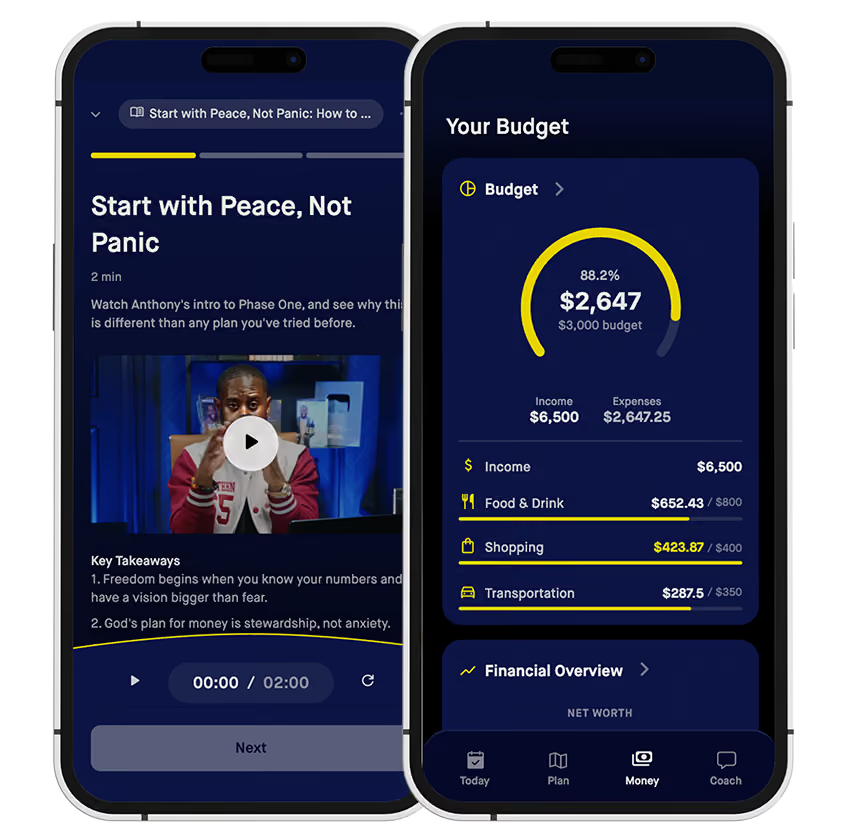
Writing the budget is the easy part. In the Black tracks your spending against the plan and puts a money assignment in your pocket every morning. The average person finds $516 in their first 30 days.
Start In the Black freeIn the Black is my app.
Recommended for this topic
Find $516 you didn't know you had
Writing the budget is the easy part. In the Black tracks your spending against the plan and puts a money assignment in your pocket every morning. The average person finds $516 in their first 30 days.
Start In the Black freeIn the Black is my app.