
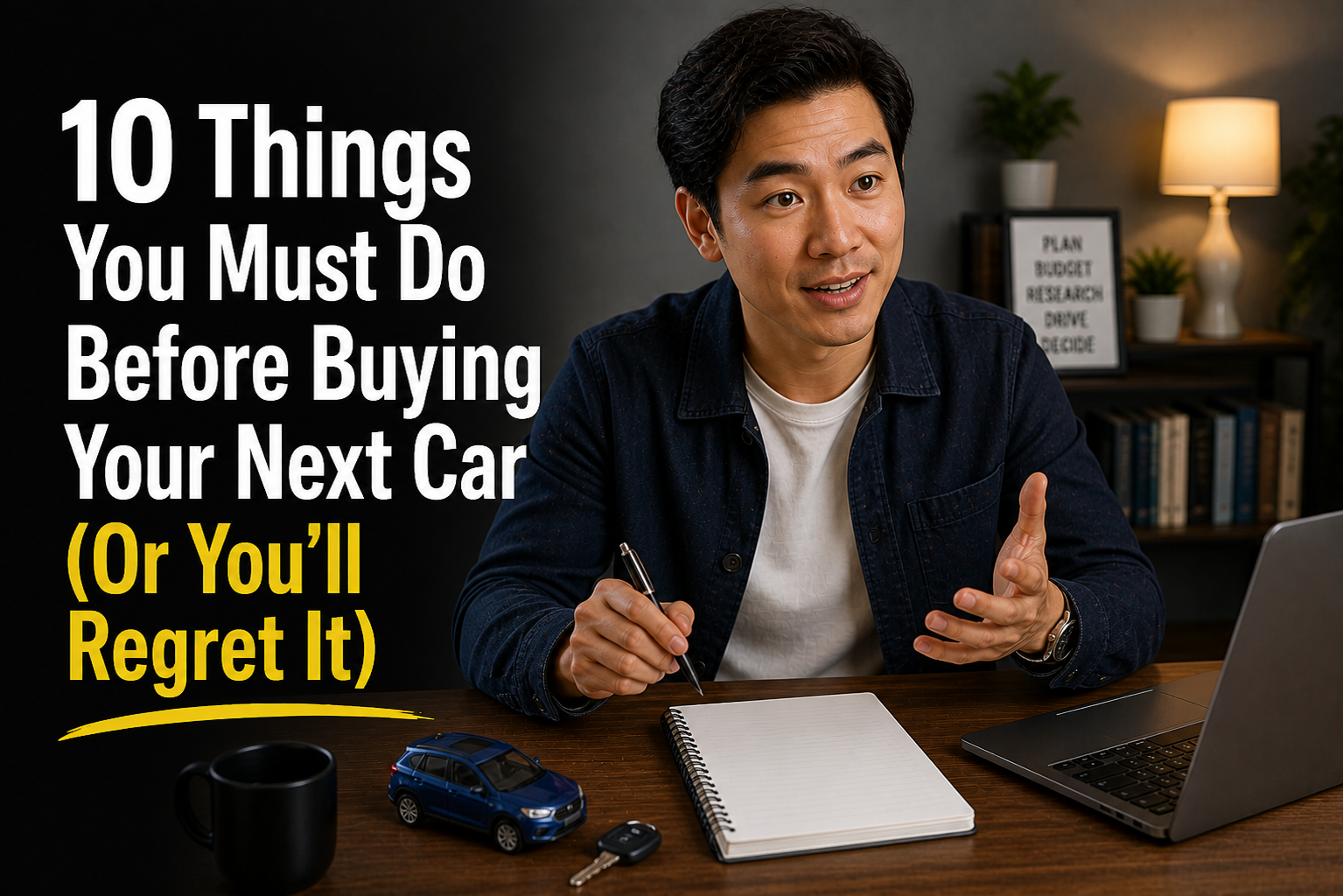
10 Things You Must Do Before Buying Your Next Car (Or You'll Regret It)

3 min read
Key Takeaways
- Never finance a depreciating asset — save up and pay cash for a used car to avoid the debt trap.
- Know the car's real value, get it inspected, test drive it, and negotiate from a position of strength.
- Timing, preparation, and discipline are the difference between a smart purchase and a financial setback.
Buying a car is one of the biggest financial decisions you'll ever make. And most people get it completely wrong.
Here's the truth: the average car payment in America is over $700 a month for a new car. That's $700 that could be going toward your emergency fund, your investments, or your children's future — instead, it's going straight into a dealership's pocket.
I've been there, family. I know what it feels like to want something you can't afford and convince yourself the monthly payment "isn't that bad." But that mindset is exactly what keeps people stuck living paycheck to paycheck.
The good news? You don't have to play that game. There's a smarter way to buy a car — and today I'm breaking it all the way down.
Here are 10 things you must do before buying your next car.
1. Get Your Budget Straight First
Before you even think about stepping foot on a lot, you need to know exactly what you can afford — in cash.
Real talk: new cars lose up to 60% of their value in the first five years. That means the second you drive off the lot, you're already losing money. Unless your net worth is over $1 million, a used car is the smart move every single time.
Here's the rule:
The car you can afford is the car you can pay cash for.
If you don't have the cash right now, that's okay. Start a car fund, cut your expenses, and save with intention. It's not about deprivation — it's about discipline for a season so you can enjoy freedom later.
2. Decide What You Actually Need (Not What You Want)
Once you know your budget, narrow down your options based on your real life — not your dream life.
Ask yourself:
- How many people am I transporting regularly?
- What's my commute like?
- Do I need good gas mileage or cargo space?
- What's the weather like where I live?
You might love the look of that luxury SUV, but if a reliable sedan fits your budget and your life, that's the move. Purpose over image, family. Always.
3. Do Your Research Before You Shop
Knowledge is power — especially at a dealership.
Before you talk to a single salesperson, look up the Kelley Blue Book value of any car you're considering. This tells you what the car is actually worth so you don't overpay.
Also pull a vehicle history report using the VIN number. Sites like Carfax or VehicleHistory.com will show you:
- Accident history
- Previous owners
- Repair records
- Any open recalls
Don't skip this step. A car that looks clean on the outside can have a messy history underneath.
4. Check Your Insurance Costs Before You Commit
Here's one most people forget — and it costs them every month.
The type of car you drive directly affects your insurance premium. A sports car or luxury vehicle can cost you significantly more to insure than a standard sedan or SUV.
Before you fall in love with a car, call your insurance agent and get a quote. If the insurance cost pushes your monthly expenses too high, that car isn't the right fit — no matter how good the deal looks.
Pro tip: Shop around. An independent insurance agent can compare rates from multiple providers to make sure you're getting the best coverage at the best price.
5. Take It for a Real Test Drive
Don't just pull out of the parking lot and back in. Take that car on a real drive.
Get on the highway. Drive through a neighborhood. Hit a speed bump. Merge into traffic. You want to experience how the car handles in real conditions — not just in a parking lot.
While you're driving, pay attention to:
- Any unusual sounds or vibrations
- How the brakes feel
- Visibility from the driver's seat
- Comfort over a longer stretch
Write everything down. These notes become your negotiating ammunition later.
6. Always Get an Independent Inspection
This is non-negotiable, family.
Before you hand over a single dollar, take the car to a trusted, independent mechanic for a full inspection. Not the dealership's mechanic — an independent one who works for you, not the seller.
A good inspection will catch:
- Engine issues
- Transmission problems
- Hidden rust or frame damage
- Brake and tire wear
If a seller refuses to let you get an inspection, walk away. That's a red flag the size of a billboard.
7. Know When to Buy
Timing matters more than most people realize.
The best times to buy a car are:
- End of the month (salespeople are chasing quotas)
- End of each quarter — March, June, September, December
- Late summer (dealers clearing inventory for new models)
- Holiday weekend sales events
Going later in the day can also work in your favor — salespeople are more motivated to close a deal before their shift ends.
This strategy alone can save you hundreds to thousands of dollars on the final price.
8. Negotiate Like You're Willing to Walk Away
Here's the secret to negotiating: you have to actually be willing to walk away.
The moment a dealer senses you're emotionally attached to a car, you've lost your leverage. Go in calm, confident, and detached.
Start with an offer lower than what you're actually willing to pay — that gives you room to meet in the middle. Bring up any issues from the test drive or inspection. And always let them know you're paying in cash.
Cash buyers have power. Use it.
If they won't come down to a fair price, thank them and leave. There's always another car.
9. Say No to the Extras
Dealerships make a significant portion of their profit on add-ons. Don't let them get you.
Common upsells to avoid:
- Extended warranties (you don't need one if you have a fully funded emergency fund)
- Chrome rims or cosmetic upgrades
- Fancy sound system packages
- Paint protection plans
- Gap insurance (in most cases)
Every one of these extras is money out of your pocket and into theirs. Keep it simple. Buy the car, not the accessories.
10. Bring Someone You Trust
Don't go alone — especially if this is your first time buying a car or you know you're susceptible to sales pressure.
Bring a trusted friend, family member, or mentor who:
- Knows cars (or at least knows numbers)
- Will keep you accountable to your budget
- Won't get caught up in the excitement of the moment
A second set of eyes can catch things you miss and help you stay grounded when the salesperson starts working their magic.
The Bottom Line: Buy the Car You Can Afford, Not the One That Impresses People
Family, a car is a tool. It gets you from point A to point B. It is not a status symbol, and it is not worth going into debt over.
The smartest car purchase you'll ever make is the one you pay for in cash — even if it's not the flashiest car on the lot. Because when you own your car free and clear, that monthly payment you would have made becomes wealth-building fuel instead.
Start with a budget. Save with discipline. Buy with cash. And enjoy the freedom that comes with owning something outright.
Your next step: If you're not sure where your money is going each month, that's the first problem to solve. Start by building a simple budget and identifying how much you can set aside each month toward your car fund. Freedom is closer than you think.
Which of these tips hit home the most for you? Drop it in the comments — let's build together.
Keep building,

Lorem ipsum dolor sit amet, consectetur adipiscing elit. Suspendisse varius enim in eros elementum tristique. Duis cursus, mi quis viverra ornare, eros dolor interdum nulla, ut commodo diam libero vitae erat. Aenean faucibus nibh et justo cursus id rutrum lorem imperdiet. Nunc ut sem vitae risus tristique posuere.
like what you’ve just read?
Make sure to share it with your tribe!
.webp)
like what you’ve just read?
Make sure to share it with your tribe!


