
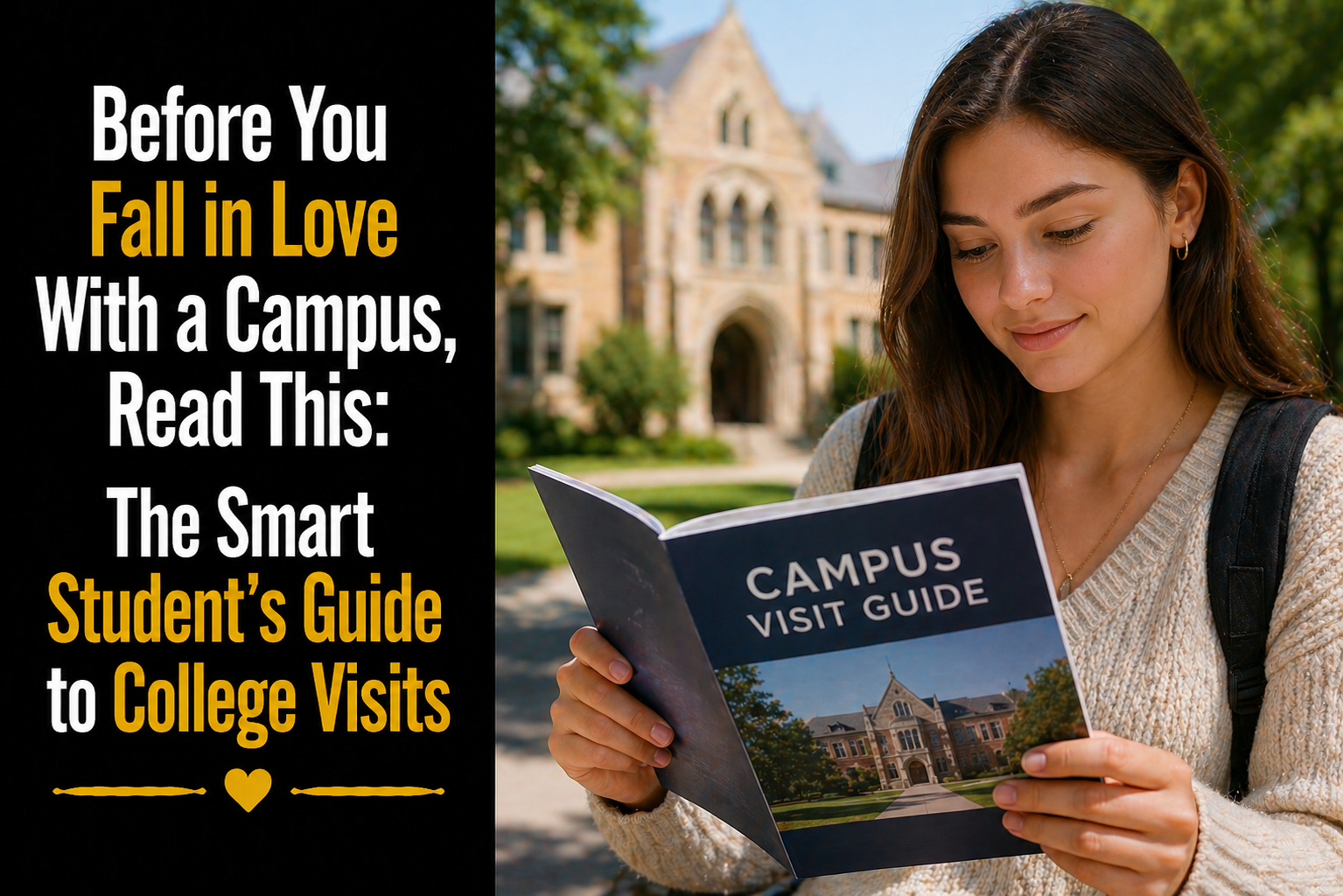
Before You Fall in Love With a Campus, Read This: The Smart Student's Guide to College Visits

3 min read
Family, let me ask you something.
Have you ever walked onto a college campus, felt the energy, saw the beautiful buildings, watched the students laughing on the lawn — and immediately thought, "This is the one"?
It happens all the time. And I get it. College visits are exciting. But here's what nobody tells you: falling in love with a campus before you do your homework is one of the most expensive mistakes a student can make.
I've seen it happen. A student tours a school, catches feelings, applies, gets accepted — and then realizes the price tag is going to cost them $80,000 in student loans. Now they're locked in emotionally and financially unprepared.
That's not freedom. That's a trap.
So today, I'm going to show you how to visit colleges the right way — so you walk away with clarity, not just excitement. Let's get to work.
When Should You Start Visiting Colleges?
The earlier, the better. Ideally, you want to start visiting schools during your junior year of high school — fall semester if possible.
Why so early? Because you need time to:
- Compare multiple schools without pressure
- Ask real questions without a deadline breathing down your neck
- Make a financially sound decision — not an emotional one
Narrow your list down to three to five schools you're genuinely serious about. Then commit to visiting at least three of them in person.
And before you book a single flight or fill up a gas tank — check the price tag first. There is no point in falling in love with a school you cannot afford without going into debt. Your future self is counting on you to make a wise decision right now.
How to Prepare Before You Set Foot on Campus
1. Know What You're Looking For
Before you visit, get clear on what actually matters to you. Write it down. Ask yourself:
- Does this school offer the degree program I want?
- Do I want a big university or a smaller campus feel?
- What kind of community do I want to be part of?
- Are there faith-based organizations or groups on campus?
- What does the career placement look like after graduation?
Clarity before the visit saves you from confusion after it. When you know what you're looking for, you'll know whether a school has it — or doesn't.
2. Do Your Research Ahead of Time
Don't show up to a campus tour knowing nothing. Spend 30 minutes on the school's website before you go. Look up:
- Total cost of attendance (tuition, room, board, fees — all of it)
- Available degree programs
- Scholarship and financial aid options
- Campus size and student population
When you do your homework ahead of time, you can use your visit to ask the deeper questions — not the basic ones you could've Googled.
3. Connect With the Admissions Office Early
Call or email the admissions office before your visit. Ask about:
- Scheduled campus tours or open house events
- Opportunities to sit in on a class
- Meetings with professors or current students
- Scholarship interviews or financial aid appointments
The admissions office wants to meet you. Don't be shy. And while you're at it — talk to your high school counselor about getting excused absences for your visit days.
4. Set a Travel Budget
College visits cost money. Be intentional about it.
If you're traveling out of state, plan ahead for gas, flights, hotels, and food. Some schools even offer free virtual tours — take advantage of those first if budget is tight. There's no shame in being strategic with your money. That's exactly the kind of thinking that will serve you well in college and beyond.
What to Do the Day of Your Visit
1. Show Up on Time — and Be Present
This sounds simple, but it matters. Show up a few minutes early to every appointment. Put your phone away when someone is talking to you. Ask follow-up questions. Take notes.
You are not just touring a campus. You are evaluating a major financial and life decision. Treat it that way.
2. Walk the Campus With Fresh Eyes
Take the guided tour — but also explore on your own afterward. Walk through the student center. Sit in the library. Grab a coffee and just watch how students interact with each other.
Ask yourself honestly: Can I see myself here for four years? Does this feel like home?
Your gut matters. But it should never override your budget.
3. Sit In on a Class If You Can
If the admissions office approves it, sit in on one or two classes in your area of interest. Pay attention to:
- How the professor teaches
- Whether students seem engaged
- The size of the class
- The overall energy in the room
This is one of the most valuable things you can do on a college visit — and most students skip it entirely.
4. Explore Everything That Matters to You
Look into clubs, student organizations, faith communities, fitness programs, internship pipelines, and career services. College is not just about a degree — it's about the full experience. Make sure this school can deliver on what matters most to you.
Questions to Ask on Every College Visit
Don't leave campus without getting answers to these:
- What is the total cost of attendance — including every fee?
- What scholarships are available, and what does the application process look like?
- What is the job placement rate for graduates in my field?
- What work-study opportunities are available on campus?
- What support systems exist for students who are struggling academically or personally?
- What do you wish you had known before your freshman year? (Ask a current student this one.)
- What makes this school different from every other school I'm considering?
- What are the options if my financial situation changes mid-year?
Write these down before you go. The answers will tell you everything you need to know.
What to Do After the Visit
1. Write Down Your Honest Impressions Immediately
The moment you leave campus, pull out your phone and record a voice memo or jot down notes. Capture:
- What you loved
- What felt off
- Questions you still have
- How you felt walking around
You're going to visit multiple schools, and the details will blur together fast. Your notes will be your anchor when it's time to decide.
2. Compare the Real Numbers
Feelings aside — lay out the actual cost of each school side by side. Look at:
- Tuition and fees
- Room and board
- Scholarship and grant offers
- Expected family contribution
- The gap you'd have to fill
If that gap requires student loans, that school is not the right choice. Period. There is always another path. A community college, a transfer plan, a school with a better aid package — there is always a way to get your degree without going into debt.
3. Follow Up With Everyone You Met
Send a thank-you email to every person who took time to meet with you — admissions counselors, professors, students. It's respectful, it's professional, and it keeps the door open if you have more questions later.
4. Go Back If You Need To
There is no rule that says one visit is enough. If you're seriously considering a school, go back. See it on a regular Tuesday — not just during an open house when everything looks perfect. Get a real feel for what daily life looks like there.
This is a four-year decision. Take the time to get it right.
Conclusion
Family, here's the bottom line.
College visits are not just about finding a campus you love. They're about finding a school that fits your future, your finances, and your freedom.
Don't let a beautiful campus or a great tour guide talk you into a decision that costs you decades of debt payments. Go in prepared. Ask the hard questions. Compare the real numbers. And choose the school that sets you up to win — not just for four years, but for the rest of your life.
Here's your move: Before your next college visit, write down your top five must-haves and the maximum you're willing to spend without taking on debt. Bring that list with you. Let it guide every conversation.
Now I want to hear from you — what's the biggest question you have about paying for college without loans? Drop it in the comments. Let's figure it out together.
Keep building,

Lorem ipsum dolor sit amet, consectetur adipiscing elit. Suspendisse varius enim in eros elementum tristique. Duis cursus, mi quis viverra ornare, eros dolor interdum nulla, ut commodo diam libero vitae erat. Aenean faucibus nibh et justo cursus id rutrum lorem imperdiet. Nunc ut sem vitae risus tristique posuere.
like what you’ve just read?
Make sure to share it with your tribe!
.webp)
like what you’ve just read?
Make sure to share it with your tribe!


