

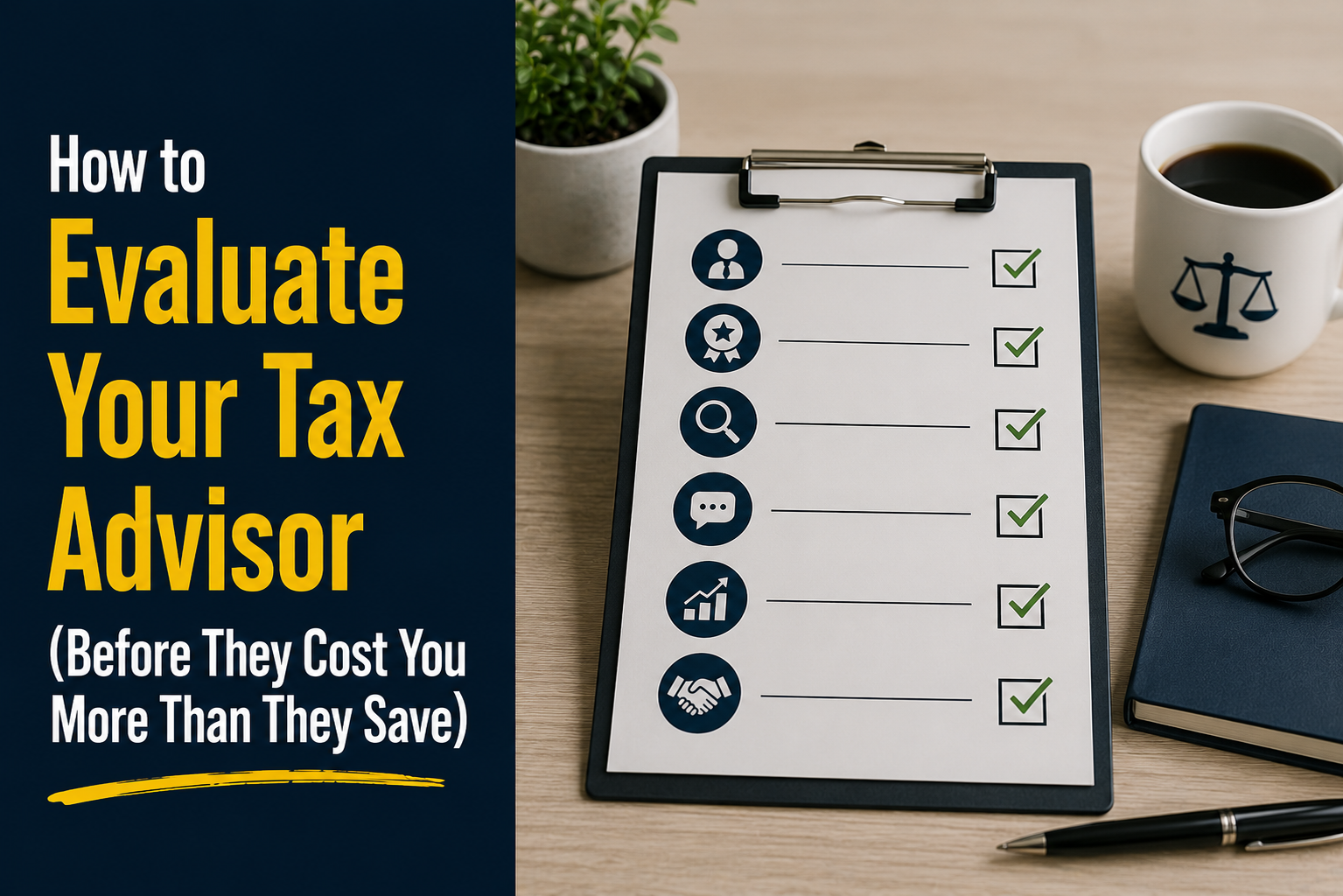
Let me be real with you, family.
Most people pick a tax advisor the same way they pick a restaurant — they Google it, read a couple of reviews, and hope for the best. But when it comes to your money and your future, hope is not a strategy.
A bad tax advisor doesn't just waste your time. They can cost you thousands of dollars, missed deductions, and in the worst case — an IRS audit you never saw coming.
But here's the good news: finding the right tax pro doesn't have to be complicated. You just need to know what to look for — and what questions to ask. That's exactly what we're breaking down today.
Let's get to work.
Are They Actually Communicating With You?
This one sounds simple, but you'd be surprised how many people are paying a tax pro who won't even return a phone call.
A great tax advisor doesn't wait for you to chase them down. They reach out. They check in. They make sure you feel informed — not confused — every time you walk away from a conversation.
If you're leaving voicemails that go unanswered for days, or you feel more lost after a meeting than before it, that's not just bad service. That's a red flag.
Your tax advisor should be able to explain your situation in plain language. Not IRS jargon. Not complicated tax code. Plain. Simple. English. If they can't do that, they're not the right fit for you.
Are They Around All Year — Or Just During Tax Season?
Here's something a lot of people don't realize: your tax situation doesn't stop changing on April 15th.
Life happens all year long. You get a new job. You start a side hustle. You buy a house. You get married. Every one of those moments has tax implications — and if your advisor only shows up in January, you're flying blind the rest of the year.
The right tax pro is available when life happens, not just when the IRS deadline is approaching.
Ask yourself: Can I call my advisor in July with a question and actually get an answer? If the answer is no, it's time to find someone who will show up for you year-round.
Do They Know Where You're Trying to Go?
A good tax advisor files your taxes. A great tax advisor understands your goals and helps you build a plan around them.
There's a big difference.
If you're working to get out of debt, build an emergency fund, or start investing for the first time — your tax advisor should know that. They should be helping you keep more of your money so you can move faster toward those goals.
The best advisors don't just look at last year. They look ahead. They ask questions. They want to understand your full picture — not just your W-2.
If your current advisor has never once asked about your financial goals, that's a conversation worth having. And if they're not interested in having it, that tells you everything you need to know.
Are They Helping You — Or Just Filing For You?
There's a version of a tax advisor who shows up, punches in your numbers, hands you a form, and collects a check. That's not a tax advisor. That's a data entry service.
A real tax advisor is proactive. They're looking for deductions you didn't know existed. They're flagging changes in the tax code that affect you. They're telling you what to do differently next year so you keep more of what you earn.
Ask your advisor directly: "What can I do differently to improve my tax situation?"
Their answer will tell you a lot. A great advisor will have specific, practical suggestions. A mediocre one will shrug and say everything looks fine.
You deserve someone who's actually in your corner — not just someone going through the motions.
Do They Have Experience With Your Situation?
Not all tax situations are the same. If you're a small business owner, a freelancer, a real estate investor, or someone building multiple income streams — you need an advisor who has walked that road before.
General tax knowledge is a starting point. But experience with your specific situation is what separates a good advisor from a great one.
Ask them directly: "Have you worked with clients in my situation before? What does that typically look like?"
If they hesitate or give you a vague answer, keep looking. The right advisor will be confident, specific, and ready to show you exactly how they can help.
Are They Teaching You — Or Keeping You in the Dark?
Here's something I believe deeply: financial education is not just for the wealthy. It's for everyone. And your tax advisor should be part of that education.
Every time you meet with your tax pro, you should walk away knowing something you didn't know before. You should feel more empowered — not more dependent.
If your advisor makes you feel like taxes are too complicated for you to understand, that's not humility on their part. That's a problem. The best advisors break things down. They explain the why behind every decision. They want you to understand what's happening with your own money.
You have every right to ask questions. And you deserve an advisor who welcomes them.
What to Do If Something Feels Off
Trust your gut, family.
If something feels off — if communication is poor, if they seem disorganized, if they're not asking about your goals — don't ignore it. Your financial future is too important to stay in a relationship out of convenience or loyalty.
It's okay to ask for a second opinion. It's okay to shop around. It's okay to move on.
Finding the right tax advisor is not about finding the cheapest option or the most impressive credentials. It's about finding someone who genuinely cares about your outcome — someone who will fight for your money the way you would fight for it yourself.
Conclusion
Look, family — your taxes are one of the biggest financial decisions you make every single year. You deserve a tax advisor who shows up, communicates clearly, knows your goals, and actively helps you keep more of what you earn.
Don't settle for someone who just files your paperwork and disappears.
Here's your move: Take these questions and use them. Whether you're evaluating your current advisor or looking for a new one, you now have a clear filter. Use it.
And remember — the goal isn't just to survive tax season. The goal is to build a life where your money is working for you, not against you.
You got this.
Keep building,

Anthony O'Neal is a bestselling author, speaker and personal finance educator. He teaches families how to get out of debt and build real wealth on any income through The Escape Plan, his show The Table with AO, and the In the Black app.
more articles
Money Tips
October 20, 2026
Five Families, Five Different Paths to an Extra $1,000
Money Tips
October 20, 2026
Extra Income for Parents: How to Build Margin Without Sacrificing Family Time
Money Tips
October 16, 2026
The Monthly Paycheck Trap (And How to Beat It Every Single Time)
Money Tips
October 16, 2026
The Right Way to Use Multiple Bank Accounts Without Losing Track of Your Money
Money Tips
October 15, 2026
The Weekly Habit That Keeps Your Budget From Falling Apart
Money Tips
October 15, 2026
When Your Budget Falls Apart Mid-Month, Do This
Where this fits
The Escape Plan
Five phases, one plan. Find where you are, then take the next step.
In The Black
A coach in your pocket
Daily money assignments and real accountability, built around the Escape Plan. Know your next step every single day.
$59.99 a quarter or $179.99 a year
Get In The Black →Get the plan in your inbox.
Weekly money tips, real stories, and my free Wealth Checklist.
Free. Unsubscribe anytime.