

Key Takeaways
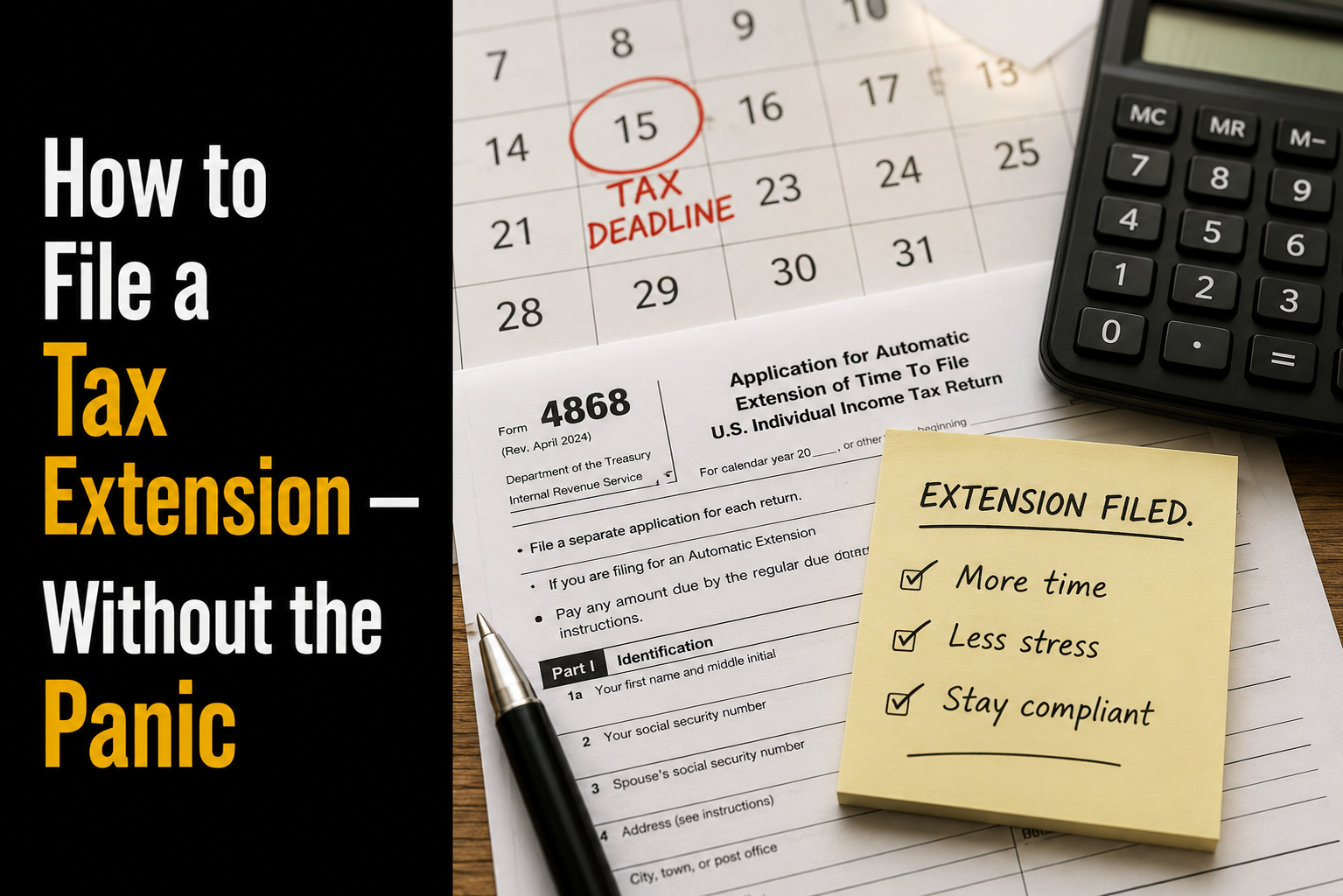
- A tax extension gives you six extra months to file your return — but it does not give you extra time to pay what you owe.
- Filing an extension is free and takes less time than you think.
- If you owe taxes and skip filing altogether, the IRS will hit you with penalties up to 25% of what you owe. Don't do that to yourself.
- The deadline to request an extension is April 15 — same as Tax Day.
Real talk, family.
Tax season sneaks up on people every single year. January feels far away. February feels manageable. Then March hits, April is right around the corner, and suddenly you're staring at a pile of documents you haven't touched — wondering if you can just... not deal with it.
I get it. Life is busy. But here's what I need you to hear before you do something you'll regret:
Do not ignore your taxes.
The IRS does not forget. And the penalty for doing nothing is far worse than the penalty for asking for more time. So let's talk about what a tax extension actually is, how to file one, and what it will — and won't — do for you.
Let's get to work.
What a Tax Extension Actually Is
A tax extension is simply a request for more time to file your tax return. That's it.
When you file for an extension, the IRS gives you an additional six months. So instead of your return being due on April 15, it moves to October 15.
And here's the part most people don't know — filing an extension is completely free. No fees. No complicated forms. No judgment. Just a simple request that buys you breathing room.
But I need to be straight with you about one thing.
An extension gives you more time to file. It does not give you more time to pay.
If you owe the IRS money, that bill is still due on April 15 — extension or not. We'll talk about what happens if you can't pay in a minute. But don't let that stop you from filing the extension. Filing is always better than hiding.
How to Actually File the Extension
This part is simpler than most people expect. Here's what you need to do.
Fill out IRS Form 4868.
That's the official extension request form. You can file it online through the IRS website, through tax software, or by mailing it in. Online is faster and you'll get a confirmation right away.
When you fill it out, you'll need a few basic things:
- Your name, address, and Social Security number
- An estimate of how much federal tax you owe
- How much you've already paid in federal taxes (check your W-2)
That's it. No essay. No explanation required. The IRS doesn't even ask you why you need more time.
One shortcut worth knowing: If you owe taxes and make a payment online before Tax Day, the IRS will automatically grant you a six-month extension — even without filing Form 4868. But you still have to file your actual return eventually.
When Filing an Extension Makes Sense
Let me be honest with you. If your taxes are simple and you're just procrastinating, stop reading this and go file your return right now. Seriously. It probably won't take as long as you think.
But there are real situations where an extension is the right move.
You're missing documents.
If you're still waiting on a W-2, a 1099, or other important paperwork, don't guess. File the extension, track down what you need, and do it right.
Life hit you hard.
A death in the family. A health crisis. A situation that turned your world upside down. The IRS can wait. File the extension, take care of yourself and your people, and come back to it when you're ready.
Your tax situation is complicated.
If you own a business, have multiple income streams, or are dealing with real estate transactions — rushing through your taxes is how you make expensive mistakes. Take the time. Do it right. And honestly, if your situation is that complex, you should be working with a tax professional anyway.
What Happens If You Don't File — At All
This is where I need you to pay close attention.
If you skip filing your return and don't request an extension, the IRS will charge you a failure-to-file penalty. That penalty starts at 5% of your unpaid tax bill every single month — and it can climb all the way up to 25%.
Let's put that in real numbers. If you owe $2,000 and you wait two months without filing or requesting an extension, you're looking at $200 in penalties — plus interest on top of that.
Now compare that to filing an extension and paying late. The failure-to-pay penalty is only 0.5% per month. Still not ideal, but it's a fraction of what you'd owe for not filing at all.
The lesson here is simple. Always file something. Even if you can't pay a dollar, file the extension. Protect yourself.
What If You Can't Pay Your Tax Bill?
This is the question I get most often, and I want to give you a straight answer.
If you can't pay everything you owe by April 15, pay as much as you can. Every dollar you pay reduces the interest and penalties that will build up over time.
After that, look into setting up a payment plan with the IRS. They do work with people. It's not a perfect situation, but it's a manageable one — and it's far better than ignoring the problem and letting it grow.
What you should never do is assume that because you can't pay in full, you shouldn't file at all. That thinking will cost you far more in the long run.
What If You're Getting a Refund?
Good news here. If the IRS owes you money, you won't face a penalty for filing late.
But here's the catch — they'll hold your refund until you file. And if you wait more than three years, the IRS keeps it. That's your money. Don't leave it on the table.
File your return. Get what's yours.
Conclusion
Family, I want you to walk away from this with one clear message.
You have options. Use them.
A tax extension is not a sign of failure. It's a tool — and smart people use the tools available to them. If you need more time, ask for it. If you can't pay in full, pay what you can and make a plan. If your situation is complicated, get help.
What you cannot afford to do is nothing.
Here's your next step: If you need an extension, go to IRS.gov right now and file Form 4868 before April 15. It's free, it's fast, and it will save you from penalties that could set your financial progress back months.
And if you're ready to stop letting tax season — or any financial season — catch you off guard, that's exactly what we work on together at anthonyoneal.com.
You've got this.
Keep building,

Anthony O'Neal is a bestselling author, speaker and personal finance educator. He teaches families how to get out of debt and build real wealth on any income through The Escape Plan, his show The Table with AO, and the In the Black app.