


Let me hit you with something real, family.
According to a recent Gallup poll, only 32% of Americans actually keep a monthly budget. And out of those who do? Most of them abandon it by week two.
Let that sit for a second. That means nearly 7 out of 10 people have zero plan for where their money goes every single month. No wonder 60% of us are living paycheck to paycheck.
But here's the thing — it's not your fault that nobody taught you this. It is your responsibility to change it.
Today, I'm putting the cookie jar on the bottom shelf. I'm breaking down exactly how to build a budget you'll actually follow — step by step, no fluff, no complicated spreadsheets. Just real moves that lead to real freedom.
Let's get to work.
1. Give Every Dollar a Job Before the Month Starts
This is the foundation, family. Before you spend a single dollar, I need you to sit down and tell your money where it's going. Every. Single. Dollar.
This is called zero-based budgeting. Your income minus your expenses should equal zero. That doesn't mean you blow everything — it means you plan everything.
- Bills
- Groceries
- Gas
- Giving
- Savings
- Debt payments
When every dollar has an assignment, you stop wondering where your money went. You already told it where to go.
2. Be Honest About Where You Actually Are
Real talk — you can't budget for a lifestyle you don't have yet.
If you're making $3,500 a month, your budget needs to reflect $3,500 a month. Not $5,000. Not what you hope to make next quarter. Right now. Today.
- Write down your actual take-home pay
- List every single bill and expense — even the small ones
- Don't forget subscriptions, that gym membership you never use, and those "little" DoorDash orders
Clarity is power. You can't fix what you won't face.
3. Stop Treating Your Budget Like a One-Time Event
Here's where most people fall off. They build a budget on January 1st, feel great about it for 11 days, and then life happens.
Your budget is not a set-it-and-forget-it deal. It's a living document. Every single month is different.
- February has Valentine's Day
- March might have a birthday
- August has back-to-school expenses
- December has the holidays
Check your calendar before you build next month's budget. Plan for what's actually coming, not just the basics. A little planning goes a long way toward keeping you on track.
4. Use the Debt Snowball to Attack What's Holding You Back
If you've got consumer debt — credit cards, car notes, personal loans — your budget needs to be a weapon against it.
Here's how the debt snowball works:
- List all your debts from smallest balance to largest
- Pay minimums on everything except the smallest
- Throw every extra dollar at that smallest debt
- When it's gone, roll that payment into the next one
This method works because it gives you quick wins. And those wins build momentum. Momentum builds discipline. Discipline builds freedom.
I don't care what the math nerds say about interest rates. Behavior change beats calculators every single time.
Pro tip: Use the free debt calculator at anthonyoneal.com/debt-calculator to see exactly when you'll be debt-free.
5. Automate the Important Stuff
Discipline is great. Systems are better.
Set up automatic transfers for the things that matter most:
- Tithes and giving — first 10% off the top
- Savings — straight into your high-yield savings account
- Debt payments — on the same day every month
- Bills — utilities, rent, insurance
When the money moves before you can touch it, you remove the temptation to spend what you've already committed to your future.
You're still the one calling the shots. Automation just makes sure the plan actually gets executed.
6. Build Your Emergency Fund and Protect Your Progress
Listen, family. Life is going to throw something at you. A flat tire. A medical bill. A broken appliance. It's not a matter of if — it's when.
If you don't have an emergency fund, every unexpected expense becomes a crisis that wrecks your budget and sends you right back into debt.
Here's the plan:
- Step one: Save $1,000 as fast as you can — that's your starter emergency fund
- Step two: Once you're consumer debt-free, build it up to 3 to 6 months of your net pay
And I need you to put that money somewhere it actually grows. Not a regular savings account making 0.01%. That's slowly going broke with a false sense of security.
Go to anthonyoneal.com/savings and compare the top high-yield savings accounts. We update that list regularly with accounts paying 4% to 5%+ with no fees and no minimums. Your money should be working while you sleep.
7. Think Weekly, Not Just Monthly
A monthly budget shows you the big picture. But thinking weekly keeps you from overspending in week one and starving in week four.
Break your big categories into weekly amounts:
- $400 grocery budget = $100 per week
- $200 personal spending = $50 per week
- $120 gas budget = $30 per week
When you pace yourself in smaller chunks, you stay in control all month long. No more "I don't know what happened to my money" moments.
8. Meal Plan Like Your Budget Depends on It
Because it does.
Food is one of the biggest budget killers in America. Between DoorDash, Uber Eats, drive-thrus, and "let's just grab something real quick" — families are spending hundreds of extra dollars every month on food they didn't plan for.
Here's the fix:
- Plan your meals for the week — breakfast, lunch, dinner, and snacks
- Make a grocery list and stick to it
- Cook at home more than you eat out
- Prep meals on Sunday so you're not tempted during the week
This one habit alone can save you $200 to $500 a month. That's money that could be going toward your debt snowball, your emergency fund, or your investment account.
9. Cut the Credit Cards
I'm going to be direct with you. Credit cards are not your friend.
They make it easy to spend money you don't have with a "deal with it later" mindset. But "later" comes with interest, fees, and stress.
If you want to stick to your budget, use the money you actually have. When the cash is gone, you're done spending for that category. Simple.
Budgeting with real money keeps you honest. Credit cards keep you in denial.
10. Learn to Say "Not This Month"
Your budget doesn't always say no. Sometimes it just says not yet.
That new pair of shoes? Save up and pay cash next month. That weekend trip your friends are planning? Maybe this isn't the month, and that's okay.
Saying no to spending now means saying yes to bigger wins later. That's not deprivation — that's discipline. And discipline is the bridge between where you are and where you want to be.
Scripture reminds us in Proverbs 21:5 — "The plans of the diligent lead surely to abundance, but everyone who is hasty comes only to poverty."
Be patient with the process. Your season of beans and rice won't last forever. But the freedom on the other side? That lasts for generations.
11. Get an Accountability Partner
Don't try to do this alone, family.
Find someone who will cheer you on and call you out when you slip. If you're married, budget together every single month. Sit down, review the numbers, and get on the same page.
If you're single, grab a friend or family member who's serious about their money. Check in monthly. Share your wins. Be honest about your struggles.
There's no weakness in asking for help. You'll go farther and faster with someone in your corner.
12. Celebrate the Wins
Paid off a credit card? Celebrate it. Stayed under your grocery budget? That's a win. Made it through a whole month without touching your emergency fund? Give yourself a high five.
Sticking to a budget is not easy. So when you do it, acknowledge it. Tell your accountability partner. Do a happy dance. You earned it.
Celebrating progress keeps you motivated and reminds you why this whole thing is worth it.
Conclusion
Look, family — budgeting isn't about restriction. It's about freedom.
We covered 12 real, practical ways to finally stop breaking your budget:
- Give every dollar a job
- Be honest about where you are
- Treat it as a monthly habit, not a one-time event
- Use the debt snowball to eliminate what's holding you back
- Automate the important stuff
- Build your emergency fund
- Think weekly
- Meal plan
- Cut the credit cards
- Learn to say "not this month"
- Get accountability
- Celebrate the wins
The truth is, you're not too far behind. You're not too broke. You're just one decision away from a new story.
Here's your move: Start tonight. Write down your income. Write down your expenses. Give every dollar a name. If you need help, use the free budgeting and wealth tracker at anthonyoneal.com/wealthbuilder to get started.
Now I want to hear from you — which of these 12 tips hit home the hardest? Drop it in the comments. Let's build together.
Keep building,

Lorem ipsum dolor sit amet, consectetur adipiscing elit. Suspendisse varius enim in eros elementum tristique. Duis cursus, mi quis viverra ornare, eros dolor interdum nulla, ut commodo diam libero vitae erat. Aenean faucibus nibh et justo cursus id rutrum lorem imperdiet. Nunc ut sem vitae risus tristique posuere.
Find $516 you didn't know you had
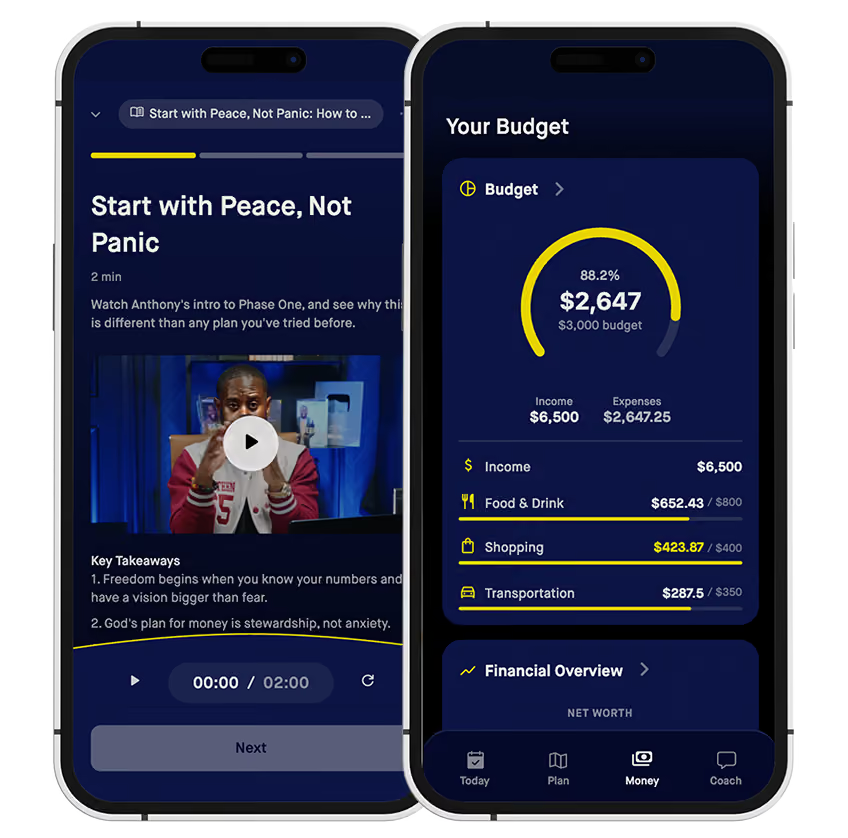
Writing the budget is the easy part. In the Black tracks your spending against the plan and puts a money assignment in your pocket every morning. The average person finds $516 in their first 30 days.
Start In the Black freeIn the Black is my app.
Recommended for this topic
Find $516 you didn't know you had
Writing the budget is the easy part. In the Black tracks your spending against the plan and puts a money assignment in your pocket every morning. The average person finds $516 in their first 30 days.
Start In the Black freeIn the Black is my app.