

Key Takeaways
- The cash envelope system is a hands-on budgeting method where you put physical cash into labeled envelopes for specific spending categories — and when the cash is gone, you stop spending.
- This system works because it forces you to feel every dollar leaving your hands, making overspending nearly impossible.
- Cash envelopes are one of the fastest ways to break the paycheck-to-paycheck cycle and start building real margin in your budget.
Listen, family. If you've ever gotten to the end of the month and asked yourself, "Where did all my money go?" — this one is for you.
Because here's the truth. 78% of Americans are living paycheck to paycheck right now. And most of them aren't broke because they don't make enough. They're broke because they don't have a system for what comes in and what goes out.
But here's the good news. There's a method that's been helping people win with money for decades. It's not fancy. It's not complicated. And it doesn't require an app, a spreadsheet, or a finance degree.
It's called the cash envelope system. And if you actually commit to it, it will change the way you see and spend money forever.
Let's get to work.
What Is the Cash Envelope System?
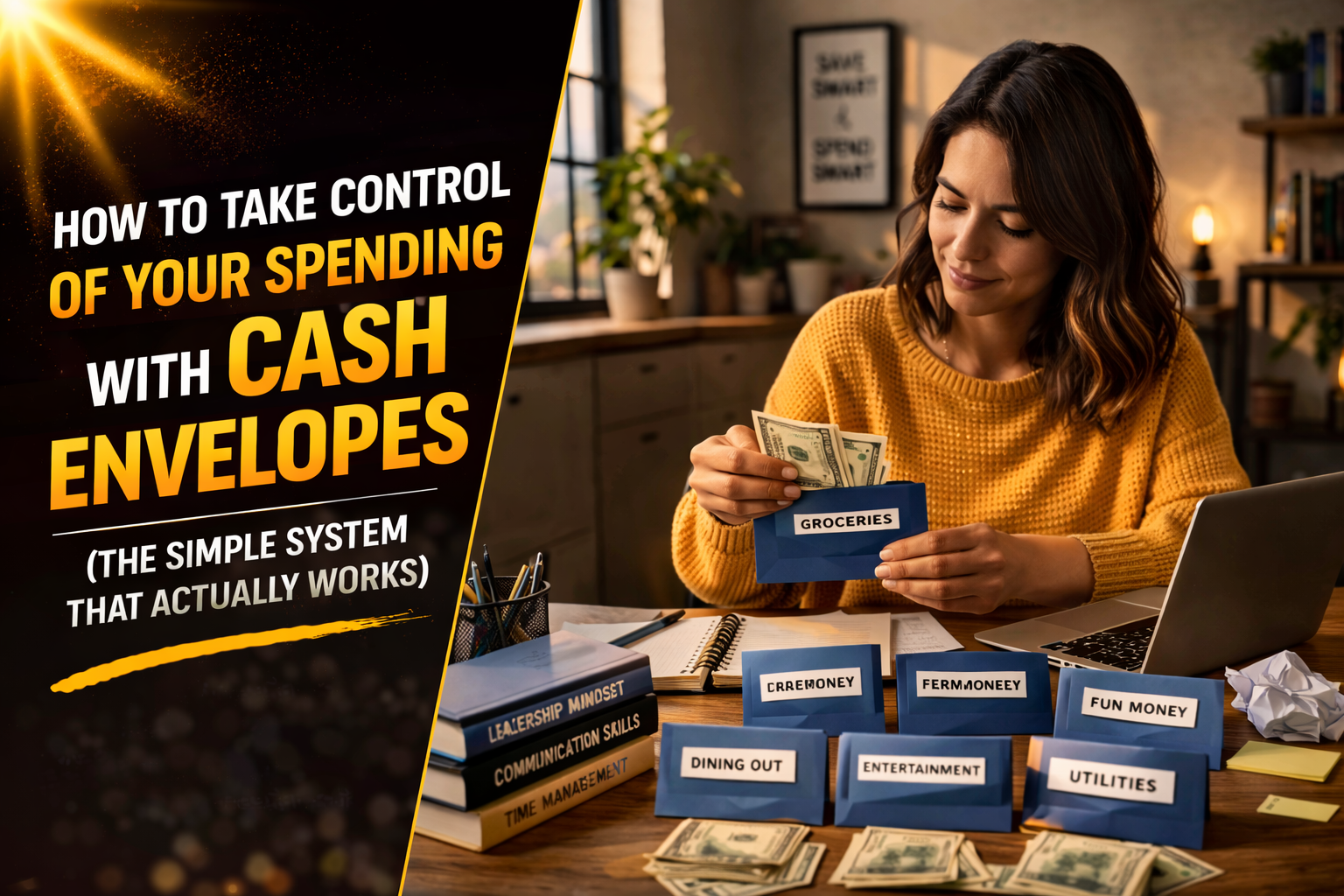
The cash envelope system is a budgeting method where you withdraw cash for specific spending categories, place that cash into labeled envelopes, and only spend what's inside each envelope for the month.
That's it. No swiping. No guessing. No "I'll check my bank app later."
When the envelope is empty, you're done spending in that category until next month. Period.
Now, I know what some of you are thinking. "Anthony, cash? In 2025? Who carries cash anymore?"
Real talk — that's exactly why this works. We've gotten so comfortable tapping cards and watching numbers on a screen that we've lost the connection between spending and sacrifice. When you hand over physical cash and watch that envelope get thinner, something shifts in your brain.
You start making different decisions. You start asking, "Do I really need this?" And that question right there is the beginning of financial freedom.
Why Does the Cash Envelope System Work?
Let me put it on the bottom shelf for you.
When you swipe a card, spending doesn't feel real. It's just a number on a screen. But when you pull three $20 bills out of your grocery envelope and hand them to the cashier, you feel that. You remember that.
Studies show that people spend 12 to 18% more when they use cards versus cash. That's not a small number, family. On a $600 monthly grocery budget, that's an extra $72 to $108 you're bleeding every single month without even realizing it.
Over a year? That's up to $1,296 that could have gone toward your emergency fund, your debt snowball, or your first investment.
The cash envelope system works because it does three things:
- Creates a spending ceiling. You physically cannot overspend what's not there.
- Builds awareness. You see exactly how much you have left every time you open that envelope.
- Develops discipline. The discomfort of running low on cash teaches you to prioritize what actually matters.
This isn't about restriction. This is about freedom. Because when you control your spending, your money stops controlling you.
How to Start Using Cash Envelopes (Step-by-Step)
Step 1: Build Your Budget First
Before you touch a single envelope, you need a zero-based budget. That means every dollar of your income has a job — giving, saving, bills, spending, investing. Income minus expenses equals zero.
If you don't have a budget yet, go to anthonyoneal.com and grab the free budgeting guide. Get that foundation locked in first.
Write down your monthly income. Then list every single expense. Every one. Don't skip the small stuff — that $7 coffee habit and that $14.99 streaming subscription count too.
Step 2: Identify Your Problem Categories
You don't need an envelope for your mortgage or your electric bill. Those get paid electronically and that's fine.
Cash envelopes are for the categories where you tend to lose control. Be honest with yourself here. For most people, that's:
- Groceries
- Restaurants and eating out
- Gas
- Entertainment and fun money
- Personal care (hair, nails, grooming)
- Clothing
- Gifts
Pick three to five categories to start. Don't overcomplicate it. You can always add more later once the habit is built.
Step 3: Withdraw Your Cash and Stuff Your Envelopes
Once you've set your budget amounts, go to the bank or ATM and pull out cash for each category. Label your envelopes clearly and put the exact amount inside each one.
Let's say your budget looks like this:
Category Monthly Budget
Groceries $500
Restaurants $150
Gas $200
Fun Money $100
Personal Care $75
That's $1,025 in cash, split across five envelopes.
If you get paid twice a month, split it up. First paycheck — stuff half. Second paycheck — stuff the other half. The math still works.
Step 4: Spend Only What's in the Envelope
This is where the discipline kicks in. When you go to the grocery store, you bring the grocery envelope. When you go out to eat, you bring the restaurant envelope.
The rule is simple: if the envelope is empty, you don't spend.
No borrowing from other envelopes. No running to the ATM for more. No "I'll just use my card this one time." That one time turns into every time, and now the system is broken.
If your grocery envelope runs low by week three, it's time to get creative. Raid the pantry. Make meals with what you already have. Plan your meals for the week before you shop.
This is the part that builds the muscle. It's uncomfortable at first. But that discomfort is teaching you something that no app or spreadsheet ever will — how to live within your means.
Step 5: Track and Adjust Monthly
At the end of the month, look at your envelopes. Did you run out too fast in one category? Did you have money left over in another?
Adjust. Maybe you need $550 for groceries and only $100 for restaurants. That's fine. The budget is a living document. It should reflect your real life, not some fantasy version of it.
The goal isn't perfection. The goal is progress.
5 Benefits of Using Cash Envelopes
- Overspending becomes almost impossible. When the cash is gone, it's gone. There's no overdraft. There's no credit line. There's just an empty envelope telling you to stop.
- You become intentional with every purchase. Swiping a card is mindless. Counting out cash is a decision. And better decisions lead to better outcomes.
- You build financial discipline fast. There's no shortcut to discipline. But this system accelerates it because the feedback is immediate. You see the money leave. You feel the consequence in real time.
- You eliminate impulse purchases. That random Target run where you went in for toothpaste and came out $87 lighter? That stops when you only have $30 cash in your pocket.
- You free up money for what actually matters. Every dollar you don't waste on impulse spending is a dollar that can go toward your debt snowball, your emergency fund, or your first investment. That's how you start building real wealth.
Common Mistakes to Avoid
Borrowing between envelopes. This is the number one way people sabotage the system. Your restaurant envelope is empty but your grocery envelope still has $80? That doesn't mean you go out to eat. That means you cook at home. Discipline is the whole point.
Not planning for irregular expenses. Birthdays, car maintenance, annual subscriptions — these aren't surprises. They happen every year. Create envelopes for them and contribute a little each month so you're not blindsided.
Carrying all your envelopes everywhere. Only take the envelope you need for that specific trip. Leave the rest at home in a safe place. Cash can't be replaced like a debit card.
Giving up after one bad month. You're going to mess up. You're going to overspend in a category. You're going to feel frustrated. That's normal. The system doesn't fail because you had a rough month. It fails when you quit. Get back up and stuff those envelopes again.
Skipping the budget step. Envelopes without a budget is just carrying cash around. The budget is the blueprint. The envelopes are the tool. You need both.
What to Do With Leftover Cash
If you get to the end of the month and there's still money sitting in an envelope — first of all, celebrate that win. You came in under budget. That's not small.
Now, put that money to work. Here's the priority:
- If you still have consumer debt — throw it at your debt snowball. Every extra dollar accelerates your payoff date.
- If you're building your emergency fund — add it to your high-yield savings account. Go to anthonyoneal.com/savings to find the best rates right now.
- If you're debt-free with a full emergency fund — invest it. Even $20 into an index fund is $20 working for your future. Go to anthonyoneal.com/invest to compare platforms.
Don't let leftover cash just sit there. Make it move. Make it multiply. Your children's children's children will thank you for it.
Can You Use Cash Envelopes for Online Shopping?
Real talk — the cash envelope system works best for in-person purchases. That's where the magic of physically handing over money does its thing.
But we live in a world where online shopping is part of life. So here's how you handle it:
- Write your budgeted amount on the outside of the envelope. Even if you're not pulling cash out, the envelope is your tracker.
- Log every online purchase on the back of the envelope. Subtract it from your total just like balancing a checkbook.
- When the written balance hits zero, you're done. No more clicking "Add to Cart."
It takes a little more discipline, but it works. The key is that the envelope is still your accountability partner — whether the cash is physical or tracked.
What About Emergencies?
Life happens. The car breaks down. A medical bill shows up. Something urgent comes through that you didn't plan for.
If a real emergency hits mid-month, here's what you do:
- If you're married or in a partnership — sit down together and decide which envelopes to adjust. This is a joint decision. No solo moves.
- If you're single — call someone you trust. An accountability partner. A mentor. Someone who will help you think clearly and not just react emotionally.
- Use your emergency fund. This is exactly what it's for. If you don't have one yet, make that your next priority. Start with $1,000 and build from there.
Don't drain your envelopes for every unexpected expense. That's not an emergency — that's poor planning. Real emergencies are rare. Inconveniences are common. Learn the difference.
Frequently Asked Questions
How much cash should I start with?
Start with whatever your budget says. If your problem categories total $800 a month, that's your number. Don't overthink it. The amount will adjust as you learn your spending patterns.
What if I feel unsafe carrying cash?
Only carry the envelope you need for that specific errand. Leave the rest locked up at home. You don't need all five envelopes at the grocery store.
Does the cash envelope system work for couples?
It works even better for couples. When both of you agree on the budget and the envelope amounts, you're on the same team. No more "I didn't know you spent that." The envelopes keep both of you accountable and honest.
How long should I use this system?
Use it until the habits are built. For some people, that's six months. For others, it's a lifestyle. There's no expiration date on financial discipline. If it's working, keep going.
What if I hate carrying cash?
I hear you. But let me ask you this — do you hate being broke more? The discomfort of carrying cash is temporary. The freedom that comes from controlling your spending is permanent. Try it for 90 days. If it doesn't change your financial life, I'll be shocked.
Conclusion
Family, this isn't about going backwards. This isn't about being old school. This is about taking control.
The cash envelope system works because it puts you back in the driver's seat. No more wondering where your money went. No more overdraft fees. No more guilt at the end of the month.
Here's what we covered:
- Build your zero-based budget first — every dollar gets a job.
- Pick your problem categories — start with three to five.
- Withdraw cash and stuff your envelopes — make it real.
- Spend only what's inside — when it's gone, it's gone.
- Track, adjust, and keep going — progress over perfection.
You're not too far behind. You're not too broke. You're just one system away from a completely different financial life.
Here's your move: Pick your top three overspending categories, set your budget amounts, and stuff those envelopes before your next paycheck hits. Start this week. Not next month. Not "when things settle down." This week.
Now I want to hear from you — which spending category do you struggle with the most? Drop it in the comments. Let's build together.
Keep building,

Lorem ipsum dolor sit amet, consectetur adipiscing elit. Suspendisse varius enim in eros elementum tristique. Duis cursus, mi quis viverra ornare, eros dolor interdum nulla, ut commodo diam libero vitae erat. Aenean faucibus nibh et justo cursus id rutrum lorem imperdiet. Nunc ut sem vitae risus tristique posuere.
Find $516 you didn't know you had
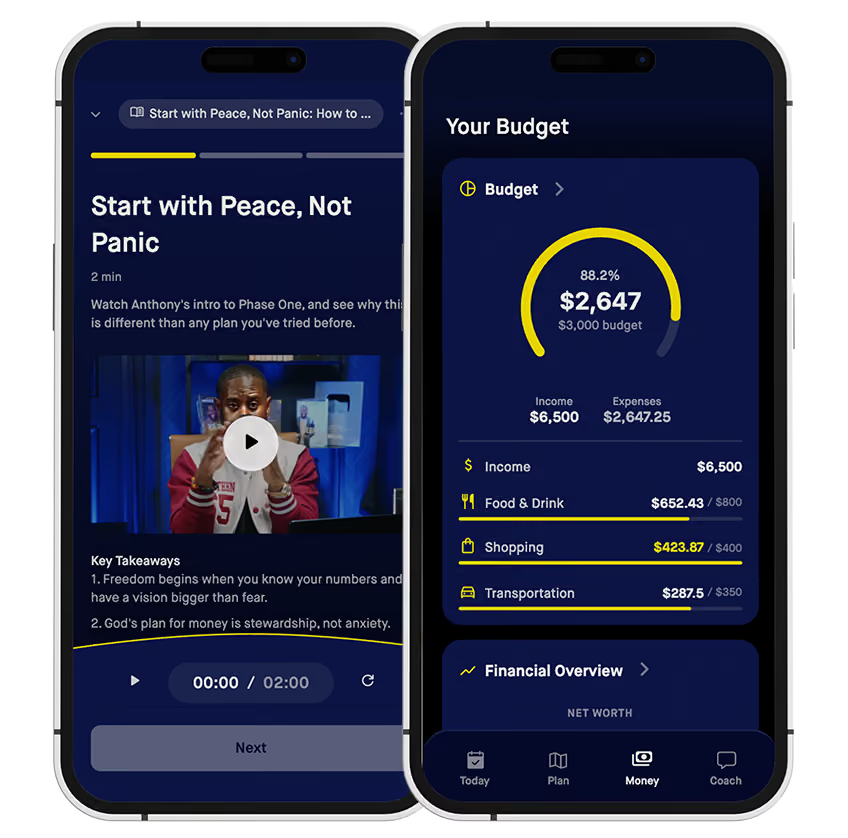
Writing the budget is the easy part. In the Black tracks your spending against the plan and puts a money assignment in your pocket every morning. The average person finds $516 in their first 30 days.
Start In the Black freeIn the Black is my app.
Recommended for this topic
Find $516 you didn't know you had
Writing the budget is the easy part. In the Black tracks your spending against the plan and puts a money assignment in your pocket every morning. The average person finds $516 in their first 30 days.
Start In the Black freeIn the Black is my app.