

Key Takeaways
- Most households waste hundreds of dollars a year on electricity without even realizing it.
- Heating, cooling, and phantom energy are the biggest silent budget killers in your home.
- Simple habit changes — costing little to nothing — can save you $500 or more every year.
- Every dollar you save on utilities is a dollar you can throw at your debt or build your future with.
Family, let me ask you something.
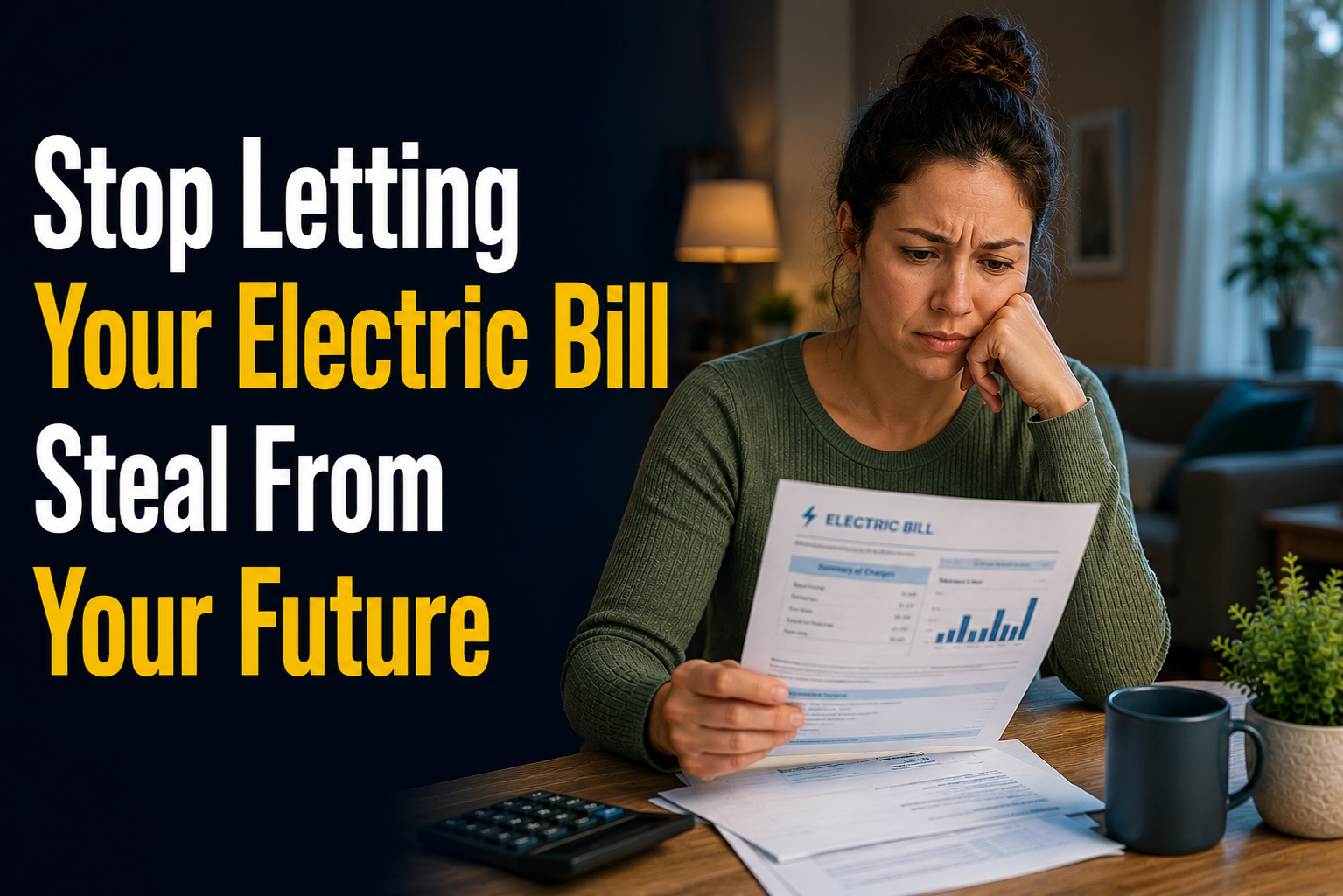
When was the last time you actually looked at your electric bill — not just paid it, but looked at it?
For most people, it's one of those bills that just shows up, hurts a little, and gets paid without question. Month after month. Year after year.
But here's the truth: the average American household spends over $1,700 a year on electricity. And a big chunk of that? Pure waste. Lights left on in empty rooms. Appliances draining power while you sleep. A thermostat set higher than it needs to be.
Nobody taught us this stuff. I get it. But today, that changes.
I'm going to walk you through simple, practical ways to cut your electric bill down — starting this week. No major renovations. No expensive upgrades required. Just smart, intentional habits that keep more money in your pocket where it belongs.
Let's get to work.
Why Your Electric Bill Is So High
Before we fix the problem, let's understand it.
Your electric bill doesn't spike for no reason. The biggest culprits are almost always the same:
Heating and cooling eat up nearly half of your total energy use. Most people never think about optimizing it.
Phantom energy — appliances and electronics pulling power even when they're turned off — quietly adds 5–10% to your bill every single month.
Old habits and outdated equipment like incandescent bulbs, inefficient appliances, and air leaks around windows and doors bleed money slowly and consistently.
The good news? Every single one of these is fixable. And most of the fixes are free.
Here's how to tackle each one.
Whole-Home Savings
1. Start With an Electricity Audit
You can't fix what you don't understand. An electricity audit shows you exactly where your home is wasting energy — and where the easiest wins are.
Here's the thing most people don't know: many utility companies offer this service for free. Call yours and ask. If they don't, the U.S. Department of Energy has free online tools that walk you through it yourself.
This one step alone can reveal savings you never would have found on your own.
2. Stop Phantom Energy From Robbing You
Phantom energy is real, and it is expensive. Your toaster, coffee maker, phone charger, printer, and TV are all pulling electricity right now — even if they're switched off.
That silent drain adds up to 5–10% of your monthly bill. For nothing.
Unplug devices when you're not using them. Or invest in a smart power strip that cuts the power automatically. Either way, stop paying for energy you're not even using.
3. Shift Away From Peak Hours
Most power companies charge higher rates during peak demand hours — typically evenings when everyone gets home from work and cranks up their appliances at the same time.
Run your dishwasher, washing machine, and dryer during off-peak hours instead — early morning or late at night. Check your utility company's website to find out exactly when peak hours are in your area. This one shift can make a noticeable difference on your next bill.
4. Call and Ask About Discounts
This is one of the most overlooked money moves out there. Most people never ask — but many electric companies offer:
- Discounts for going paperless
- Rebates for energy-efficient home improvements
- Special programs for qualifying households
- Seasonal savings opportunities
One phone call. That's all it takes. If you don't ask, you'll never know what you're leaving on the table.
5. Turn Down Your Water Heater
Most water heaters come factory-set to 140 degrees. You don't need it that hot. Turning it down to 120 degrees can save you $36–$61 a year — and it takes about two minutes to do.
Find the dial on the side of your unit and turn it down today. Small move, real savings.
Lighting
6. Turn Off Lights You're Not Using
This one sounds almost too simple — but the math doesn't lie.
Five lights left on in empty rooms for 10 hours a day adds up to real money wasted every single month. Multiply that across a full year and you're looking at dollars that could have gone toward your emergency fund or your debt snowball.
Make it a house rule: if you're not in the room, the light goes off. Natural light is free — use it.
7. Switch to LED Bulbs
If you're still running old incandescent bulbs, you're paying way more than you need to. LED bulbs use up to 90% less energy and last up to 25 times longer.
The average household saves around $225 a year just by making this switch. Yes, LEDs cost a little more upfront. But they pay for themselves quickly — and then they keep saving you money for years.
8. Add Dimmer Switches in High-Use Rooms
Dimmer switches let you use only as much light as you actually need. Less light, less energy, lower bill. They're inexpensive, easy to install, and they make your home feel cozier too. Win-win.
Heating and Cooling
9. Program Your Thermostat
Heating and cooling are the biggest energy expenses in your home — full stop. But here's what most people don't know: adjusting your thermostat by just 7–10 degrees for 8 hours a day can cut your annual energy bill by 10%.
That's real money saved with almost zero effort.
When you leave for work, adjust it. When you go to bed, adjust it. If you want to make it even easier, a programmable thermostat does it automatically. If it fits your budget, it's one of the smartest home investments you can make.
10. Seal Your Air Leaks
Your home might be leaking money right now through gaps around windows, doors, and air ducts — and you'd never know it just by looking.
Walk through your home and check for drafts. Feel around door frames and window edges. Listen for whistling on windy days.
A $30 investment in weather stripping and caulk can save you up to 20% on your energy costs. That's one of the best returns on investment you'll find anywhere in your home.
11. Replace Your Air Filter Every Three Months
A dirty air filter makes your HVAC system work harder than it needs to. That means more energy used, higher bills, and a shorter lifespan for your unit.
Set a calendar reminder right now. Every three months, swap it out. It takes five minutes and costs a few dollars — and it protects a system that costs thousands to replace.
12. Keep Doors and Blinds Closed
Every time you leave the front door open while the AC or heat is running, you're paying to cool or heat the outside. Close the door.
In the summer, keep your blinds closed during the hottest part of the day. It keeps the heat out and gives your AC a break. In the winter, open them on sunny days to let natural warmth in. Simple, free, and effective.
Laundry Room
13. Wash in Cold Water
Here's something most people don't know: about 90% of the energy your washing machine uses goes toward heating the water — not actually cleaning your clothes.
Switch to cold water. Your clothes will get just as clean, they'll last longer, and your bill will go down. This is one of the easiest swaps on this entire list.
14. Line Dry When You Can
Dryers are among the biggest energy consumers in your home. When the weather allows, hang your clothes outside or on a drying rack inside. Your clothes will last longer, and you'll use zero electricity to dry them.
When you do use the dryer, run it on a lower heat setting. It takes a little longer, but it uses significantly less energy.
15. Clean the Lint Trap After Every Load
A clogged lint trap makes your dryer work harder and longer to dry your clothes. That means more energy and more money. It also creates a serious fire hazard.
Clean it every single time. No exceptions.
16. Wait for Full Loads
Don't run the washer or dryer half-empty. The machine uses roughly the same amount of energy whether it's half full or completely full — so wait until you have a full load before you run it.
This applies to your dishwasher too. Patience here saves real money.
Kitchen
17. Air Dry Your Dishes
The heated dry cycle on your dishwasher uses a surprising amount of energy. Skip it. After the wash cycle finishes, crack the door open and let the dishes air dry on their own.
Zero extra effort. Lower energy use. Done.
18. Set Your Refrigerator to the Right Temperature
Your fridge should be set between 35–38 degrees. Any colder and you're wasting energy without any benefit to your food. Most people have never checked this setting — check yours today.
19. Keep Your Freezer Full
A full freezer is more energy-efficient than an empty one. The frozen items act as insulation and help maintain the temperature without the motor working as hard.
If your freezer is half-empty, fill the space with water bottles. Seriously — it works.
20. Use Smaller Appliances When You Can
Your microwave, air fryer, and toaster oven use far less energy than your full-size oven. When you're reheating leftovers or cooking a small meal, reach for the smaller appliance first.
Save the big oven for when you actually need it.
21. Keep the Oven Door Closed
Every time you open the oven to peek at your food, the temperature drops and the oven has to burn more energy to recover. Use the oven light instead. Let it cook. Keep the door closed.
Put Those Savings to Work
Here's what I really want you to hear, family.
Cutting your electric bill isn't just about saving money. It's about redirecting that money with purpose.
If you save $100 a month on utilities, that's $1,200 a year. That's your starter emergency fund. That's a debt you can knock out. That's money going toward your future instead of disappearing into a bill you never questioned.
Wealth isn't built in one big moment. It's built in a hundred small, intentional decisions made consistently over time. This is one of them.
Conclusion
Family, this is not complicated. It just takes intention.
We covered 21 ways to lower your electric bill — from auditing your home and unplugging phantom energy, to sealing air leaks, switching to LED bulbs, washing in cold water, and using your appliances smarter every single day.
You don't have to do all 21 today. Pick three. Start there. Come back next month and add three more. That's how real change happens.
Here's your move: Call your electric company this week and ask about a free energy audit and any discounts you might qualify for. Then pick one tip from each section of this article and put it into practice before your next bill arrives.
Now I want to hear from you — which one of these surprised you the most? Which one are you starting with? Drop it in the comments below. Let's build together.
Keep building,

Lorem ipsum dolor sit amet, consectetur adipiscing elit. Suspendisse varius enim in eros elementum tristique. Duis cursus, mi quis viverra ornare, eros dolor interdum nulla, ut commodo diam libero vitae erat. Aenean faucibus nibh et justo cursus id rutrum lorem imperdiet. Nunc ut sem vitae risus tristique posuere.

Find $516 you didn't know you had
Writing the budget is the easy part. In the Black tracks your spending against the plan and puts a money assignment in your pocket every morning. The average person finds $516 in their first 30 days.
Start In the Black freeIn the Black is my app.
Recommended for this topic
Find $516 you didn't know you had
Writing the budget is the easy part. In the Black tracks your spending against the plan and puts a money assignment in your pocket every morning. The average person finds $516 in their first 30 days.
Start In the Black freeIn the Black is my app.