
Is a Will All You Really Need? Here's the Truth Nobody Tells You

3 min read
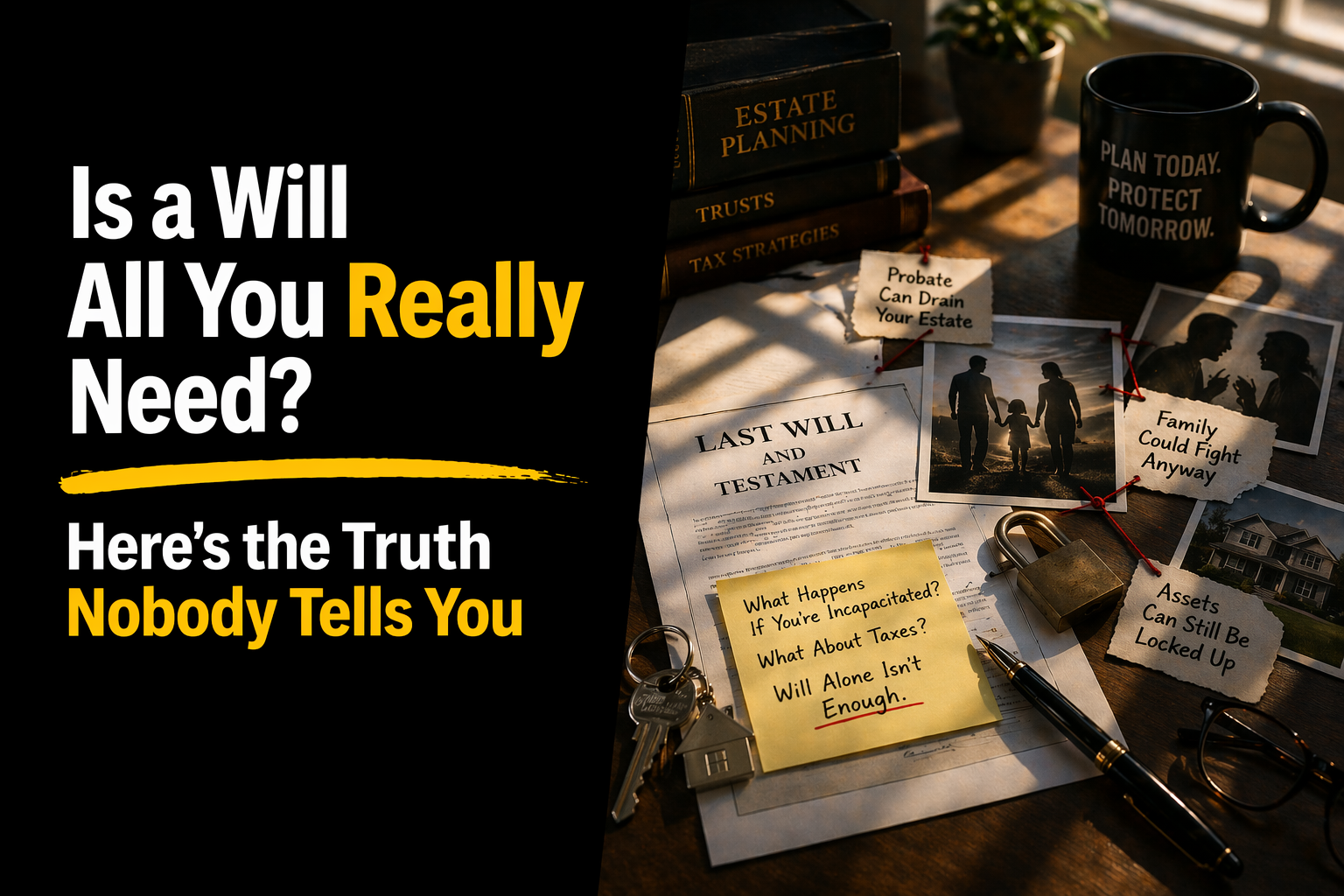
Key Takeaways
- Most people have a simple estate — and a simple will is enough to protect your family.
- A simple estate has modest assets, clear beneficiaries, and no complicated tax situations.
- A complex estate involves significant wealth, business ownership, blended families, or dependents with special needs.
- If your estate is complex, hire an attorney. If it's simple, an online will can save you time and money.
- Either way, having something in place is better than leaving your family with nothing.
Listen, family. Let me be straight with you.
According to a recent Gallup poll, only 46% of American adults have a will. That means more than half of us — over half — have zero plan for what happens to our stuff, our money, and our families when we're gone.
And in the Black community? That number is even lower.
This isn't about being morbid. This isn't about fear. This is about stewardship. This is about love. Because if you say you love your family but you haven't protected them with a plan, we need to have an honest conversation.
Today, I'm breaking down whether a simple will is enough for your situation — or if you need something more. And I promise you, by the end of this, you're going to know exactly what move to make.
Let's get to work.
First, Let's Talk About What an "Estate" Actually Is
When you hear the word estate, your mind probably goes to mansions and trust funds. But here's the truth — your estate is just your stuff.
Your car. Your savings account. Your 401(k). Your house. That life insurance policy. Your grandmother's ring. All of it.
If you own anything and you have people you love, you have an estate. Period.
The real question isn't whether you have one. It's whether your estate is simple or complex — because that determines what kind of protection you need.
Cookie jar on the bottom shelf. Let me break it down.
Simple Estate vs. Complex Estate — What's the Difference?
What a Simple Estate Looks Like
A simple estate is straightforward. No special tax situations. No complicated family dynamics. No business partnerships that need untangling.
Here's the profile:
- Net worth under $1 million (including your home, savings, retirement accounts)
- Clear beneficiaries — you know exactly who gets what
- No business ownership or partnerships
- No property in multiple states
- No dependents with special needs requiring long-term care
- No blended family situations that could create disputes
If that sounds like you, a simple will is likely all you need. And that should be a relief, not a stress.
What a Complex Estate Looks Like
A complex estate has more moving parts. More money. More people. More potential for things to go sideways if there's no plan.
Signs your estate might be complex:
- You own real estate in more than one state
- You own a business or have a business partnership
- Your net worth is over $1 million
- You expect estate taxes to apply (net worth over $13.99 million for individuals or $27.98 million for married couples in 2025)
- You have a child or dependent with special needs
- You have a blended family — stepchildren, remarriage situations
- You want to control how and when your assets are distributed after you pass
If even one of those applies to you, your estate is likely complex and you need professional help.
Let Me Show You What This Looks Like in Real Life
Example 1: Keisha — Simple Estate
Keisha is 34, single, renting an apartment in Atlanta. She's got $45,000 in her 401(k), $8,000 in a high yield savings account, and a paid-off Honda Accord. If something happened to her, she wants everything split between her mom and her younger sister.
Keisha has a simple estate. A simple online will handles this perfectly. No attorney needed.
Example 2: Marcus and Tanya — Simple Estate with Kids
Marcus and Tanya are married with two kids, ages 6 and 9. They own a home worth $280,000 with a mortgage. Combined, their retirement accounts, savings, and life insurance put their net worth around $400,000. They want everything to go to each other, and if something happens to both of them, they want Tanya's sister to manage the money until the kids turn 21.
Even with kids, this is still a simple estate. They need a will with a testamentary trust — which is included with most quality online will packages. That testamentary trust just means someone they choose manages the assets until their children are old enough to handle it themselves.
Example 3: Darnell — Complex Estate
Darnell owns a barbershop with his business partner, a rental property in North Carolina, and his primary home in Maryland. His net worth is around $1.2 million. He has two kids from his first marriage and a stepdaughter from his current marriage.
Darnell has a complex estate. Business ownership, property in multiple states, blended family. He needs an estate attorney to help him set up a will and likely a trust to make sure everything is handled properly and legally.
Example 4: Jasmine — Complex Estate
Jasmine is a single mom with a 12-year-old son who has autism and will need lifelong care. Her net worth is only $350,000, but because of her son's special needs, she needs a special needs trust to make sure he's provided for without disqualifying him from government benefits.
Even though Jasmine's net worth is modest, her estate is complex because of her son's situation. She needs an attorney.
What Exactly Does a Simple Will Do?
A simple will covers the essentials:
- Names your beneficiaries — who gets what
- Appoints a guardian for your minor children
- Includes a testamentary trust — appoints someone to manage assets for your kids until they're old enough
- Names an executor — the person responsible for carrying out your wishes
That's it. Simple. Clear. Done.
And here's what a lot of people don't realize — a quality online will is customized to your state's laws. It's not some generic template. It's a legal document that holds up in court.
When Do You Need More Than a Will?
If your estate is complex, you'll likely need a trust in addition to your will. Here's the difference:
A will tells people what you want to happen with your stuff after you die. It goes through probate — which is the legal process where a court validates your will and oversees the distribution.
A trust lets you transfer assets to a third party who manages them according to your instructions. Trusts can help you:
- Avoid probate — keeping your business private and saving time
- Minimize estate taxes — for high net worth individuals
- Control distribution — like releasing money to your kids at age 25 instead of all at once
- Protect special needs dependents — without affecting their government benefits
There are different types of trusts — living trusts, testamentary trusts, special needs trusts — and an estate attorney can help you figure out which one fits your situation.
The Real Cost of Doing Nothing
Family, I need to be direct with you here.
If you die without a will — what the law calls dying "intestate" — the government decides who gets your money. Not your mama. Not your spouse. Not your kids. The government.
They will take their cut in taxes. They will distribute your assets based on state law, not based on what you wanted. And your family? They'll be left fighting, waiting, and paying legal fees during the worst season of their lives.
I've seen it happen. Families torn apart. Houses lost. Savings drained by probate costs. All because someone didn't take two hours to set up a will.
Real talk — if you've got a designer bag in your closet but no will in your filing cabinet, we need to have a conversation about priorities.
Scripture reminds us in Proverbs 13:22: "A good man leaves an inheritance to his children's children."
That inheritance doesn't just mean money. It means order. It means peace. It means your family isn't left scrambling because you didn't plan.
What Should You Do Right Now?
Here's your action plan. Simple. No excuses.
If Your Estate Is Simple:
- Get an online will today. It takes less than an hour and costs around $100 to $200.
- Make sure it includes a testamentary trust if you have minor children.
- Set up financial and medical power of attorney — so someone you trust can make decisions if you're incapacitated.
- Review your beneficiaries on your 401(k), life insurance, and bank accounts. These override your will, so make sure they're current.
- Tell someone where your documents are. A will doesn't help if nobody can find it.
If Your Estate Is Complex:
- Hire an estate attorney. Not your cousin who watches legal YouTube. A real, licensed estate attorney.
- Discuss whether you need a trust — and what type.
- Get your business documents in order — operating agreements, partnership agreements, succession plans.
- Set up financial and medical power of attorney.
- Review everything annually — as your life changes, your estate plan should too.
"But Anthony, I'm Young. I Don't Need This Yet."
Yes, you do.
Tomorrow is not promised. I don't care if you're 25 with $500 in your savings account. If you have people who depend on you — or people you love — you need a will.
And here's the thing. You can always update it. Start with a simple will now. As your life gets more complex — marriage, kids, business, property — you upgrade your plan. But you start today.
Frequently Asked Questions
How do I know if my estate is simple or complex?
If your net worth is under $1 million, you don't own a business, you don't have property in multiple states, and your beneficiaries are straightforward — your estate is simple. If any of those factors apply, consult an attorney.
Do I need a trust if I have kids?
Not necessarily a full trust. Most simple wills include a testamentary trust, which appoints someone to manage your assets for your minor children until they reach an age you specify. That's usually enough for simple estates.
Can I start with a will and add a trust later?
Absolutely. Your estate plan should grow with you. Start with a will now, and as your wealth and family situation evolve, work with an attorney to add a trust or update your plan.
What's the difference between a will and a trust?
A will goes into effect after you die and goes through probate. A trust can go into effect while you're alive, avoids probate, and gives you more control over how and when your assets are distributed.
How much does a will cost?
A quality online will typically costs between $100 and $200. An attorney-drafted will for a complex estate can range from $1,000 to $3,000 or more depending on your situation.
Conclusion
Look, family — this isn't about fear. This is about freedom. This is about stewardship.
We covered the difference between a simple and complex estate. We walked through real examples so you can see where you fall. And I gave you the exact steps to take — whether you need a simple online will or a full estate plan with an attorney.
The truth is, most of you reading this have a simple estate. Which means you're one hour and $200 away from protecting everything you've built and everyone you love.
Here's your move: Before the end of this week, get your will done. If your estate is simple, use a trusted online will maker. If it's complex, schedule a consultation with an estate attorney. Either way, stop putting this off.
Now I want to hear from you: Do you have a will or estate plan in place? If not, what's been holding you back? Drop it in the comments — let's build together.
Keep building,

Lorem ipsum dolor sit amet, consectetur adipiscing elit. Suspendisse varius enim in eros elementum tristique. Duis cursus, mi quis viverra ornare, eros dolor interdum nulla, ut commodo diam libero vitae erat. Aenean faucibus nibh et justo cursus id rutrum lorem imperdiet. Nunc ut sem vitae risus tristique posuere.
like what you’ve just read?
Make sure to share it with your tribe!
.webp)
like what you’ve just read?
Make sure to share it with your tribe!


