
Stop Guessing With Your Money: A Simple Guide to Picking the Right Mutual Funds

3 min read
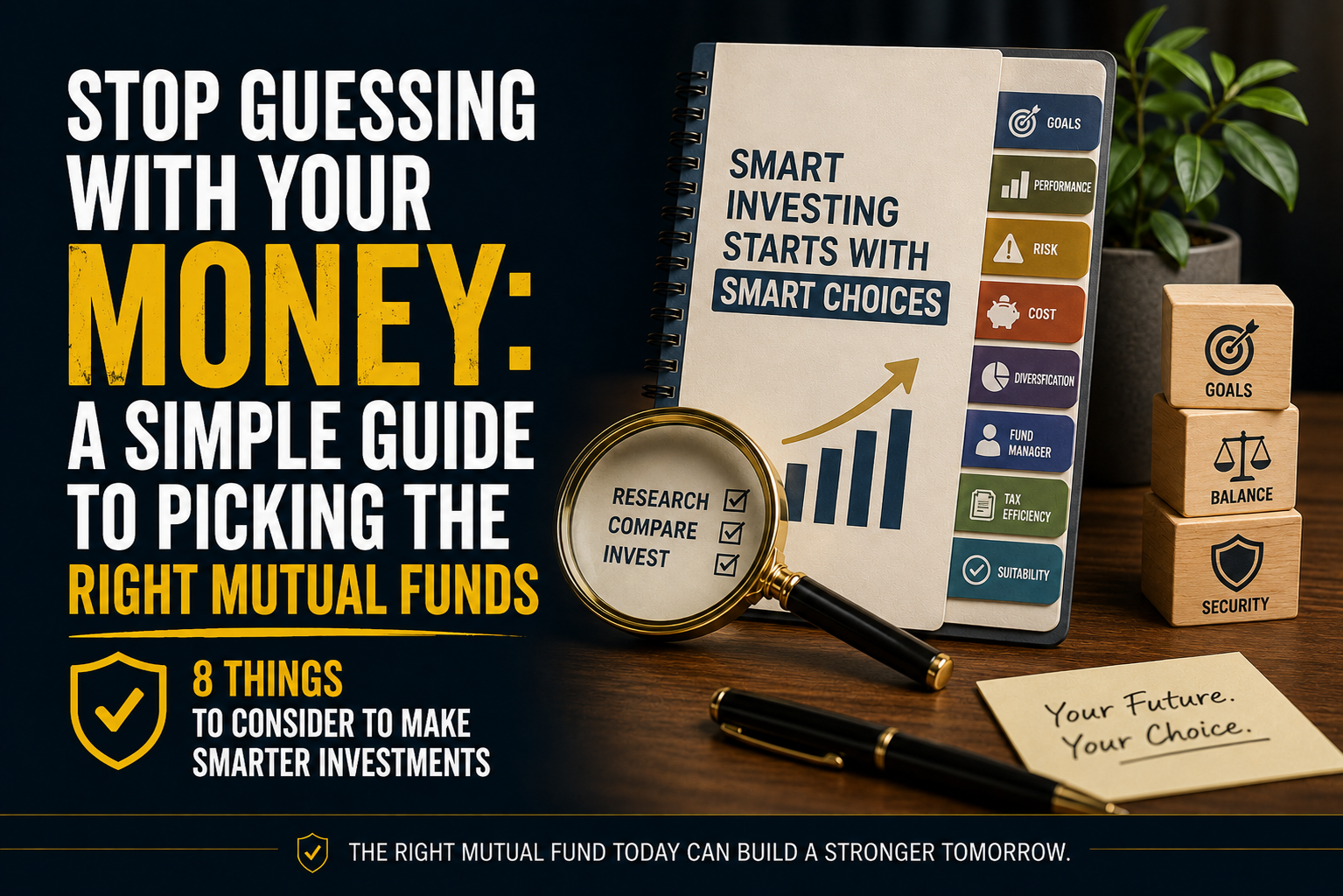
Key Takeaways
- Mutual funds allow you to pool your money with other investors to build wealth without picking individual stocks.
- There are four types of mutual funds you should know about: growth and income, growth, aggressive growth, and international.
- Choosing the right fund means looking at track record, fund manager experience, fees, and diversification.
- Mutual funds are one of the most accessible ways for everyday Americans to build long-term wealth.
- If you're unsure where to start, work with a trusted financial professional who can guide you based on your specific situation.
What if I told you that most people are either not investing at all — or investing in the wrong things — and have no idea?
That's not an exaggeration. Millions of hardworking Americans are leaving serious money on the table every single year because nobody ever sat them down and explained how this stuff actually works. And in our community, that gap is even wider.
But here's the truth: building wealth through investing doesn't have to be complicated. You don't need a finance degree. You don't need to be rich to start. You just need the right information and the courage to take the first step.
Today, I'm breaking down mutual funds — what they are, why they matter, and exactly how to choose the right ones. This is the guide I wish someone had handed me years ago.
Let's get to work.
What Is a Mutual Fund and Why Should You Care?
Think of a mutual fund like a group grocery run.
Instead of one person buying everything alone, a group of people pool their money together, buy in bulk, and everyone benefits. That's essentially what a mutual fund does — it pools money from thousands of investors to buy stocks, bonds, or other assets as a group.
Here's why that matters for you:
- You get instant diversification without having to pick individual stocks
- Professional fund managers handle the research and decision-making
- You can start investing with relatively small amounts
- Your risk is spread across dozens or even hundreds of companies
Betting everything on one company is a gamble. Mutual funds spread that risk across many companies so that one bad day on Wall Street doesn't wipe out your future.
This is one of the most practical tools available for everyday people who want to build real, lasting wealth — and it's been largely overlooked in our community for too long.
The Four Types of Mutual Funds You Need to Know
Not all mutual funds are the same. Here's a simple breakdown of the four types and how each one plays a role in a healthy portfolio.
Growth and Income Funds
These are your foundation. Stable, steady, and reliable.
Growth and income funds are made up of large, established American companies — the kind that have been around for decades and aren't going anywhere. Think household names that people buy from regardless of what the economy is doing.
These funds won't make you rich overnight, but they won't crash overnight either. They're designed for consistent, predictable growth over time. This is where you build your base.
Growth Funds
These funds focus on mid-size to large American companies that are actively expanding.
They move a little more with the economy than growth and income funds, but they also carry more upside potential. These are companies offering products and services that are in high demand — businesses that are growing because the market is growing with them.
Think of this as the middle lane. Not too safe, not too risky. Just steady forward momentum.
Aggressive Growth Funds
This is the bold move in your portfolio.
Aggressive growth funds are typically made up of smaller companies or businesses entering new markets. When they're up, they're really up. When they're down, they can drop hard. That's the trade-off.
This isn't where you put money you can't afford to lose. But as part of a balanced portfolio, aggressive growth funds give you exposure to high-upside opportunities that can significantly boost your long-term returns.
International Funds
These funds invest in large companies outside of the United States.
Why does that matter? Because the U.S. market isn't the only market. Spreading your investments globally helps protect you when the domestic economy struggles. International funds add another layer of diversification to your portfolio.
One important note: don't confuse international funds with global or world funds. Global funds mix U.S. and foreign stocks together. International funds focus specifically on companies outside the U.S. — and that distinction matters.
How to Actually Choose the Right Mutual Fund
Now that you know the types, here's what to look for when evaluating a specific fund.
Look at the Fund's Track Record
Past performance doesn't guarantee future results — but it tells you a lot about consistency.
You want to see a fund with at least 10 years of strong returns. Not just one good year. Not just a hot streak. A long, consistent track record of growth through different market conditions — recessions, corrections, and recoveries.
If a fund can't show you a decade of solid performance, keep looking.
Check the Fund Manager's Experience
Behind every mutual fund is a team of professionals making investment decisions on your behalf.
Look for fund managers with at least five to ten years of experience. You want someone who has navigated real market downturns — not just managed money during a bull run. Experience in difficult markets is what separates good managers from great ones.
A newer manager isn't automatically a dealbreaker. Many experienced managers mentor their successors for years before stepping back. If the fund has a strong history, dig deeper before writing it off.
Understand What Sectors the Fund Invests In
Sectors are the industries a fund is invested in — technology, healthcare, energy, consumer goods, and so on.
A well-diversified fund spreads its investments across multiple sectors. That's what you want. If a fund is heavily concentrated in one industry and that industry takes a hit, your entire investment suffers.
Diversification across sectors is one of the most important protections you have as an investor.
Pay Attention to the Fees
Here's something the financial industry doesn't always advertise clearly: fees eat your returns.
Every mutual fund charges what's called an expense ratio — a percentage of your investment that covers the cost of managing the fund. As a general rule, avoid any fund with an expense ratio above 1%. Over decades of investing, even a small difference in fees can cost you tens of thousands of dollars.
Do your homework. A fund with slightly lower returns but significantly lower fees can actually outperform a high-fee fund over the long run.
Watch the Turnover Ratio
The turnover ratio tells you how often the fund buys and sells investments within a given year.
A low turnover ratio — around 10% or less — signals that the management team is confident in their picks and playing the long game. A high turnover ratio can mean the opposite: a team that's constantly second-guessing itself, chasing short-term gains, or trying to time the market.
Trying to time the market is a losing strategy. Always has been. Always will be.
High turnover also means more taxable events, which can reduce your actual returns. Keep an eye on this number.
A Word on Patience
Family, I need to say this clearly: investing is not a sprint. It's a marathon.
The market will go up. The market will go down. There will be scary headlines and moments where everything feels uncertain. That's normal. That's always been normal.
The people who build real wealth are the ones who stay the course. They don't panic-sell when the market dips. They don't chase the latest hot stock tip. They invest consistently, stay diversified, and let time do the heavy lifting.
Biblical wisdom teaches us that steady, disciplined effort produces lasting results. That principle applies to your finances just as much as any other area of life.
You are not building for next year. You are building for your children's children's children.
What This Means For You
Here's the bottom line, family.
Mutual funds are not just for wealthy people or Wall Street insiders. They are one of the most accessible, practical tools available for everyday Americans who are serious about building generational wealth.
You don't have to figure this out alone. Start by understanding the four fund types. Look for funds with long track records, experienced managers, diversified sectors, and reasonable fees. And if you need guidance, work with a trusted financial professional who has your best interests at heart — not someone trying to sell you something.
Freedom is possible. Wealth is buildable. And you are not too far behind to start.
Conclusion
Look, family — this isn't about being perfect. It's about being intentional.
We covered the essentials of choosing the right mutual funds:
- Understanding the four types and how they work together
- Evaluating track record, management experience, and sector diversification
- Watching out for fees and high turnover ratios
- Staying patient and playing the long game
The truth is, the wealth gap in our community didn't happen by accident — and it won't close by accident either. It closes one informed decision at a time.
Here's your move: Take 30 minutes this week to review your current investments or open a retirement account if you haven't already. One step. That's all it takes to start.
Now I want to hear from you — what's been the biggest barrier keeping you from investing? Drop it in the comments. Let's figure it out together.
Keep building,

Lorem ipsum dolor sit amet, consectetur adipiscing elit. Suspendisse varius enim in eros elementum tristique. Duis cursus, mi quis viverra ornare, eros dolor interdum nulla, ut commodo diam libero vitae erat. Aenean faucibus nibh et justo cursus id rutrum lorem imperdiet. Nunc ut sem vitae risus tristique posuere.
like what you’ve just read?
Make sure to share it with your tribe!
.webp)
like what you’ve just read?
Make sure to share it with your tribe!


