

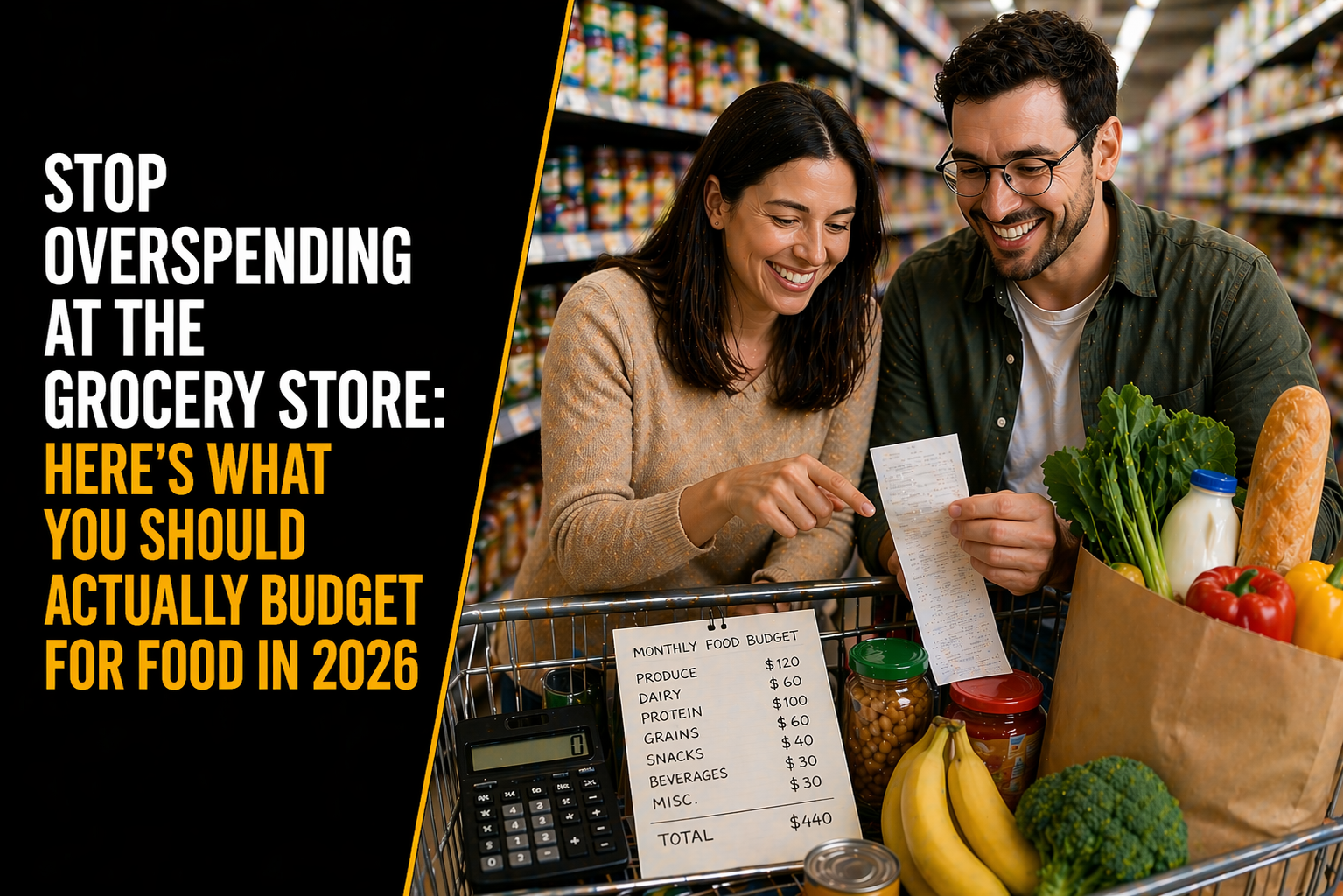
Key Takeaways
- The average American household spends $504 per month on groceries — that's over $6,000 a year.
- The USDA estimates $299–569/month for a single person, $617–981 for a couple, and $1,002–1,631 for a family of four depending on your plan level.
- Your grocery budget should be built around your income, your family size, and your financial goals — not what feels right in the moment.
- Small changes — like switching stores, buying generic, and meal planning — can save you $200+ per month.
- Every dollar you save on groceries is a dollar that can go toward your emergency fund, debt payoff, or investments.
Real talk, family.
Americans are spending over $6,000 a year on groceries — and most of us have no idea where that money is actually going. We walk into the store for milk and eggs and walk out $187 lighter with a cart full of stuff we didn't plan on buying.
And here's what makes it worse. Food prices went up 2.7% from September 2024 to September 2025 according to the Bureau of Labor Statistics. That means the same groceries you bought last year are costing you more today — and if you don't have a plan, inflation is eating your budget alive.
But here's the thing — this is fixable. You don't need to starve. You don't need to eat beans and rice forever. You just need a system. And today, I'm going to give you one.
Let's get to work.
How Much Are Americans Actually Spending on Groceries?
According to the Bureau of Labor Statistics, the average grocery cost per month is $504 per household. That breaks down to roughly $6,053 per year — and that's before eating out.
Let that satisfying. Over six thousand dollars a year just on what you bring home from the store.
Now, that number shifts depending on where you live, how many mouths you're feeding, and what you're putting in the cart. But for most families, groceries are one of the top three budget categories — right up there with housing and transportation.
And if you're not paying attention to it, it's quietly draining your ability to build wealth.
What the USDA Says You Should Be Spending
The USDA puts out monthly food cost reports broken down by family size and budget level. Here's what they recommend:
Single Person
Plan Monthly Cost
Thrifty $299–375
Low-Cost $323–372
Moderate $394–467
Liberal $501–569
Couple (2 People)
Plan Monthly Cost
Thrifty $617
Low-Cost $638
Moderate $788
Liberal $981
Family of Four
Plan Monthly Cost
Thrifty $1,002
Low-Cost $1,097
Moderate $1,351
Liberal $1,631
Source: U.S. Department of Agriculture, 2025. Family of four includes two children ages 6–11.
Now, these aren't rules. They're guidelines. But they give you a real starting point instead of just guessing every month.
Why Your Grocery Spending Matters More Than You Think
Listen, family — I know groceries don't feel like the thing that's keeping you broke. It's not as dramatic as a car note or credit card debt. But here's what I've learned:
It's the small leaks that sink the ship.
If you're overspending $200 a month on groceries — that's $2,400 a year. You know what $2,400 could do?
- Fund your emergency fund in a high yield savings account earning 4–5% APY
- Pay off a credit card balance
- Invest into an index fund that averages 10% annual returns
- Cover 4 months of investing at $600/month into your retirement
That's not pocket change. That's your future. That's your children's children's children's future.
5 Ways to Cut Your Grocery Bill Without Eating Ramen Every Night
1. Check Your Pantry Before You Shop
This sounds simple because it is. Before you leave the house, look at what you already have. How many of us have bought a second jar of pasta sauce because we forgot we had one in the back of the cabinet?
Take inventory. Get creative. Use what you've got before you spend more.
2. Switch Where You Shop
Where you buy your groceries matters — a lot. The same basket of items can cost you 20–40% more depending on the store.
Look into stores like ALDI, Costco, or Walmart Grocery. Yeah, you might have to bag your own stuff. But that little inconvenience could save you $100+ per month.
3. Go Generic
According to Consumer Reports, store brands cost anywhere from 5–72% less than name brands — and most of them taste the same.
Start with the basics. Generic bread, condiments, rice, canned goods, cleaning supplies. You probably won't taste the difference, but you'll definitely see the difference on your receipt.
4. Meal Plan Like Your Budget Depends on It
Because it does.
Sit down for 15 minutes on Sunday. Plan your meals for the week. Write a list. Stick to the list. When you walk into the store with a plan, you stop making emotional purchases.
No plan = no discipline = no margin.
5. Shop the Sales — But Do the Math
Pay attention to weekly specials and seasonal produce. But don't fall for the trap of buying something just because it's "on sale." If you weren't going to buy it anyway, it's not saving you money — it's costing you money.
And buying 47 cans of soup because they're buy-one-get-one isn't a strategy. That's hoarding.
How to Build a Grocery Budget That Actually Works
Here's the step-by-step system I want you to follow:
Step 1: Look at What You're Already Spending
Pull up your bank statements from the last 2–3 months. Add up every grocery transaction. Divide by the number of months. That's your baseline.
You might cringe. That's okay. Awareness is the first step to change.
Step 2: Budget for Everything Else First
After groceries, make sure you've covered your Four Walls — food, utilities, shelter, and transportation. Then add in your other monthly expenses. Debt payments. Subscriptions. Insurance. All of it.
Step 3: Adjust Until Every Dollar Has a Job
This is what I call a zero-based budget. Every dollar that comes in gets assigned somewhere — giving, saving, investing, spending, or paying off debt. If your grocery number is too high, cut it. If it's too low to feed your family, bump it up and trim somewhere else.
It's going to take a few months to dial this in. That's normal. Don't quit.
Step 4: Align Your Budget With Your Goals
This is where it gets real.
If you're paying off debt using the debt snowball method, your grocery budget might need to be lean for a season. Beans and rice for a season so you can eat steak for a lifetime.
If you're building your emergency fund, every dollar you save on food is a dollar that goes into your high yield savings account earning real interest while you sleep.
If you're investing and building wealth, your grocery discipline is funding your future.
Your grocery budget isn't just about food. It's about freedom.
Put Your Savings to Work
Family, let me be straight with you. If your emergency fund is sitting in a regular savings account earning 0.01%, your money is going backwards. Inflation is eating it alive.
I update the best high yield savings accounts every single week so your money actually works for you. We're talking 4–5%+ APY. No fees. No minimums. FDIC insured.
Go to anthonyoneal.com/savings right now and compare the top accounts. It takes 5 minutes to open one. Your future self will thank you.
Don't Know Where to Start With Your Budget?
I've got you. Download my free Money Plan Guide — it'll walk you through setting up your budget, building your emergency fund, and creating a real plan for your money.
And if you want to see exactly where you stand financially right now, take the 60-Second Wealth Assessment on my website. It's free and it takes less than a minute.
Conclusion
Look, family — this isn't about deprivation. It's about discipline for a season so you can live free for a lifetime.
Here's what we covered:
- The average household spends $504/month on groceries — over $6,000 a year
- The USDA gives us real benchmarks by family size and budget level
- Small grocery savings add up to thousands per year that can fund your future
- A zero-based budget with a meal plan is the system that wins
- Every dollar saved is a dollar that can go toward debt freedom, your emergency fund, or investments
Here's your move this week: Pull up your last 3 months of bank statements. Add up your grocery spending. Set a realistic number. Write a meal plan for next week. And open a high yield savings account at anthonyoneal.com/savings so the money you save actually grows.
Now I want to hear from you — what's your biggest grocery budget struggle? Is it impulse buying? Eating out too much? Not knowing where to start? Drop it in the comments. Let's figure this out together.
Keep building,

Anthony O'Neal is a bestselling author, speaker and personal finance educator. He teaches families how to get out of debt and build real wealth on any income through The Escape Plan, his show The Table with AO, and the In the Black app.
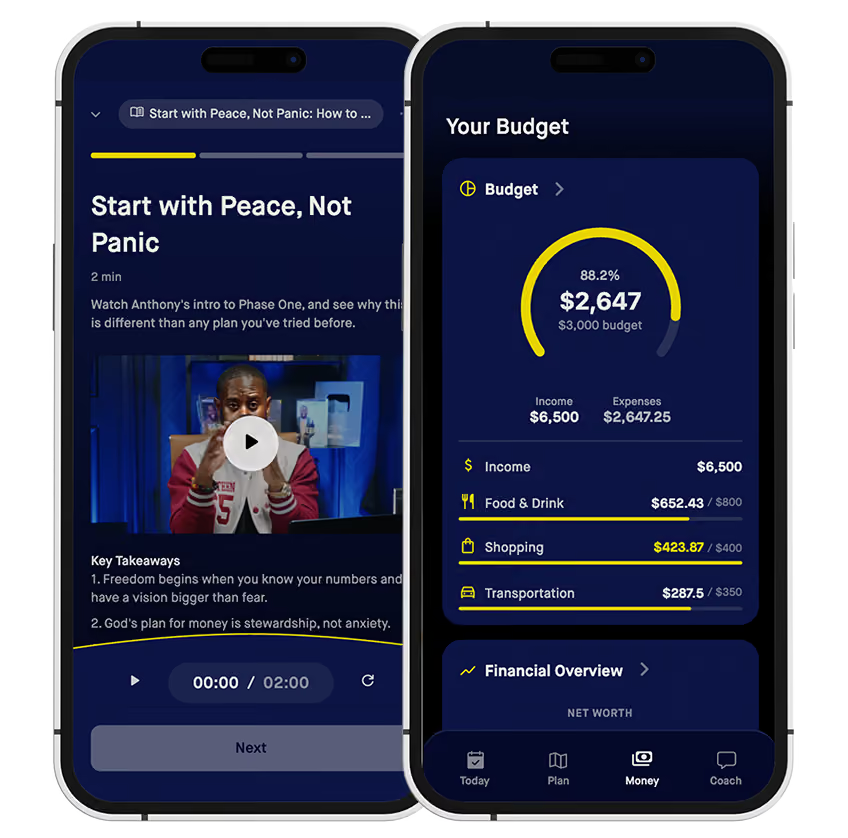
Find $516 you didn't know you had
Writing the budget is the easy part. In the Black tracks your spending against the plan and puts a money assignment in your pocket every morning. The average person finds $516 in their first 30 days.
Get startedIn the Black is my app.
Recommended for this topic
Find $516 you didn't know you had
Writing the budget is the easy part. In the Black tracks your spending against the plan and puts a money assignment in your pocket every morning. The average person finds $516 in their first 30 days.
Get startedIn the Black is my app.
more articles
Money Tips
October 16, 2026
The Monthly Paycheck Trap (And How to Beat It Every Single Time)
Money Tips
October 16, 2026
The Right Way to Use Multiple Bank Accounts Without Losing Track of Your Money
Money Tips
October 15, 2026
The Weekly Habit That Keeps Your Budget From Falling Apart
Money Tips
October 15, 2026
When Your Budget Falls Apart Mid-Month, Do This
Money Tips
October 14, 2026
Stop Buying Dad Stuff. Give Him This Instead.
Money Tips
October 14, 2026
Still Living Paycheck to Paycheck? Here's the Budget App Difference Nobody Explains
Where this fits
The Escape Plan
Five phases, one plan. Find where you are, then take the next step.
In The Black
A coach in your pocket
Daily money assignments and real accountability, built around the Escape Plan. Know your next step every single day.
$59.99 a quarter or $179.99 a year
Get In The Black →Get the plan in your inbox.
Weekly money tips, real stories, and my free Wealth Checklist.
Free. Unsubscribe anytime.