
When the Worst Happens, Will Your Family Be Okay?

3 min read
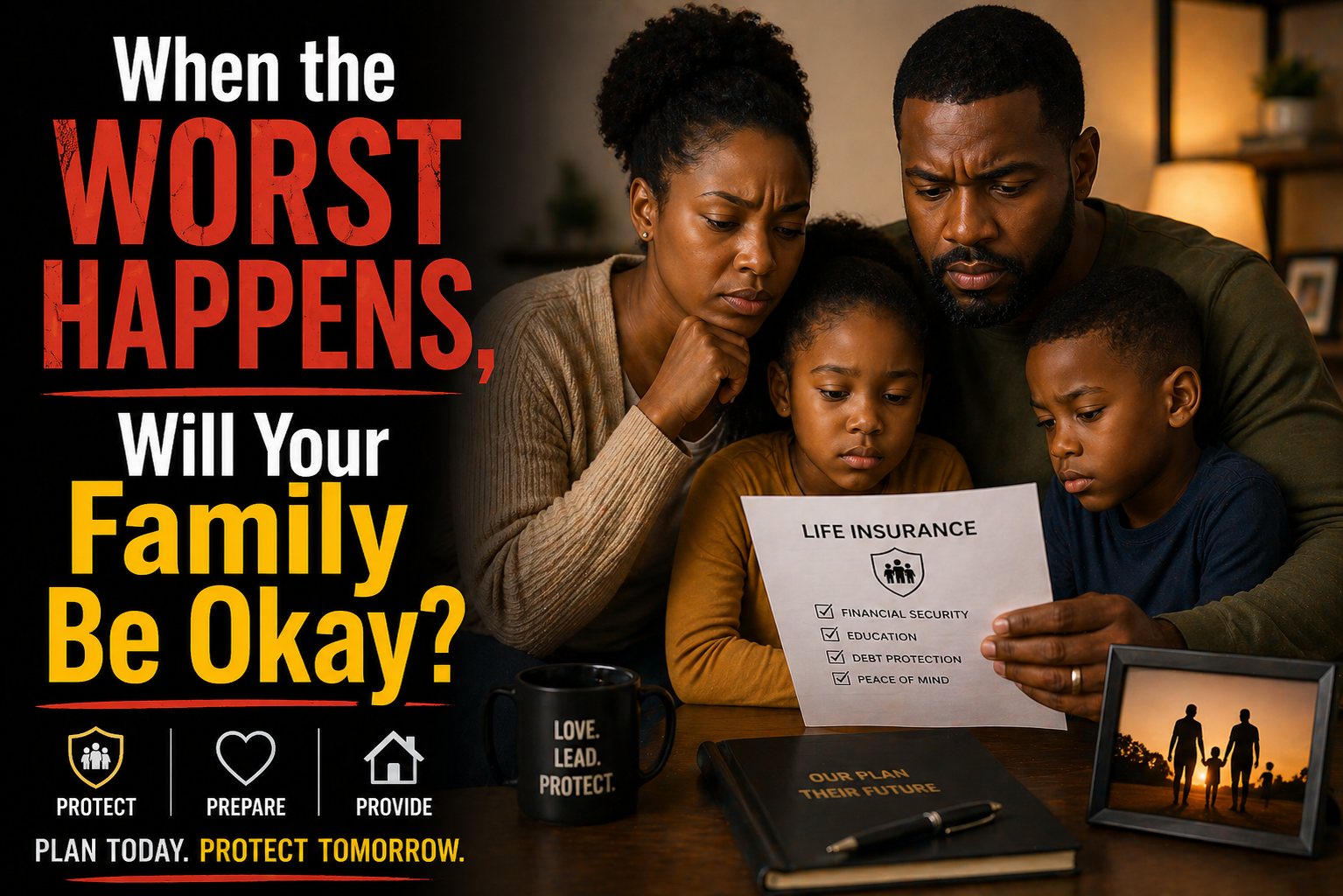
There are moments in life you never see coming.
One day everything is fine. The kids are good. The bills are paid. You and your spouse are finally hitting your stride. And then — in an instant — everything changes.
That's what happened to a woman I'll call Denise.
Denise and her husband Marcus had been married for six years. They were doing the work — budgeting, paying down debt, building something real together. Marcus had even taken out a term life insurance policy two years before. It felt like just another box to check. Something responsible adults do. Something they hoped they'd never actually need.
Then Marcus passed away suddenly. No warning. No time to prepare.
And in the middle of the most painful season of her life, Denise discovered something that changed everything:
They had prepared. And because of that, she and her children were going to be okay.
The Conversation Most Couples Never Have
Family, let me be real with you.
In our community, we don't like to talk about death. We don't like to say "what if." It feels like speaking something dark into existence. I understand that. I really do.
But here's the truth nobody wants to say out loud:
Avoiding the conversation doesn't protect your family. It leaves them exposed.
The couples who make it through the unthinkable aren't the ones who never faced hardship. They're the ones who had the hard conversation before hardship showed up at their door.
That conversation starts with one question: "If something happened to me tomorrow, would my family be okay?"
If you don't know the answer — this article is for you.
What Financial Peace in a Crisis Actually Looks Like
When Marcus passed, Denise didn't have to scramble. She didn't have to rush back to work before she was ready. She didn't have to choose between grieving and keeping the lights on.
She had margin. She had time. She had peace — not because life was easy, but because they had built a financial foundation that held even when everything else fell apart.
That's what real financial preparation does. It doesn't stop the pain. But it keeps the pain from becoming a disaster.
Here's what that foundation looked like for them — and what it needs to look like for you.
3 Steps to Protect Your Family Before the Unthinkable Happens
Step 1: Get Term Life Insurance — Today
This is non-negotiable, family.
If anyone in your household depends on your income, you need term life insurance. Not whole life. Not a policy someone sold you at a family cookout. Term life insurance — enough to cover 10 to 12 times your annual income, for a term that covers your working years.
Here's what that policy should be able to do if something happens to you:
- Pay off your mortgage
- Cover your family's living expenses for years
- Fund your children's education
- Give your spouse time to grieve without financial panic
That's not a luxury. That's love in action.
If you don't have a policy yet, get one this week. It is one of the most important financial decisions you will ever make for the people you love.
Step 2: Build a Financial Emergency Binder
This is something I tell every couple, every single time — and most people have never heard of it.
Sit down together and document everything your family would need to know if you were suddenly gone:
- All bank accounts and login credentials
- Life insurance policy numbers and contact information
- Investment and retirement accounts
- Outstanding debts and monthly bills
- Your will, trust, or any estate documents
- Social Security numbers and important legal documents
Put it in a binder. Put that binder somewhere safe. Tell your spouse where it is.
This one step — one afternoon of work — could save your family from complete financial chaos during the worst season of their lives.
Step 3: Build an Emergency Fund That Buys Time
Grief is not productive. And it should not have to be.
When you lose someone you love, the last thing you need is to rush back to work because rent is due next Friday. A 3-to-6 month emergency fund gives your family breathing room — time to grieve, time to think clearly, time to make wise decisions instead of desperate ones.
If you don't have one yet, start today. Even $1,000 in a high-yield savings account is a foundation. Build from there, one month at a time.
This Is What Stewardship Really Means
Biblical wisdom teaches us to be good stewards of everything God has placed in our hands. That includes the people who depend on us.
Proverbs 13:22 says, "A good person leaves an inheritance for their children's children."
That legacy starts long before you're gone. It starts with the decisions you make today — the policy you take out, the binder you build, the savings account you open — so that the people you love are covered no matter what comes.
Denise didn't have to worry about money in the middle of her grief because Marcus made a decision years earlier that said: "I love you enough to prepare."
That's the kind of love that lasts.
Conclusion
Family, this is not about fear. This is about freedom.
The most loving thing you can do for the people in your life is to make sure they are protected — financially, legally, and practically — before the unthinkable ever happens.
Here's your move this week: Sit down with your spouse or your family and ask the question. "If something happened to me tomorrow, would you know what to do?"
If the answer is no — let's fix that. Start with a term life insurance quote. Build your financial emergency binder. Open that savings account.
You cannot predict loss. But you can prepare for it. And that preparation is one of the greatest acts of love you will ever give your family.
Now I want to hear from you: Does your family have a plan in place if the unexpected happened tomorrow? Drop it in the comments below. Let's talk about it — and let's build together.
Keep building,

Lorem ipsum dolor sit amet, consectetur adipiscing elit. Suspendisse varius enim in eros elementum tristique. Duis cursus, mi quis viverra ornare, eros dolor interdum nulla, ut commodo diam libero vitae erat. Aenean faucibus nibh et justo cursus id rutrum lorem imperdiet. Nunc ut sem vitae risus tristique posuere.
like what you’ve just read?
Make sure to share it with your tribe!
.webp)
like what you’ve just read?
Make sure to share it with your tribe!


